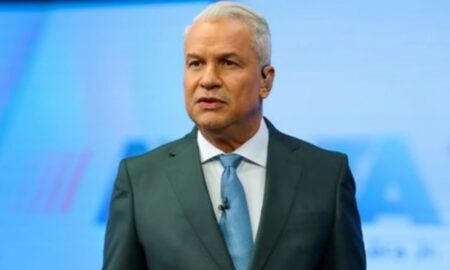
What drives the use of the US Magnitsky Act against STF minister Alexandre de Moraes and Viviane Barci


The United States government announced sanctions under the Magnitsky Act against Supreme Federal Court Minister Alexandre de Moraes. The measure comes amid diplomatic tensions between Washington and Brasília. American authorities justify the action with accusations of serious human rights violations. The focus lies on judicial decisions made by the magistrate in sensitive cases.
The law’s application now extends to Moraes’ wife, Viviane Barci de Moraes, and the Lex Institute, an entity linked to the family. This expansion marks an unprecedented step in U.S. foreign policy toward foreign judicial authorities. The U.S. Treasury Department issued a statement detailing the reasons for their inclusion on the sanctioned list.
- Immediate freezing of any assets or accounts in the United States;
- Prohibition of transactions with entities or individuals under U.S. jurisdiction;
- Restrictions on global financial services tied to the U.S. banking system;
- Travel bans to U.S. territory.
These penalties aim to curb practices deemed abusive. The case takes on political dimensions, with mentions of proceedings involving Brazilian opposition figures.

Origin of the legislation turning allegations into global punishments
The Magnitsky Act stems from a tragic episode in Russia. In 2009, lawyer Sergei Magnitsky dies in a Moscow prison after exposing a tax fraud scheme involving Russian authorities. His death reveals failures in the prison system and systematic human rights violations.
The U.S. Congress responds by passing the law in 2012 under Barack Obama’s administration. Initially aimed at punishing those responsible for the Magnitsky case, the law gains global reach in 2016. The Global Magnitsky Human Rights Accountability Act allows sanctions against any foreign individual or entity accused of gross abuses or large-scale corruption.
The U.S. Office of Foreign Assets Control manages the list of sanctioned individuals. To date, over 600 people and organizations face these restrictions. Examples include Chechen leaders for extrajudicial killings and former Hong Kong officials for suppressing dissidents.
The law operates without requiring a formal judicial process. A report from the State or Treasury Department, backed by evidence from international organizations or credible media, suffices. This flexibility makes the law a powerful yet controversial diplomatic tool.
Countries like Canada, the European Union, and the United Kingdom adopt similar mechanisms. Around 40 nations have incorporated Magnitsky-inspired frameworks to promote global accountability.
Allegations justifying sanctions against the STF minister
The U.S. Treasury Department cites Alexandre de Moraes’ decisions as the basis for the sanctions. Reports point to an alleged censorship campaign against U.S.-based digital platforms. Judicial measures against social media, such as account suspensions and content removals, are interpreted as restrictions on free speech.
Another factor involves preventive detentions in investigations related to the January 8, 2023, events. U.S. authorities allege arbitrary arrests without due process. The prosecution of political figures, including former president Jair Bolsonaro, is described as politicized.
Treasury Secretary Scott Bessent claims Moraes leads an “oppressive censorship campaign.” The inclusion of his wife and family institute broadens the scope to support networks. Viviane Barci de Moraes, a lawyer, and the Lex Institute face asset freezes for alleged material support to the minister’s actions.
These claims echo pressures from Republican congressmen. Capitol Hill hearings highlight impacts on American interests, such as access to big tech services. The sanction bypasses bilateral treaties, focusing on unilateral enforcement.
The STF responds with an official statement, calling the measure unjust and a violation of Brazilian sovereignty. The minister asserts that the sanctions contradict American values of respecting fundamental rights.
Financial effects extending beyond U.S. borders
Individuals on the Magnitsky list lose access to credit cards issued by brands like Visa and Mastercard. Brazilian banks with U.S. ties may suspend accounts to avoid fines. International transfers become unfeasible, affecting travel and business.
Airlines operating in the U.S., like Latam and Gol, face dilemmas. Denying services to sanctioned individuals prevents penalties but violates local laws. U.S.-based digital platforms, such as Google and Meta, may block personal accounts.
- Freezing of assets in U.S. jurisdiction, including investments and properties;
- Prohibition of contracts with American firms, impacting business partnerships;
- Risks for global financial institutions ignoring the restrictions;
- Effects on digital services, like emails and social media hosted in the U.S.;
- Potential disruption of Pix payments in transactions with U.S. entities.
International law experts note the law’s extraterritorial reach pressures allies. In Brazil, central banks monitor impacts on the financial system. The law has affected leaders in over 50 countries, including Chechnya’s Ramzan Kadyrov.
For Moraes, with no declared assets in the U.S., indirect effects prevail. International credit cards and official travel face immediate complications. The Lex Institute, focused on legal consulting, sees global operations halted.
Diplomatic tensions marking U.S.-Brazil relations
The law’s application occurs amid escalation under the Trump administration. In July 2025, STF ministers’ visas are revoked. Trade tariffs on Brazilian products follow, citing imbalances. Pressures from Eduardo Bolsonaro in Washington influence the Republican agenda.
Secretary of State Marco Rubio warns of accountability for those threatening U.S. interests. The sanction on Moraes’ family serves as a warning to support networks. Brazilian diplomats seek negotiations, but the U.S. Executive remains steadfast.
The Magnitsky Act’s history includes sanctions on Turkish officials for fraudulent trials. In Brazil’s case, analysts see politicization of the law. William Browder, the activist behind the law, criticizes its use as a distortion of humanitarian purposes.
Bilateral relations face setbacks. Pending trade agreements encounter delays. The Brazilian Foreign Ministry issues a statement reaffirming judicial independence. U.S. critics question whether the measure violates non-intervention treaties.
The episode underscores the power of unilateral sanctions. Developing nations like Brazil debate countermeasures. In the U.S. Congress, hearings discuss balancing human rights and foreign sovereignty.
Historical applications illustrating the law’s reach
Since 2012, the Magnitsky Act has targeted numerous high-profile cases. In Saudi Arabia, the murder of Jamal Khashoggi leads to sanctions against intelligence agents. Myanmar leaders face restrictions for genocide against Rohingyas.
In 2017, Zimbabwean president Emmerson Mnangagwa is listed for resource smuggling. Chinese officials are targeted for abuses in Xinjiang. The law has imposed 672 designations by 2025, per Treasury reports.
- Sanctions on Carrie Lam, former Hong Kong chief, for suppressing protests;
- Freeze on Horacio Cartes, former Paraguayan president, for electoral corruption;
- Restrictions on illegal diamond networks in the Central African Republic;
- Penalties on Russian judges for politically motivated trials against dissidents;
- Measures against Mexican cartels for prison abuses.
These precedents highlight a focus on systemic abuses. In the judiciary, Turkish cases involve journalist persecution. The application to Moraes marks the first against a Latin American Supreme Court minister.
Annual State Department reports detail criteria. Evidence includes victim testimonies and NGO data. Transparency aims to legitimize actions but attracts legal challenges.
Controversies questioning the legitimacy of sanctions
Critics argue the law serves political agendas. In Moraes’ case, domestic judicial decisions are reframed as violations. International relations experts see interference in sovereign matters.
The STF notes that sanctions on family members exacerbate injustice. Viviane Barci, uninvolved directly, suffers by association. The Lex Institute, dedicated to educational projects, denies ties to abuses.
International lawyers anticipate appeals in U.S. courts. Browder suggests misuse of the law may lead to reversals. The São Paulo Bar Association issues a technical note, claiming a breach of International Law.
- Censorship allegations based on judicial orders against fake news;
- Preventive detentions supported by Brazilian law against democratic threats;
- Lack of systematic evidence of corruption or extrajudicial killings;
- Pressure from conservative U.S. lobbies influencing decisions;
- Risk of escalation in bilateral trade retaliations.
The debate exposes tensions between global accountability and non-intervention. Countries like China challenge Magnitsky sanctions in UN forums. In Brazil, the episode rallies defenses of judicial independence.