Plane crash in Pantanal kills architect Kongjian Yu and Brazilian filmmakers in documentary flight Por Luís Henrique Costa
11 min de leitura
 |
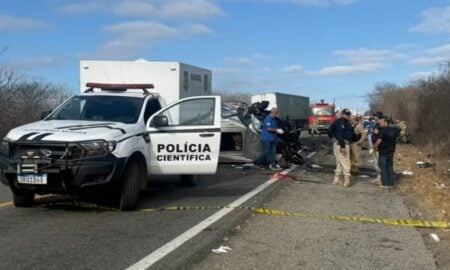
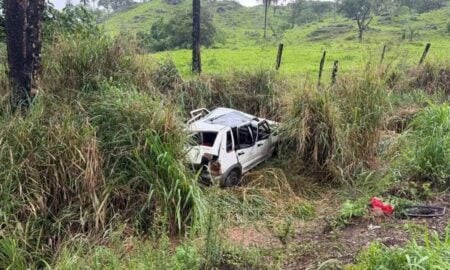
A Cessna 175 single-engine plane crashed on Tuesday afternoon in the rural area of Aquidauana, in the heart of Mato Grosso do Sul’s Pantanal, causing the immediate death of its four occupants. The aircraft, operating under permitted daytime conditions, collided with the ground near Barra Mansa farm, a region known for its Pantanal landscapes and appeal to tourists and audiovisual professionals. Rescue teams confirmed the bodies were charred due to a post-impact explosion, complicating initial identification efforts.
The incident occurred around 6 p.m., as the plane approached a planned landing in the region. Local witnesses reported hearing a loud boom followed by dense smoke rising over the flooded fields. Firefighters and civil police mobilized quickly, but the rugged terrain and poor access delayed authorities’ arrival. The Center for Investigation and Prevention of Aeronautical Accidents dispatched experts to analyze the wreckage and reconstruct the sequence of events.
Among the victims was Chinese landscape architect Kongjian Yu, 62, whose presence in Brazil sparked anticipation among urbanists and environmentalists. He was traveling with two Brazilian filmmakers involved in a documentary project on urban adaptations to wetland ecosystems. The pilot, who owned the aircraft, completed the group in a mission blending academic research and audiovisual production.
- Identified victims: Kongjian Yu, architect and professor at Peking University; Luiz Fernando Feres da Cunha Ferraz, documentary filmmaker; Rubens Crispim Jr., cinematographer.
- Aircraft involved: Cessna 175, manufactured in 1958, registered for private flights, with documentation valid until December 2025.
- Exact location: Near Barra Mansa farm, Aquidauana, 141 km from Campo Grande.
- Approximate time: 6 p.m. on Tuesday, September 23, 2025.

Aircraft details and flight conditions
The Cessna 175, registration PT-BAN, was in normal airworthiness condition per records from the National Civil Aviation Agency. Purchased in 2015 by pilot Marcelo Pereira de Barros, the small aircraft carried up to four passengers and was restricted to daytime private flights, without commercial taxi authorization. Aviation experts initially ruled out documentation issues but stress that older models like this require rigorous maintenance in humid environments like the Pantanal.
Investigators note the flight departed from a base in Campo Grande, heading to the Pantanal for filming. Reports suggest a possible go-around attempt, a maneuver where the pilot aborts landing to regain altitude, but technical details await reports. The weather that afternoon recorded partly cloudy skies, moderate winds, and high humidity, common in the biome’s dry-to-wet season transition.
Marcelo Pereira de Barros, 58, had over 5,000 flight hours in light aircraft and was known for transporting production teams in the region. Friends describe him as experienced in Pantanal routes, where visibility and air currents pose constant challenges. The explosion on impact suggests potential mechanical failure or human error, though the final report from the investigation center will clarify these points in months.
The aircraft’s ownership by Barros underscores the private nature of the flight, aligned with the ongoing project. Records show the Cessna underwent regular annual inspections, with the last in June 2025. However, the fuselage’s age raises debates about component durability in tropical conditions, where corrosion accelerates wear.
Kongjian Yu’s professional profile
Kongjian Yu rose to global prominence in landscape architecture by founding Turenscape in 1998, transforming over 70 Chinese municipalities with innovative designs. Born in a rural Zhejiang village, he grew up observing farmers adapt lands to seasonal floods, shaping his vision of harmony between buildings and water cycles. A Harvard doctorate holder, Yu taught at Peking University and advised China’s government on sustainable urban policies.
His career amassed international awards, including the IFLA Sir Geoffrey Jellicoe Award in 2020 and the Cooper Hewitt National Design Award in 2023. As editor-in-chief of Landscape Architecture Frontiers, he published over 20 books and 300 articles, influencing climate resilience debates. Projects like Sanya Mangrove Park demonstrate his practical approach, where green areas absorb up to 80% of heavy rainfall, reducing urban flooding by 70%.
In Brazil, Yu arrived in September 2025 to speak at the International Conference of the Council of Architecture and Urbanism in Brasília, from September 4-6. There, he discussed applying his concepts in tropical contexts, suggesting adaptations for Rio de Janeiro’s Francisco Bicalho Avenue. After the event, he attended São Paulo’s Book Biennial and, on September 20, traveled to the Pantanal with the film crew to capture local lessons on flood coexistence.
Yu advocated replacing gray infrastructure—like concrete channels—with “green infrastructure,” promoting multifunctional parks that store water for droughts. His Shanghai projects created temporary reservoirs in public squares, managing rainfall equivalent to Brazil’s 2024 southern floods. His expertise positioned him as a key figure for Brazil-China urban resilience collaborations.
Filmmakers’ contributions to the project
Luiz Fernando Feres da Cunha Ferraz, 45, directed environmentally and culturally focused documentaries, notably a Chapecoense crash film nominated for an Emmy in 2018. His work spanned Amazonian and Atlantic biomes, capturing stories of climate-impacted communities. Ferraz joined Yu to document the Pantanal’s potential as a living model for water adaptation, blending striking visuals with technical insights.
Rubens Crispim Jr., 52, served as cinematographer on over 50 projects, specializing in remote and harsh locations. His portfolio includes documentaries screened at festivals like É Tudo Verdade, exploring Pantanal conservation in 2022. Together, Ferraz and Crispim planned a 30-minute short, funded by cultural institutions, highlighting how the biome absorbs natural floods—a parallel to sponge cities.
The filmmaking trio arrived in the Pantanal on September 20, based at a lodge near Aquidauana for aerial and ground shots. Sources reveal they recorded local guides’ accounts of historic floods, with Yu narrating parallels to Chinese urban interventions. The production aimed for a 2026 debut at international architecture events, amplifying Yu’s ideas globally.
Friends of Ferraz and Crispim express shock at the dual loss, praising their dedication to Brazil’s unseen narratives. Ferraz balanced filmmaking with activism, serving on Mato Grosso do Sul conservation committees since 2019. Crispim innovated with drone techniques in flooded areas, crucial for the documentary.
- Planned documentary stages: Filming began in Brasília; Pantanal focus from September 20-23; editing in São Paulo from October.
- Core themes: Human flood coexistence; Pantanal lessons for global urbanism; science-audiovisual integration.
- Initial funders: CAU Cultural Institute and a Chinese environmental foundation.
- Estimated runtime: 30 minutes, with potential for an expanded series.
- Filmed locations: Riverside lodges and flooded fields near Aquidauana.
Immediate response from authorities
Civil Police and Fire Department cordoned off the Barra Mansa farm area after the 6:30 p.m. alert on Tuesday. Delegate Ana Cláudia Medina, from the Organized Crime Repression Department, led initial forensics, confirming four deaths and the bodies’ carbonization. Teams used heavy equipment to clear wreckage amid dense vegetation, with drones aiding site mapping.
The Center for Investigation and Prevention of Aeronautical Accidents sent analysts from Brasília the next morning, prioritizing black box recovery and wreckage analysis. Procedures include interviewing air traffic controllers and reviewing flight logs, focusing on regional crosswinds. The National Civil Aviation Agency temporarily suspended similar flights in the area pending clarification.
Identifications relied on preserved documents and fingerprints, supported by Campo Grande’s Legal Medical Institute. Yu’s family was notified via China’s embassy in Brasília, while Brazilian relatives received psychological support on-site. The operation involved 25 professionals, including forensic experts and aerial rescue firefighters.
This swift response contrasts with prior Pantanal incidents, where remote access delayed investigations. Authorities note the biome’s 150,000 km² demands tailored protocols, like helicopter use for urgent transport.
Pantanal aviation context
Mato Grosso do Sul records about 20 air accidents yearly, with 70% involving light aircraft in rural routes. Over the past decade, the state logged 230 incidents and 24 fatalities, many tied to single-engine planes in low-infrastructure areas. The Pantanal’s varied topography and seasonal water cycles amplify risks like thermal turbulence and reduced visibility in dry seasons.
This is the second fatal crash in the biome in September 2025: on September 16, doctor Ramiro Pereira de Matos, 67, died in a similar collision near Corumbá. General aviation statistics show 40% of incidents involve human error, 30% mechanical issues, and 20% environmental factors. Experts recommend extra training for pilots in wetland ecosystems, where humidity affects instruments.
The regulatory agency enforces annual inspections, but critics highlight gaps in monitoring older aircraft. The Cessna 175’s recent checks confirmed compliance, but its 67-year age fuels debates on mandatory fleet retirement. Local operators like Barros rely on these flights for tourism and logistics, vital to the Pantanal economy.
- Common risk factors: Irregular winds during seasonal transitions; lack of equipped airstrips; humidity-driven corrosion.
- Preventive measures: Annual simulated training; mandatory transponder use on Pantanal routes.
- Recent statistics: 15% accident reduction after 2023 campaigns; still, 12 fatalities in 2024.
- Regional comparison: MS has a 20% higher rate than the national general aviation average.
- Future initiatives: Rural runway modernization plan, set for 2026.
Sponge cities’ legacy in global projects
Yu’s sponge city concept proposes urban areas absorb 70% of annual rainfall via parks and permeable soils, preventing disasters like Brazil’s 2024 southern floods. Implemented in Shanghai since 2015, the model turned plazas into temporary reservoirs, cutting flooding by 85% during monsoons. Yu argued gray infrastructure fails long-term, advocating nature-inspired adaptations.
In agriculture, he recommended dedicating 20% of land to lakes and terraces, a practice seen in the Pantanal, where farms coexist with annual floods. Beijing projects incorporated this logic, creating green corridors that recharge aquifers and mitigate urban heat islands. Yu estimated a mid-sized metropolis could become a sponge city in five years, with initial investments offset by savings on flood repairs.
In Brazil, his ideas gained traction post-2025 lectures, with proposals to restore urban rivers in São Paulo and Rio de Janeiro. Local experts see the Pantanal as a living lab, where natural floods inform resilient designs. Yu’s Turenscape, with 500 collaborators, continues operations, preserving blueprints for its 600 global projects.
Yu regularly published on scalability, stressing the concept applies to rural villages and megacities alike. In a recent interview, he noted: “Nature regulates water; we must mimic it, not fight it.” His passing halts ongoing collaborations, but the sponge city framework endures as a tool against growing climate extremes.
Architectural community’s response
Council of Architecture and Urbanism professionals mourn Yu as a bridge between East and West in sustainable urbanism. His Brasília lecture, attended by 2,000, sparked debates on Pantanal applications, with panels citing his Chinese cases. Brazilian colleagues plan tributes at future events, including São Paulo gallery exhibitions of his projects.
Yu’s death aligns with rising global interest in water resilience, driven by events like the 2024 southern Brazil floods. Universities like Harvard, where he studied, prepare retrospectives of his work, focusing on innovations like Harbin’s Qunli Park, which absorbs 100 million liters per rainfall event. In Brazil, the CAU signals continued Turenscape partnerships for regional workshops.
Filmmakers and audiovisual producers also react, with associations like ABRASC offering family support for Ferraz and Crispim. The unfinished documentary may be completed by colleagues, using raw footage to preserve the joint legacy. This tragedy underscores the dangers of remote expeditions but reinforces the value of cross-disciplinary science-art narratives.