
What are the orange balls on high voltage wires? Get to know line markers and their function


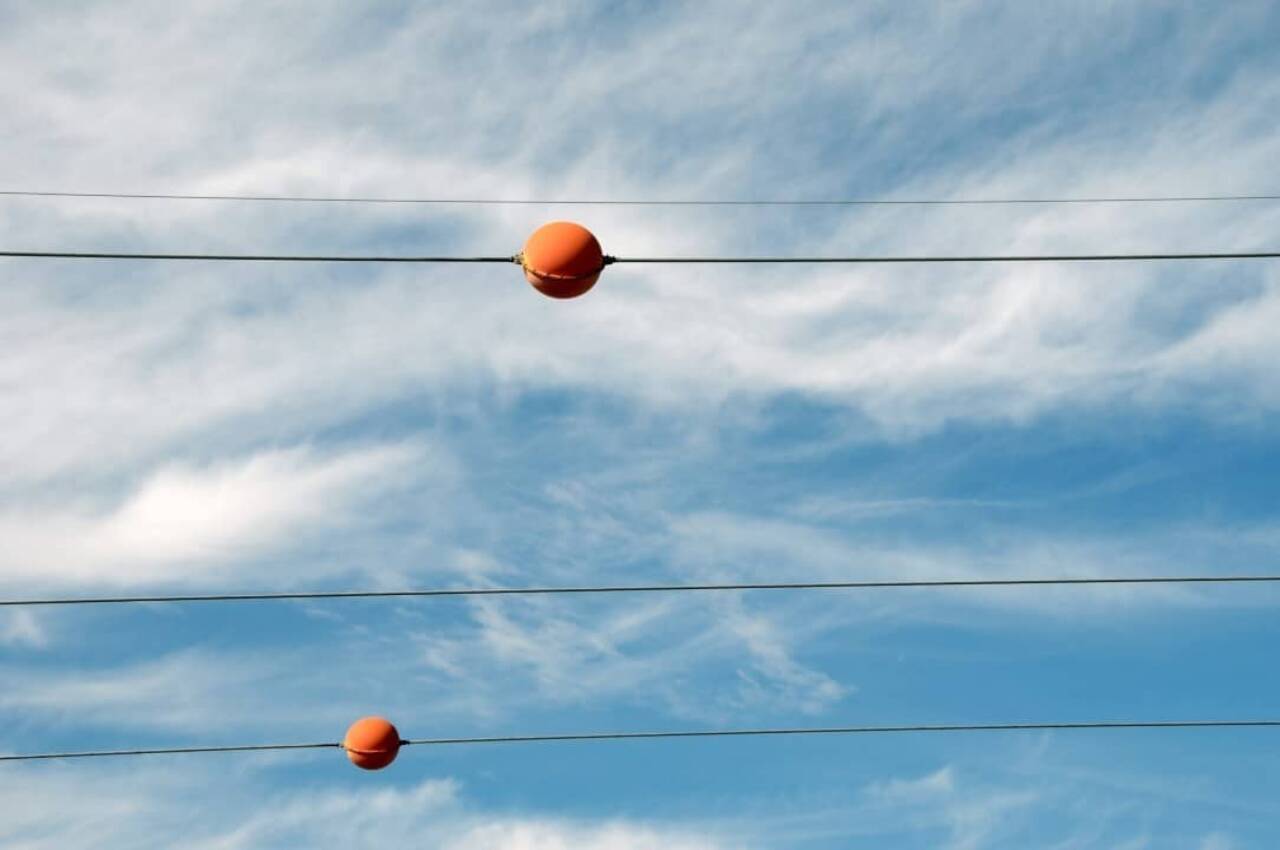
The orange spheres installed on high voltage cables are overhead line markers. Elas increase the visibility of the wires for pilots of aircraft flying at low altitude. The measure reduces the risk of collisions in open areas, river crossings, highways and valleys throughout Brazilian territory.
The installation follows ABNT technical standards and occurs mainly in regions where helicopters, agricultural and small planes operate close to the ground. The devices do not conduct electrical energy and have an exclusively visual function.
The orange color predominates as it offers high contrast against the sky in different weather conditions. In some places, companies adopt red or white markers depending on local requirements.
Preventive function in electrical networks
Transmission cables become almost invisible from the air, especially on cloudy or foggy days. Markers solve this problem by highlighting the presence of the electrical line.
Pilots of agricultural and air rescue aircraft report that the spheres make it easier to quickly identify obstacles. The absence of these devices has caused serious accidents in the past in several regions of the country.
Ball materials and resistance
The balls are made from high-density polyethylene or reinforced fiberglass. The diameter varies between 30 cm and 60 cm, defined by the risk level of the crossing.
These materials withstand winds of up to 150 km/h and extreme temperatures. The internal structure includes aluminum rings that allow secure fixation without damaging the conductor cable.
Some models incorporate elements that help dissipate atmospheric discharges. Essa feature protects nearby towers and equipment during storms.
The service life of the markers reaches 20 years with minimal maintenance.
Technical standards and mandatory installation
ABNT NBR 6535 establishes standards for color, size and spacing between spheres. The typical distance between one ball and another is 30 to 50 meters at critical crossings.
Power utilities must install the devices in new projects and retrofit old lines located in overhead corridors. Decea (Department of Controle of Espaço Aéreo) monitors compliance in areas close to aerodromes.
Most common installation locations
Crossings of large rivers such as Amazonas and São Francisco concentrate a large number of markers. Rodovias federal bodies in rural areas also receive the spheres frequently.
Regions with extensive planting in the Centro-Oeste have a high density of these devices. The same occurs in mountain valleys where helicopters carry out regular inspection flights.
Urban areas rarely have markers, as the lines are at lower altitudes and less critical for general aviation.
Maintenance and technological evolution
Specialized teams carry out periodic visual inspection by helicopter or drone. Substituições occur when there is cracking or excessive color fading.
New models incorporate reflective strips that increase nighttime visibility. Testes with luminescent materials are in the experimental phase at some dealerships.
Current technology maintains the orange standard as an international reference recognized by pilots around the world.



