
After 12 years: Ashes from the Ethiopian volcano Hayli Gubbi reach Delhi and trigger an aviation alert in India

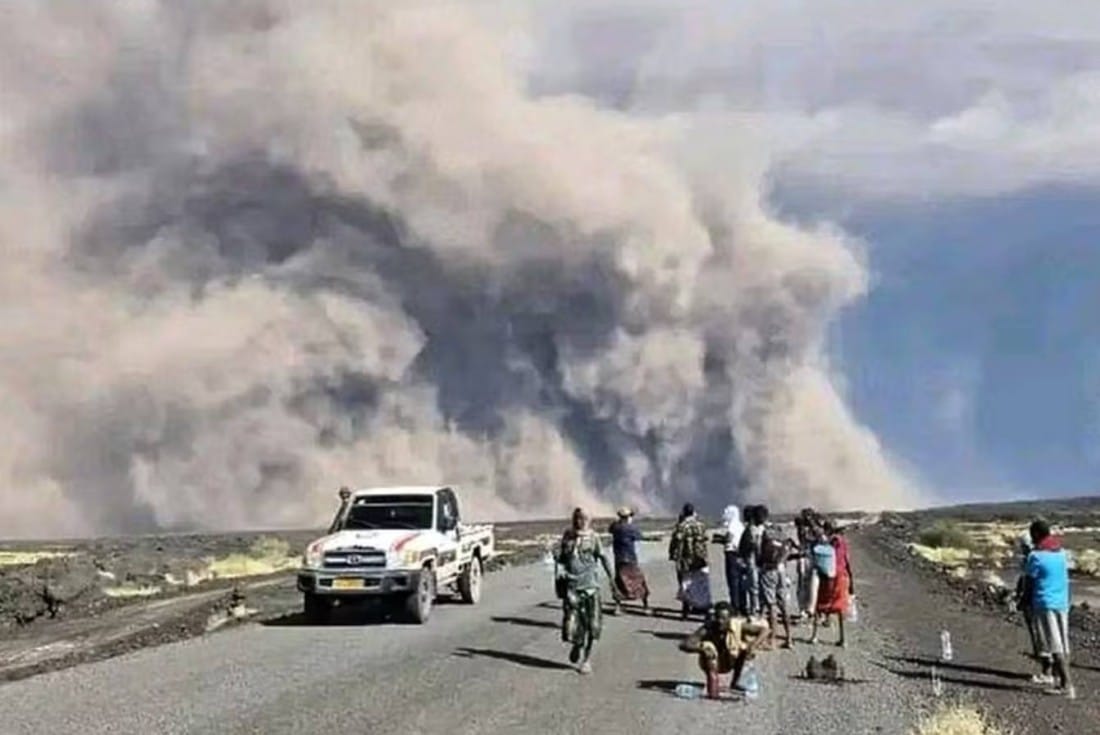
Direção Geral of Aviação Civil of The eruption, the first in almost 10 thousand years, occurred on Sunday (23) and released columns of ash and sulfur dioxide to altitudes between 7.6 km and 13.7 km. The plume entered Indian airspace from the west of Rajasthan and advanced towards the northeast.
The phenomenon was detected on Délhi around 11pm on Monday. Departamento Meteorológico from Índia (IMD) and independent tracking services confirmed that the cloud was moving at around 130 km/h. Até early this Tuesday (25), the plume already covered parts of Rajasthan, Haryana, Punjab and the territory of the federal capital.
Ash cloud trajectory
The plume crossed Mar Vermelho and Península Arábica before entering Índia through the region of Jodhpur and Jaisalmer.
Satellite images show that the highest concentration of particles remains between 25,000 and 45,000 feet (7.6 km to 13.7 km), above most regular commercial flights.
Private meteorological services indicated that the sky could be unusually colored in the next few hours in affected areas.
Alert issued to airlines
The DGCA has instructed operators to continuously monitor bulletins from Volcanic Ash Advisory Centre (VAAC) from Toulouse, responsible for the region.
Companies must evaluate routes, altitudes and possible detours to avoid passing through areas with the presence of ash.
Although the current concentration is considered low at cruising levels, volcanic particles can damage aircraft engines and systems.
Areas already affected or under monitoring
- Rajasthan (initial plume entry)
- Haryana and Délhi (coverage confirmed on Monday night)
- Punjab and west from Uttar Pradesh (predicted overnight crossing)
- Himachal Pradesh (light impact possible in lowland areas)
- Gujarat (final stretch of cloud tail may reach the state)
Feather composition and risks
The eruption of Hayli Gubbi released large amounts of sulfur dioxide and fine silica particles.
These materials, when in high concentrations, reduce visibility and affect turbine performance.
Indian officials say the impact on ground-level air quality remains minimal so far.
Measures adopted by the airline sector
Airports at Délhi, Jaipur, Amritsar and Chandigarh intensified radar and meteorological monitoring.
As of early Tuesday morning, no routes had been canceled or significantly changed.
The companies Air India, IndiGo and Vistara confirmed that they follow international safety protocols in the event of volcanic ash.
Monitoring continues throughout the day, with updates scheduled every six hours by specialized centers.



