
3I/ATLAS loses excessive mass and exhibits intense solar antitail after perihelion, says Avi Loeb

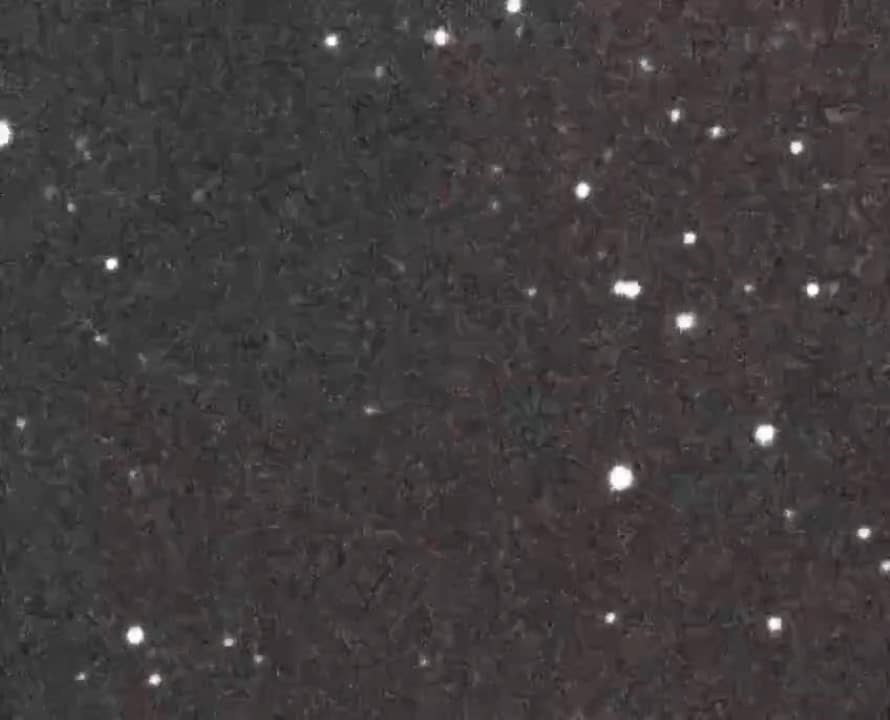
Astronomer Avi Loeb, from Universidade of Harvard, identified anomalous behaviors in the interstellar comet 3I/ATLAS between November 22 and 24, 2025.
Images captured by amateur telescopes revealed a bright coma around the nucleus, with the main tail opposite Sol and the anti-tail directed toward the sun.
This configuration, observed near perihelion on October 29, suggests high-volume ejections of material.
Loeb calculates that the total mass loss between July and November reached several billion tons, equivalent to about 10% of the minimum estimated for the object.
Visual features captured in recent observations
Photographs from November 22, taken by astrophotographers as Mitsunori Tsumura, show 3I/ATLAS with collimated jets extending up to 1 million kilometers toward Sol.
The antitail, a result of the orbital perspective aligned with the ecliptic plane, exhibits brightness and extension superior to the patterns of solar comets.
These structures indicate a rate of ice sublimation that surpasses conventional models for interstellar objects.
Acceleration beyond solar gravity detected
Astrometric measurements recorded radial acceleration of 1.1×10⁻⁶ astronomical units per day squared in 3I/ATLAS.
This value, combined with transverse acceleration of 3.7×10⁻⁷, points to impulses caused by gas jets in unusual quantities.
In natural comets, such effects derive from asymmetric ejections, but the observed magnitude demands ejecta on large scales.
Loeb notes that advanced technologies could generate the same effect with reduced mass loss.
The object’s brightness increased five times between September and October, according to data from probes such as STEREO-A and SOHO.
🚨 ‼️ THE EXPLANATION FOR THE ACCELERATION OF 3I/ATLAS 🚨 !! Porém, life is much more boring than we want!! Então this is the scientific explanation for the acceleration of 3I/ATLAS!!Although some commentators… pic.twitter.com/OtRIjnUaTO
— Sacani (Space Today) – AKA Gordão Foguetes (@SpaceToday1) November 3, 2025
Mass loss challenges cometary models
Intense sublimation near Sol caused outgassing that removed more than 13% of the original mass of 3I/ATLAS.
Calculations based on images from July’s Hubble estimate the diameter at a maximum of 5.6 kilometers, insufficient to justify the 5 billion monthly tons lost.
To accommodate the inferred loss, the surface area would need to exceed 1,600 km², which would imply a diameter of 23 kilometers.
This discrepancy suggests possible fragmentation or unconventional ejection sources.
The object maintained integrity as a single body in observations on November 11, with no evidence of total breakage.
Comparison with previous interstellar visitors
1I/’Oumuamua, detected in 2017, exhibited acceleration with no visible coma or tail.
2I/Borisov, from 2019, behaved like a typical comet, with standard gas and dust ejections.
Differently, the 3I/ATLAS combines a developed tail, strong anti-tail and high acceleration, an unprecedented combination between the three.
Its retrograde orbit, aligned less than 5 degrees with the ecliptic, has a probability of 0.2%, raising its rarity to one in a hundred million.
Spectroscopy reveals a composition with 87% CO2, 9% CO and only 4% water, contrasting with comets from Sistema Solar.
Upcoming observations and planned analyzes
Large telescopes, including James Webb, schedule captures in December for greater resolution.
3I/ATLAS will make closest approach to Terra on December 19, at 270 million kilometers, ideal for precise measurements.
In March 2026, it will pass close to Júpiter, at the limit of the radius of Hill, allowing the study of gravitational interactions.
- Spectral analysis of the coma and tails for the chemical composition of the jets.
- Trajectory monitoring to confirm continued acceleration.
- Comparison with solar comet data to validate models.
- Assessment of anomalous polarization in the gas plume.
These steps will define whether the anomalies derive from natural processes or require theoretical revisions.



