
Day turns to night for more than 6 minutes in the total solar eclipse that will cross Egypt, Libya and Spain

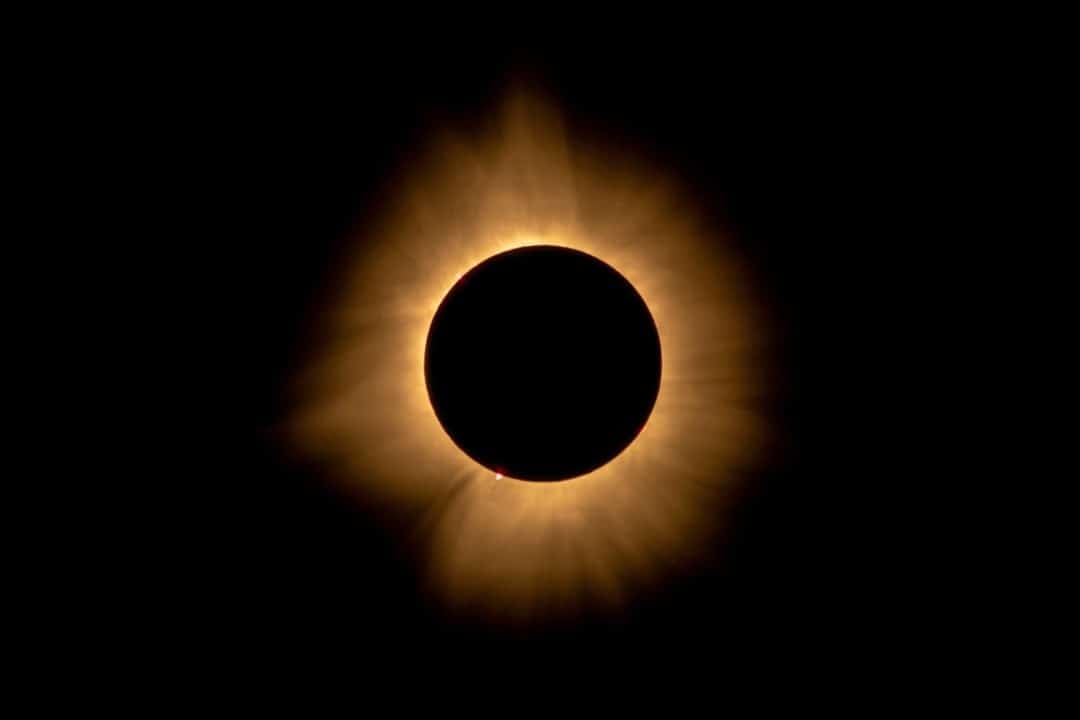
A total solar eclipse will occur on August 2, 2027 and will be the longest of the 21st century, lasting a maximum of 6 minutes and 23 seconds of complete darkness. The phenomenon will happen when Lua is positioned between Sol and Terra, completely blocking sunlight in a specific band of the planet. The lunar shadow will cross regions of Europa, África and Oriente Médio, affecting millions of observers in populated areas.
The event starts in the ocean Atlântico and reaches land in the south of Espanha, following through Marrocos, Argélia, Tunísia, Líbia and Egito. The maximum totality will be recorded close to Egyptian territory, where the duration exceeds six minutes. Países like Brasil and Estados Unidos will fall outside the band of totality.
- Trajectory begins near the Gibraltar strait
- It passes through cities such as Málaga, Valência and Luxor
- Ends at sea Arábico after crossing Arábia Saudita
- Maximum total band width reaches 250 kilometers
Phenomena observed during totality
Sudden darkness causes temperatures to drop between 5°C and 10°C in a few minutes. Ventos change direction and animals exhibit nocturnal behavior, like birds returning to their nests.
Stars and planets become visible in the daytime sky. Vênus and Mercúrio appear more prominently, next to the solar corona, the outer layer of Sol’s atmosphere.
Detailed trajectory by Mediterrâneo
The lunar shadow first touches land south of Espanha at 10:47 am local time. Cidades as Córdoba and Málaga experience more than five minutes of totality.
The path heads north from África, reaching Argélia and Tunísia. No Egito, Luxor records the longest point, with 6 minutes and 23 seconds of total blocking of Sol.
Reasons for exceptional duration
The long duration results from the position of Lua close to perigee, the closest point to Terra in its orbit. Esse alignment increases the apparent size of the Lua and prolongs the time of complete coverage of the solar disk.
The trajectory occurs close to the Earth’s equator, where the speed of the lunar shadow is lower. Esses combined factors rarely coincide with such precision.
Scientific preparation for the event
Space agencies plan detailed observations of the solar corona during the six minutes of totality. Pesquisadores will install equipment at strategic points along the strip.
Studies on animal behavior and atmospheric variations will receive special attention. The accessibility of the affected regions facilitates the participation of scientists and the general public.
Security measures for observation
Direct viewing of the Sol is only safe during the phase of complete totality. Nas partial and total phases, the use of glasses with certified solar filter is mandatory.
Pinhole projection or telescopes with solar filters represent safe alternatives. Hospitais ophthalmologists warn of the risk of permanent damage to the retina without adequate protection.
Visibility in different regions
Countries in the South African cone and a large part of América of Sul will not record the phenomenon. No Brasil, no region will enter the totality band.
Some areas of América and Norte will see a partial eclipse of low magnitude. The next similar opportunity will only occur in the 22nd century, according to calculations by Nasa.
The 2027 eclipse represents a unique opportunity to observe solar and atmospheric phenomena under ideal conditions. The combination of record duration and route through densely populated areas makes the event especially relevant for research and scientific dissemination.




