
Experts explain that peeing while sitting improves hygiene and bladder emptying in men with prostate


Men who choose to urinate sitting down achieve greater cleanliness in the bathroom and, in some cases, empty their bladder better. Estudos scientists point out clear hygienic advantages, although there is no mandatory medical recommendation for everyone. The topic is once again gaining prominence in discussions about men’s health and domestic life.
Urology experts say that the position does not alter the health of young, healthy men. No However, the practice significantly reduces urine splashes, avoiding contamination of floors, seats and nearby objects.
Advantages proven by science
Research carried out at European universities shows that microscopic droplets of urine spread up to two meters when a man urinates standing up. Essas particles can reach toothbrushes, towels and doorknobs.
A 2014 Dutch study, carried out in Universidade of Leiden, concluded that men with benign prostatic hyperplasia empty their bladder faster and completely while sitting. The difference reaches several seconds and reduces the residual volume of urine.
For men without prostate problems, urination time remains practically the same in both positions.
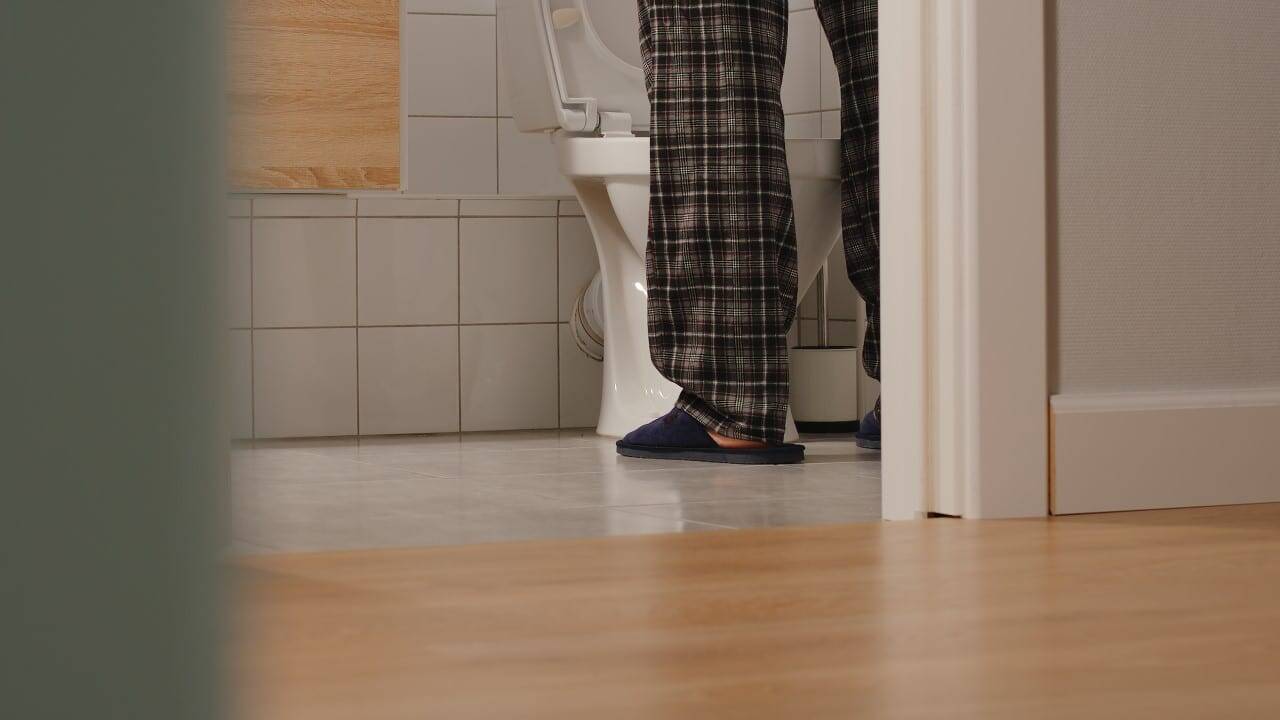
Invisible splashes cause contamination
Engineers from Universidade Brigham Young, in the Estados Unidos, filmed the process at high speed in 2013. The results revealed that urinating while standing generates an “aerosol effect” with thousands of microdroplets.
- These droplets remain suspended in the air for minutes
- They can be deposited on surfaces up to 1.5 meters from the vase
- Increase risk of transmission of bacteria in shared bathrooms
- Exposed toothbrushes absorb particles even when they are 2 meters away
The research recommends keeping personal hygiene items out of the bathroom or in closed cabinets.
Cultural differences around the world
Countries like Alemanha and Suécia record high percentages of men who urinate sitting at home. Pesquisas from YouGov indicate that 40% of Germans prefer to always sit, compared to just 9% of British people.
In Japão, many public bathrooms offer stickers or signs encouraging sitting as a courtesy. Na Islamic culture, urinating while sitting is part of the traditional hygiene recommendations of the prophet Maomé.
In Brasil, the practice is still a minority, but it is growing among couples who share the same bathroom.
Position helps in specific situations
Urologists highlight clear benefits for specific groups. Homens over 50 years old with an enlarged prostate have stronger flow when sitting, reducing effort and discomfort.
The position also offers more safety for elderly people at risk of falling at night. Pessoas recovering from surgery or with reduced mobility find greater stability.
Practice depends on individual choice
There is no medical consensus that makes changing habits mandatory. The decision remains personal, influenced by factors such as family life, cleanliness and comfort.
Many men maintain a standing position in public bathrooms for practicality. At home, the pressure for greater hygiene has led some of them to adopt a sitting position, especially when they share the space with women or children.
The general advice from experts boils down to aiming well when standing or sitting to avoid any type of dirt.



