
What is the phase of the moon on this date on November 25, 2025 and lunar calendar with key dates in November

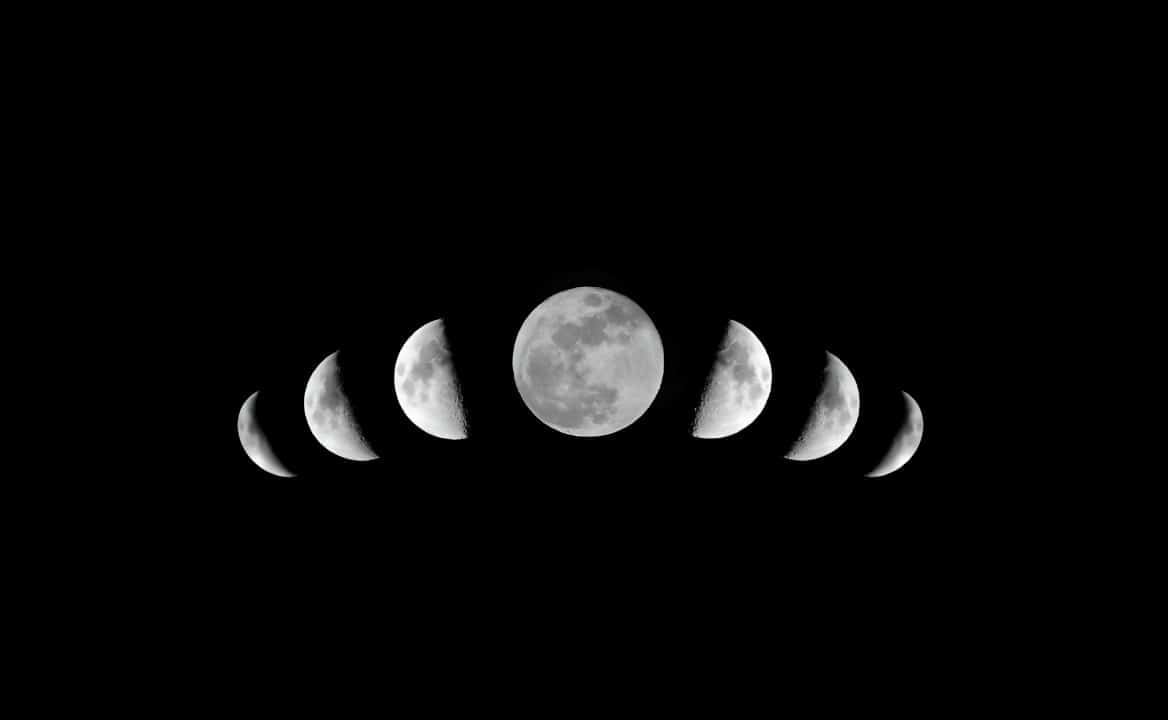
This Tuesday, November 25, 2025, Lua enters the new phase, marking the restart of the monthly lunar cycle. The phenomenon occurs at 3:47 am on Brasília, when the natural satellite of Terra aligns itself between Sol and the planet, becoming invisible from the night sky. The Essa position results in the combination of gravitational forces, which increase ocean tides around the world.
Astronomers and observers record the event as a starting point for the next visual transformations of Lua, with an average cycle duration of 29.5 days. No Brasil, coastal regions such as Rio of Janeiro and São Paulo notice variations in high tides during this phase. The invisibility of the Lua makes it easy to observe stars and constellations in the dark sky.
The 2025 lunar calendar includes this date as one of the key dates for planning nighttime activities.
- New phase on November 20th, starting the cycle.
- Neighborhood Crescente on November 28th, with 50% lighting.
- Influence on tides: greater amplitudes at new moon.
Complete lunar cycle in November
The November 2025 lunar cycle begins with the full moon on November 5, at 10:19 am, when the disk appears fully illuminated in the sky. The Essa phase opposes Lua to Sol in relation to Terra, maximizing the reflected brightness. Observadores across the country report clear visibility at times close to sunset.
The progression moves to the last quarter on November 12 at 2:28 am, reducing the illumination to half of the disk visible from right to left.

Details of the new phase observed on this date
The new moon on November 20th at 3:47 am establishes the precise alignment that defines the synodic month.
During this configuration, the illuminated face of the Lua faces the Sol, hiding it from terrestrial night vision.
Astronomers use tools such as telescopes to confirm the exact position, although the phenomenon is accessible to the naked eye under ideal clear-sky conditions.
Gravitational influences on tides
Spring tides occur at new moon due to the combined pull of Sol and Lua on the oceans.
This force results in higher water levels on Brazilian coasts, affecting navigation and fishing.
Data from tide gauge stations on the northeastern coast indicate peaks of up to 2.5 meters in some areas.
Historical records show that similar cycles in Novembro of previous years coincide with stable climate patterns.
November Lunar Calendar Overview
The full moon dominates the beginning of the month on November 5th.
Last quarter appears on November 12th.
The new moon marks November 20th.
Crescent Quarter closes on November 28th.
These dates guide astronomical observations at observatories like the one at São Paulo.
Preparation for future observations
Simple equipment, such as binoculars, allows you to follow the transition from the new moon to the waxing moon in the following days.
Astronomy apps update real-time positions for users in Brasil.
Events in capital planetariums offer guided sessions on the cycle.
The proximity of the new moon favors photos of the deep sky with digital cameras.
Groups of amateur astronomers organize vigils in urban parks during periods of low light.
Intermediate phases of the month
The crescent moon begins after the new one, gaining a thin, visible shape at dusk.
The disc gradually expands throughout the room, reaching 50% lighting on November 28th.
The transitions occur at intervals of about seven days, maintaining the synodic rhythm.
Impact on the 2025 annual calendar
The year records 12 complete lunar cycles, with supermoons in November and December.
The total lunar eclipse in March affects visibility throughout the country.
Meteor showers in December benefit from new moons for better observation.
Detailed visual transitions
From November 25th, Lua gains 20% visibility in a few days, forming a thin crescent.
The angular position relative to Sol decreases, allowing for brief nighttime appearances.
Atmospheric factors, such as clouds, influence clarity in southern regions.
Featured December lunar calendar
The full moon on December 4th, at 2:15 pm, continues with its November glow.
Last quarter on December 11th.
New moon on December 19th.
First quarter on December 27th.
These phases extend the cycle until the end of the year.
Observations in Brazilian contexts
Inmet studies correlate lunar cycles with seasonal weather patterns.
Farmers in rural areas follow phases for traditional plantations.
Astronomical tourism grows in destinations such as the northeastern hinterland during new moons.
Synodic cycle
The lunar month lasts an average of 29 days, 12 hours and 44 minutes.
The orbital revolution of Lua around Terra is completed in 27.3 days, however the synodic considers Sol.
Calculations are based on astronomical ephemerides updated annually.
Minimal variations occur due to the ellipticity of the orbit.
Applications for lunar tracking
Digital tools provide alerts for phase changes in Brazilian time zones.
GPS integration locates ideal observation positions.
Online communities share images of monthly transitions.
November phases in the chronological list
- November 5: Lua complete at 10:19 am.
- November 12: Quarto decreasing at 2:28.
- November 20: Lua new at 3:47 am.
- November 28: Quarto rising at 3:58 am.
These milestones structure the month for enthusiasts.
The new moon on this date, November 25, 2025, reinforces the ongoing cycle that influences global and local observations in the Brasil, with the November calendar highlighting precise transitions for annual astronomical planning.



