
Celestial spectacle: Saturn next to the Moon appears in the night sky of Brazil this week

Astronomers and observers from all over Brasil await the apparent alignment between Lua and the planet Saturno this Friday, November 28, 2025. The phenomenon occurs shortly after sunset, with visibility to the naked eye in several regions of the country. The proximity of the stars allows for accessible observation, without the need for advanced equipment.
The event takes place in the constellation of Peixes, with Lua about 5 degrees from Saturno, a separation that makes it easier to locate the planet as a yellowish point in the southeastern sky. Especialistas highlight that this conjunction reinforces the interest in amateur astronomy, especially in urban areas with low light pollution.
The live broadcast takes place on the Urânia Planetário channel on YouTube, with real-time explanations about orbital movements.
- Lua appears first, illuminated on 68% of the surface.
- Saturn appears an hour later, visible until midnight.
- Ideal conditions include clear skies and a clear horizon.
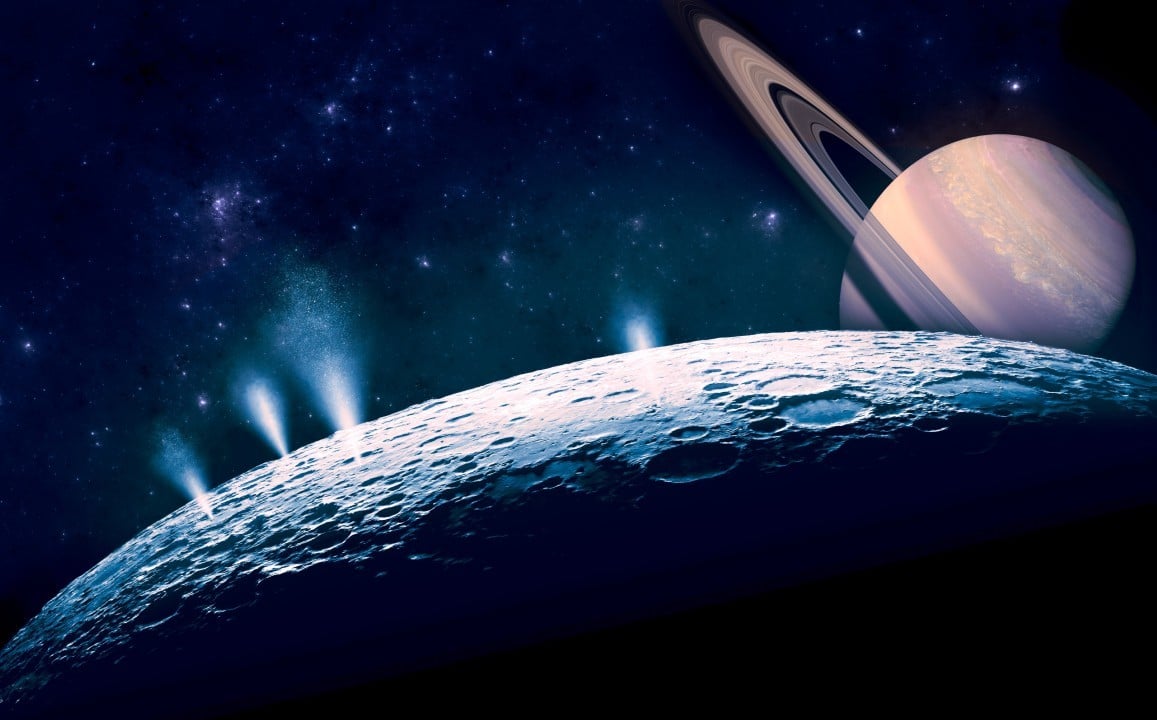
Exact position in the night sky
The alignment begins around 6pm, Brasília time, when Lua rises on the eastern horizon. Observadores on Sul and Sudeste on Brasil report excellent visibility, with the planet 10 degrees above the natural satellite.
Saturn, the sixth planet of Sistema Solar, orbits 1.4 billion kilometers from Terra and completes one rotation in 29 Earth years. Essa conjunction allows you to appreciate its distinct color, the result of the reflection of sunlight in its hydrogen-rich atmosphere.
Tips for observing without a telescope
Find an elevated location away from artificial lights to maximize your view. Comece searches for it one hour after dusk, using Lua as a reference to locate Saturno’s bright spot.
Simple binoculars magnify the experience, revealing subtle details of the planet. Evite times of dense clouds, common in November, and check local weather forecasts.
Saturno characteristics revealed
Saturn has rings composed of ice and rock, with an average thickness of just 20 meters. Durante At this stage, the terrestrial perspective makes them almost invisible, aligned sideways, a phenomenon that repeats itself every 15 years.
The planet has 146 confirmed moons, including Titã, larger than Mercúrio and with a dense atmosphere. Sua’s low density allows it to float in water, a fact proven by measurements of the Nasa since 1979.
The mass of Saturno is 95 times that of Terra, but its rapid rotation deforms the equator. Recent Estudos indicate winds of up to 1,800 km/h in its clouds.
These attributes make the alignment an opportunity to educate about planetary composition, with a broadcast commented by Brazilian astronomers.



Preparation for online broadcast
Access Urânia Planetário’s YouTube at 6pm to follow the event live. Astronomer Marcos Calil details trajectories and scientific contexts during the hour-long session.
Join online astronomy groups to share photos and stories. Ferramentas like starry sky apps help you map exact positions.
The virtual format includes live questions, expanding reach to those living in high humidity areas.
History of similar alignments
Records indicate that the last conjunction so close occurred on November 23, 2024, with a separation of less than 3 degrees. The next forecast points to 2038, a 13-year interval due to elliptical orbits.
In 1966, similar observations boosted space missions, such as Pioneer 11, which flew over Saturno in 1979. Dados from this era confirm the presence of a polar hexagon, a structure 30 thousand kilometers in diameter.
These historical events validate annual recurrence, but rarity in proximity reinforces the value of current observation.
Other stars close to the conjunction
Neptune appears below Lua, but requires a telescope due to its faint brightness of magnitude 7.8. The star Antares, in the constellation Escorpião, complements the scene to the northwest.
Jupiter dominates the morning sky, visible before dawn at Gêmeos. Mercúrio begins twilight appearance, low in the southeast, ideal for planet hunters.
These elements form a rich calendar for November, with a supermoon scheduled for the 5th.
Veja Tambem em News (EN)

Research reveals that parents are unaware of how their children use artificial intelligence

Samsung releases new system update with new features for Galaxy Watch 4 users

Digital retail reduces the value of the Galaxy S25 5G smartphone with bank bonuses and device exchange

Amazon’s wireless CarPlay adapter has a 50% discount and high approval ratings from drivers

Zach Cregger’s new Resident Evil ignores games and focuses on an unprecedented story with new characters

Rumor suggests that Nintendo is preparing a special edition of the Switch 2 with a remake of Ocarina of Time

Apple accelerates production of the iPhone 17e and develops new Air model with dual camera system

Epic Games platform releases twelve high-budget games at no permanent cost for PC users

PlayStation 5 Pro price drop accelerates digital retail sales and eliminates global stocks

New Galaxy Watch 9 firmware appears on server and confirms progress in software development

Apple’s commemorative project tests cell phone with 1.1 millimeter edge and curved screen for 2027
