
Military coup deposes president of Guinea-Bissau and suspends elections amid dispute

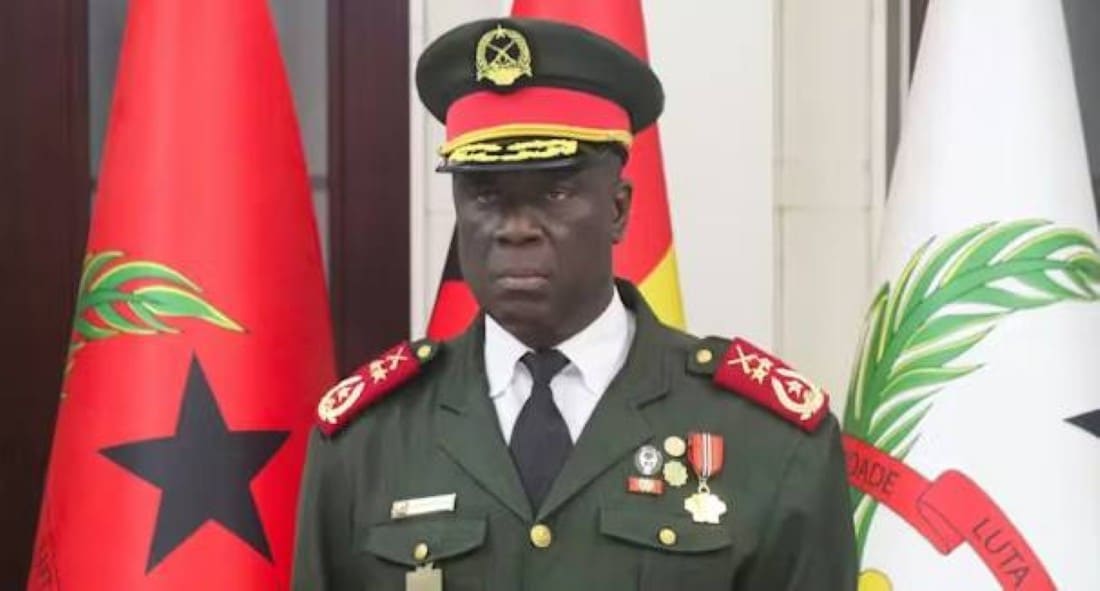
Guiné-Bissau army officers deposed President Umaro Sissoco Embaló on Wednesday, November 26, 2025, in Bissau, the country’s capital. The action took place hours before the results of the presidential and legislative elections held the previous Sunday were announced.
The self-styled Alto Comando Militar to Restauração from Segurança Nacional and Ordem Pública took full control of the Estado, suspending the electoral process and closing land, sea and air borders.
Embaló, initially detained at the presidential palace, confirmed his dismissal in contact with foreign press outlets.
The military intervention followed reports of gunshots near the palace and the electoral commission, with no immediate reports of casualties.
Declaration by coup plotters and promised transition
General Biagué N’Tam, head of the Estado-Maior of the Forças Armadas, justified the action as a response to a destabilization plan involving politicians and drug traffickers.
He announced the suspension of Constituição and the closure of republican institutions until further notice.
The following day, November 27, Major General Horta N’Ta-A was sworn in as interim president, with a one-year deadline for the transition to democracy.
- Appointment of Tomás Djassi as new head of Estado-Maior of Forças Armadas;
- End of mandatory curfew from November 28th;
- Guarantee of adequate treatment for former president Embaló.
History of instability in the African country
Guiné-Bissau records the ninth coup or attempt since the independence of Portugal in 1974.
More recent events include failures in 2022 and 2023, both against Embaló, and conspiracy allegations in October 2025.
The country, with around 2 million inhabitants, faces extreme poverty and serves as a cocaine trafficking route from América from Sul to Europa.
These factors aggravate recurring political disputes.
The nation retained ECOWAS forces after the 2012 coup, but saw their withdrawal during the term of Embaló.
Regional and international reactions
Comunidade Econômica of Estados of África Ocidental (ECOWAS) condemned the coup and suspended Guiné-Bissau from decision-making bodies.
The bloc formed a mediation mission with leaders from Senegal, Serra Leoa, Togo and Cabo Verde to restore constitutional order.
União Africana demanded the immediate release of Embaló and dialogue for legal stability.
UN Secretary-General António Guterres expressed deep concern and called for restraint from all parties.
Portugal, a former colonial power, called for abstaining from violence and resuming electoral counts.
Electoral dispute that preceded the crisis
The November 23 elections took place amid controversy over Embaló’s mandate, questioned by the opposition as expiring in February 2025.
Both Embaló and Fernando Dias’s opponent Costa claimed victory in the first round, despite the two-round system requiring an absolute majority.
Dias, supported by the historic PAIGC, claimed absolute triumph and accused forces linked to the president of attempting to manipulate the electoral commission.
He declared himself free from authorities and asked for protection from ECOWAS, AU and UN.
Opposition and civil society, such as Frente Popular, suggested that the coup would be simulated to nullify results unfavorable to Embaló.
Situation of the former president and opponents
Embaló arrived at Senegal on November 27th via special flight, mediated by ECOWAS.
Military sources confirmed that he was in custody but in good health.
Dias’s fate remained uncertain initially, with reports of failed arrest attempts.
International observers, such as former Nigerian president Goodluck Jonathan, were evacuated without immediate communication.
Liberian senators on an observation mission reported difficulties in contacting colleagues stranded on Bissau.
Context of scams in África Ocidental
The region has seen successive coups in Mali, Níger and Burkina Faso in recent years, with military governments approaching Rússia.
These events highlight institutional weaknesses and disputes over resources in vulnerable nations.
In Guiné-Bissau, drug trafficking persists as a challenge to governance, influencing political alliances.
The country recently mediated a peace agreement in the Casamance conflict, in Senegal, under the leadership of Embaló.
ECOWAS reinforced calls for a return to democracy to avoid regional escalation.



