
Test reveals cooled A18 Pro beating iPhone Air’s limited A19 Pro in benchmarks

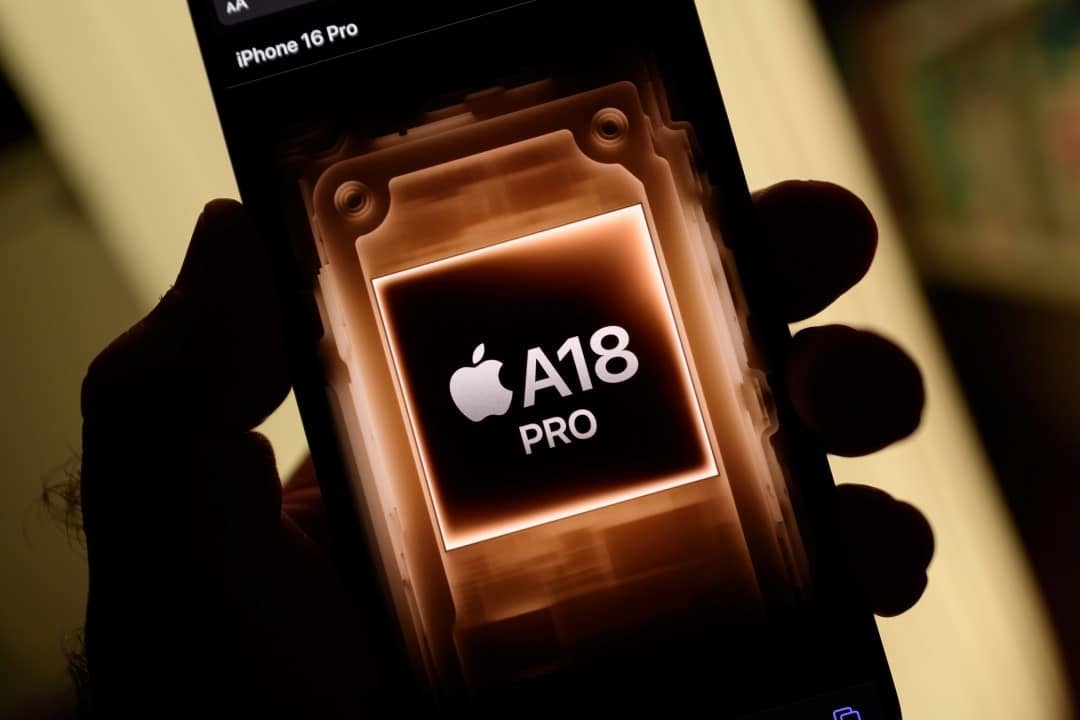
A user test on the Reddit exposed notable differences in the performance of Apple chips in recent smartphones. The iPhone 16 Pro Max, equipped with the A18 Pro and external active cooling, achieved higher scores in Geekbench 6 benchmarks compared to the iPhone Essa assessment took place on November 25, 2025 and highlights the impact of thermal management on sustained tasks.
The experiment compared devices under controlled conditions to measure single-core and multi-core. The A18 Pro, when properly cooled, achieved 3,630 points in single-core and 9,638 in multi-core. Já the A19 Pro the iPhone Air registered 3,687 and 9,390, respectively, revealing a multi-core advantage for the previous model.
Experts note that cooling allows the A18 Pro to maintain higher clock rates for longer. Essa approach avoids thermal throttling, common in ultra-thin designs like the iPhone Air, which measures just 5.6mm thick.
Differences in chips and configurations
The A19 Pro present in the iPhone Air uses a variant with 6 CPU cores and only 5 GPU cores, optimized for energy efficiency. Essa configuration reduces power consumption to suit thin chassis, but limits performance under prolonged loads.
In contrast, the iPhone 16 Pro Max’s A18 Pro has 6 full GPU cores, manufactured on TSMC’s 3nm process. With external cooling, such as SSD coolers, it achieves 90% stability in tests such as 3DMark Steel Nomad Light.
Apple adopts this strategy to balance design and performance. The iPhone Air prioritizes lightness, at 165 grams, while the 16 Pro Max focuses on intensive tasks.
Impact of Cooling on Performance
Independent testing confirms that thermal throttling affects iPhone Air faster. Sem vapor chamber, the A19 Pro reduces clocks to avoid overheating, impacting games and video editing.
On the cooled iPhone 16 Pro Max, the A18 Pro sustains peaks for longer. Isso results in up to 40% improvement in continuous performance, according to benchmark analyses.
- Single-core: Margem minimum, with A19 Pro ahead by 1.6%.
- Multi-core: Cooled A18 Pro leads by 2.6%, crucial for multitasking.
- GPU: 6-core Configuração on A18 Pro offers graphics advantage.
This data has been validated in banks such as Geekbench 6, with recent results.
Limited version of A19 Pro on iPhone Air
Apple launched the iPhone Air in September 2025 as an ultra-thin option, with adapted A19 Pro. Essa version operates at lower clock rates to fit the 3,149 mAh battery and compact design.
Unlike the iPhone 17 Pro and Pro Max, which use the A19 Pro complete with 6 GPU cores and vapor chamber. Esses models achieve 4,019 in single-core and 11,054 in multi-core under forced cooling.
The iPhone Air still impresses in everyday use, with a 6.5-inch Super Retina XDR screen and 120 Hz ProMotion. No However, for heavy loads, throttling appears after minutes of intense use.
User reports indicate heating in AAA games, leading to frame drops. The Air’s passive cooling prioritizes durability over absolute peaks.
Comparison with iPhone 17 Pro and thermal innovations
The iPhone 17 Pro incorporates a vapor chamber with deionized water, integrated into the aluminum chassis. Essa technology dissipates heat from the A19 Pro, allowing up to 40% more sustained performance than its predecessor.
On the iPhone Air, the absence of this system forces adjustments to the software to manage heat. Resultados show the A19 Pro binned with 20% less GPU than the Pro version, affecting renders and AI.
Analysis points to gains of 15% in single-core and 20% in multi-core for the complete A19 Pro over the A18 Pro. With cooling, the gap decreases, as seen in the Reddit test.
- Vapor chamber: Presente only in Pros, improves stability by 36%.
- Battery: Air has a smaller capacity, impacting autonomy in long tasks.
- RAM: 12 GB on the Air and Pros, against 8 GB on the 16 Pro Max.
Advantages of A18 Pro in real scenarios
The test reinforces that thermal management is key for high-performance chips. The 2024 iPhone 16 Pro Max uses a 3 nm N3E process, similar to the A19 Pro’s N3P, but benefits from a more robust structure.
In practical use, the cooled A18 Pro handles multitasking and games better. Usuários report stability in apps such as video editing, where Air can dim the screen to control temperature.
Apple plans evolutions in 2026, but the experiment shows unexplored potential in previous models. Para consumers, this suggests that upgrades depend on specific needs, such as slim design versus raw power.
The iPhone Air sells well due to its lightness, but tests like this guide performance choices.



