
Interstellar comet 3I/ATLAS intrigues NASA with inverted tail and unprecedented chemical composition in 2025

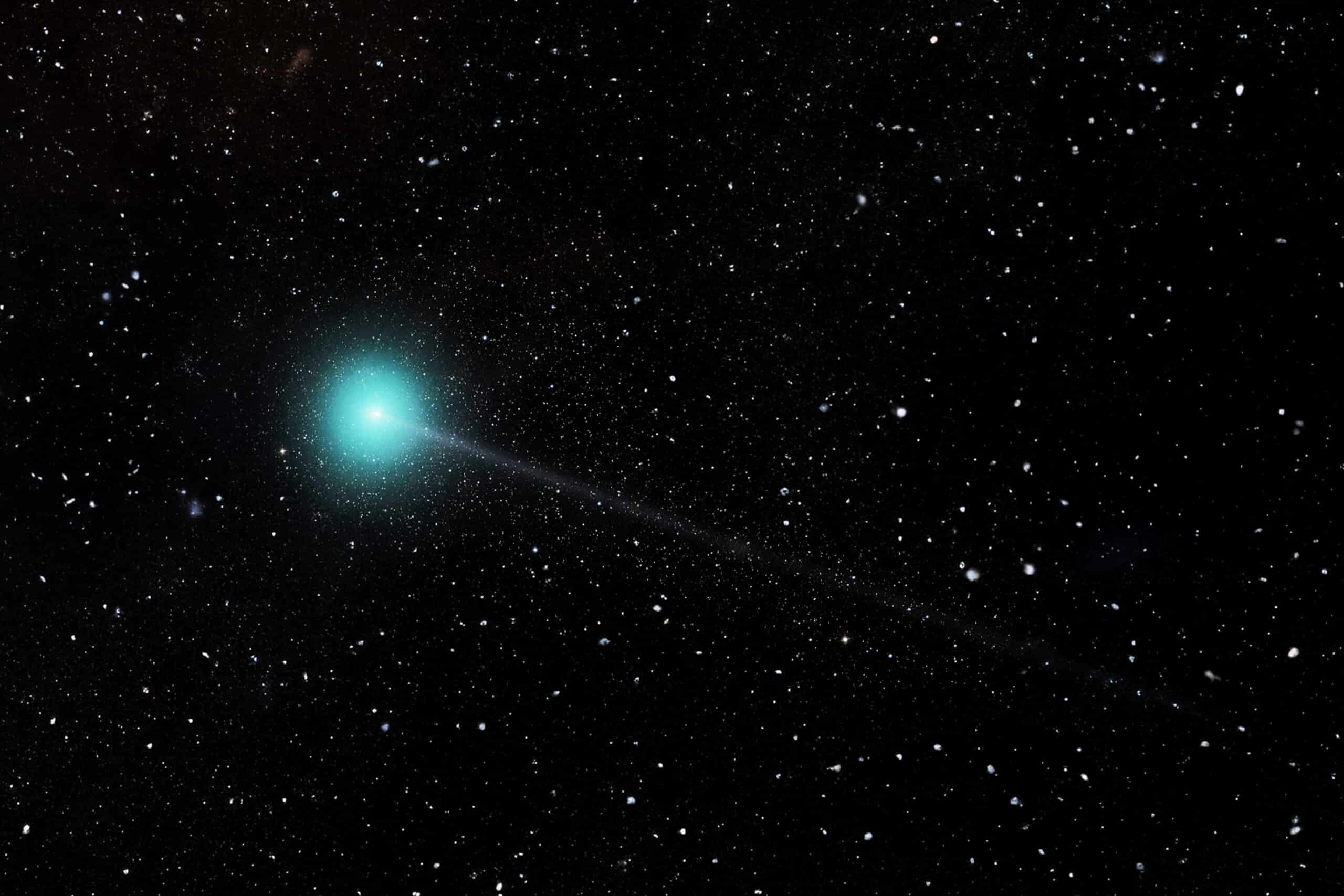
An anomaly detected in the interstellar comet 3I/ATLAS on November 5, 2025 has generated intense debate among astronomers about its composition and behavior. The object, which travels through our Sistema Solar, presented an unprecedented structure that challenges current models about celestial bodies coming from other stars, mobilizing observatories around the world.
Discovered in July by the ATLAS telescope, at Chile, the comet drew attention because it displayed a tail that pointed directly at Sol, a rare phenomenon known as an antitail. Essa characteristic, however, suddenly disappeared, giving way to a conventional ion tail more than 56 thousand kilometers long.
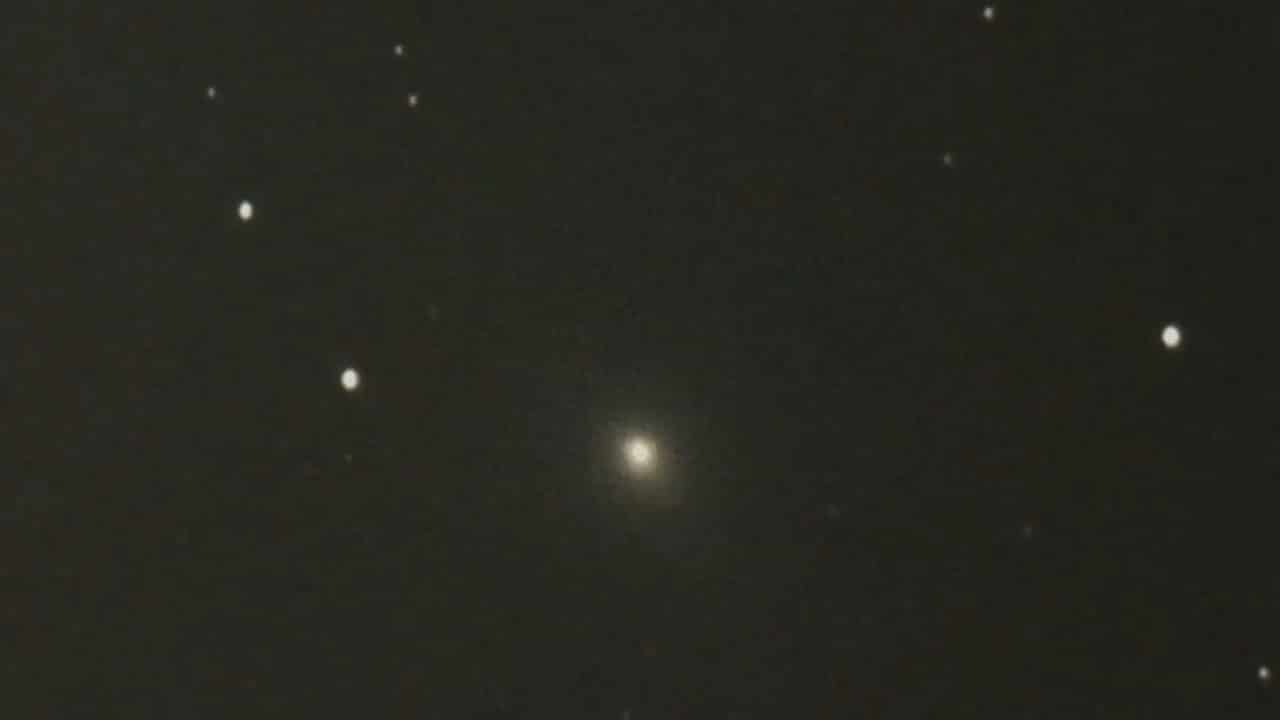
Nasa confirmed that the object will pass at a safe distance of 270 million kilometers from Terra, without any risk of impact. Continuous Observações have been held since the comet reached perihelion, its closest point to Sol, on October 29, with Telescópio Espacial James Webb revealing details about its gaseous composition.
Initial discovery and hyperbolic trajectory
The comet was first identified on July 1, 2025, by the ATLAS tracking system at Río Hurtado, Chile. Analysis of its orbit revealed a sharp hyperbolic trajectory, confirming that its origin is outside the Sistema Solar and that it moves at a speed of 58 kilometers per second.
Astronomical calculations indicate that 3I/ATLAS traveled for millions of years through interstellar space before entering our system. Sua’s journey will continue, and in March 2026, it will approach Júpiter at a distance of 50 million kilometers, an encounter that could significantly alter its exit route.
Chemical composition reveals mysteries
The spectral analysis performed by Telescópio James Webb provided a surprising chemical profile, different from our system’s native comets. The data point to a dominance of carbon dioxide over water in its composition, as well as traces of cyanide and an unusual nickel alloy, suggesting that the body formed in a very distinct stellar environment. In November, radio signals were detected at frequencies of 1.665 GHz and 1.667 GHz, marking the first time that an interstellar comet was detected in this range, indicating the presence of volatiles preserved since its origin. Observações from Telescópio Espacial Hubble estimated that its core has a diameter between 320 meters and 5.6 kilometers. During its passage through perihelion, the comet lost around 13% of its mass, which resulted in an acceleration greater than that expected solely from the influence of the solar wind, adding another layer of complexity to its dynamic behavior.
Changes in structure observed
Images captured by Nasa on November 3rd clearly recorded the jet of material that formed the antitail, projecting against the direction of Sol. Este phenomenon is generally explained from the perspective of observing larger dust particles, but its intensity in 3I/ATLAS was considered atypical.
Just two days later, on November 5, the structure disappeared completely. In its place, an extensive ion tail quickly developed, stretching tens of thousands of kilometers in the opposite direction to Sol, following the expected pattern.
This abrupt transition challenges conventional explanations based solely on gas sublimation. Acredita It is believed that charged particles interacted in an unusual way with the solar magnetic field, and probes such as SOHO and STEREO-A recorded the event between September and October, providing crucial data for the analysis.
Reactions from the scientific community
The behavior of 3I/ATLAS is described by astronomers as extremely difficult to model with current theories, forcing research teams to rethink hypotheses about the ejection of objects from their home stellar systems. The extreme polarization of the light reflected by the dust suggests an alignment of particles never before observed in other comets, whether interstellar or from our own system.
Astrophysicist Avi Loeb, of Universidade of Harvard, known for exploring hypotheses of technological origins for space anomalies, raised the possibility, although without any concrete evidence. Enquanto this, formal scientific debate takes place in specialized bulletins, such as Minor Planet Center’s MPEC 2025-U142, where data is shared and analyzed by experts globally.
Observations by space telescopes
Telescópio James Webb estimated hydroxyl emission activity within 450 million kilometers of Sol, providing a measure of the amount of water sublimating from the core. Simultaneamente, data from Telescópio Espacial Hubble revealed an irregular rotation, a feature that was later identified in TESS satellite files dated May 2025, indicating that the object was already unstable months before its closest approach.
During the comet’s approach, the MAVEN probe, which orbits Marte, captured variations in the nucleus’s brightness. Essas measurements are critical to establishing a basis for direct comparison with the two previous interstellar visitors, ‘Oumuamua and 2I/Borisov, helping to build a more complete profile of the diversity of these objects. On November 11, Telescópio Óptico Nórdico, in Ilhas Canárias, recorded intense bluish tones, and the tail grew three million kilometers in a few days, driven by accelerated sublimation.
Planetary interactions and final destination
In March 2026, the trajectory of 3I/ATLAS will bring it to a significant approach to Júpiter. The immense gravitational influence of the gas giant will alter its route considerably.
Computational simulations predict that this interaction will act like a gravitational slingshot, modifying the speed and direction of its exit from the Sistema Solar.
In October 2025, the comet had already been recorded by probes in Marte, such as Mars Reconnaissance Orbiter, when it passed 27 million kilometers from the red planet, providing high-resolution images.
These planetary interactions, although they pose no risk, are valuable opportunities to study the dynamics of interstellar objects and refine orbital prediction models.
Implications for interstellar studies
Comet 3I/ATLAS offers a unique opportunity to study materials from another star system, functioning as a time capsule. Anomalias as its acceleration and chemical composition challenge the understanding of the formation of comets in protoplanetary disks, suggesting that the processes may be more varied than previously thought. The object will leave Sistema Solar with no expected return, but the data collected will continue to be analyzed for years.



