
NASA reveals four crucial discoveries about the interstellar comet 3I/ATLAS in press conference

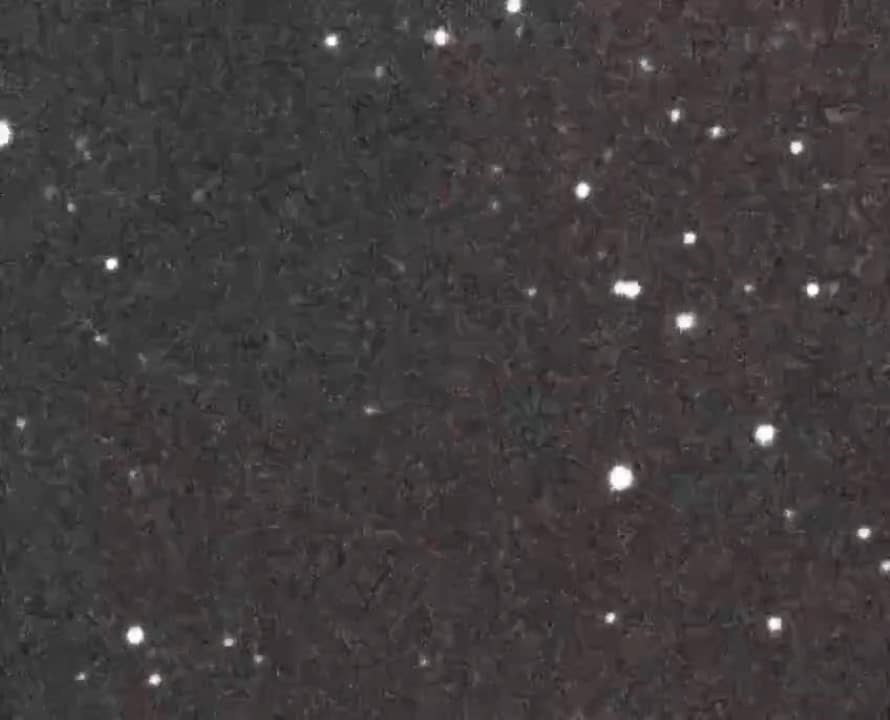
NASA confirms that the interstellar comet 3I/ATLAS has a natural origin and shows no signs of extraterrestrial technology. The agency released the first results of a coordinated campaign with more than 20 space missions during a press conference held last week. The object, discovered on July 1, 2025 by the ATLAS telescope at Chile, is the third confirmed interstellar visitor.
The observations eliminate speculation about a possible alien spacecraft that emerged on social media. The comet maintains a minimum distance of 270 million kilometers from Terra and does not pose a risk. The current trajectory predicts passage through the orbit of Júpiter in the spring of 2026.
- Campaign involved ground and space telescopes in different positions
- Combined data forms the most complete picture of the object to date
- Analyzes remain ongoing with new observations expected
Proven natural origin
Agency authorities highlighted that all the characteristics observed correspond to a common comet. Associate Administrator Amit Kshatriya stated that the object exhibits typical comet appearance and behavior.
Nicky Fox, from Diretoria from Missões Científicas, reinforced that no instrument detected a technological signature. The safe distance from the planet eliminates any possibility of collision or direct threat.
Coordinated Observation Campaign
NASA organized joint action in August to overcome initial observation difficulties. The comet was on the opposite side of Sol from Terra at the time of discovery.
More than 20 missions participated in the effort, including probes in orbit at Marte and others on distant trajectories. Cada spacecraft contributed images and data from different angles.
The comparison used by scientists equates the process to watching a sporting event from various points in the stadium. The information collected allows three-dimensional reconstruction of the coma and tail.
Different chemical composition
The Telescópio Espacial James Webb recorded a high proportion of carbon dioxide in relation to water. Essa characteristic surpasses levels observed in comets in the solar system.
The presence of gas rich in nickel in relation to iron also draws researchers’ attention. The dust has grains of a different size than the local standard.
The initial behavior of dust directed towards Sol before being repelled by solar radiation lasts longer than usual. Esses aspects indicate formation in a more intense radiation environment.
The core is estimated to be between 427 meters and 5.6 kilometers in size, according to images from Hubble. The coma is pear-shaped in some observations.
Window into ancient planetary systems
The speed of entry into the solar system suggests a long interstellar trajectory. Evidências points to their origin in a stellar system older than the solar system.
The material carried by the comet offers a rare opportunity to study the chemical composition of another planetary system. The advanced age of the object expands the historical scope of the analyses.
Images obtained by multiple probes
The Mars Reconnaissance Orbiter probe captured the comet as a diffuse white sphere 145 million kilometers away. The MAVEN mission detected ultraviolet signals from hydrogen 32 million kilometers away.
The Psyche mission recorded a faint spot at 53 million kilometers in September. The Lucy probe observed the coma and tail in the opposite direction, assisting in 3D modeling.
The SOHO observatory identified the object in October despite the expected low luminosity. Telescópio James Webb provided first infrared image of interstellar visitor.
The combined data makes it possible to estimate water production rates and map dust structure. The campaign demonstrates the agency’s ability to respond quickly to rare events.
The analysis remains in its initial phase, with new observations scheduled for the coming months. The comet continues on its way out of the solar system after perihelion.



