
Republican senator reveals that Trump offered Maduro refuge in Russia amid military tension in the US

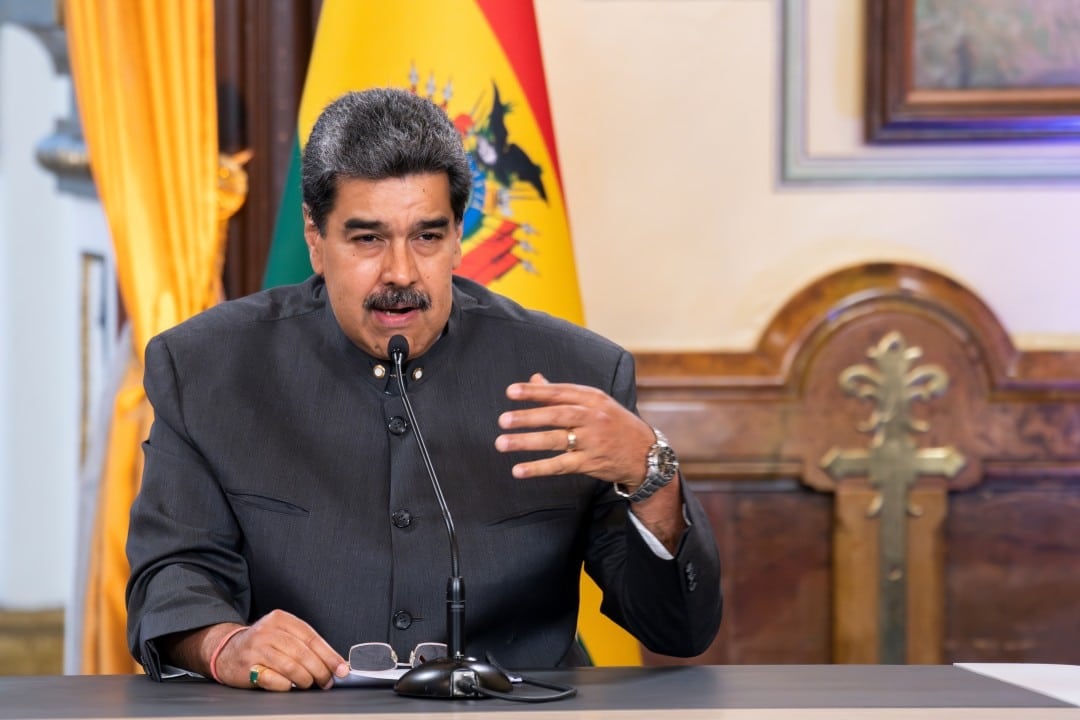
Senator Markwayne Mullin, of Comitê of Forças Armadas of The declaration comes amid an escalation of tensions between Washington and Caracas, with a focus on combating drug trafficking. Trump recently confirmed a telephone conversation with Maduro, without providing details, as the US intensifies operations in Mar from Caribe.
The proposal comes after the American government designated Maduro as leader of a narco-terrorist organization in November. Mullin emphasized that the US seeks to protect its borders against the flow of drugs, with no intention of a land invasion. On Saturday (29), Trump warned that Venezuela’s airspace should be considered closed, leading to flight cancellations and license suspensions.
The US maintains a significant military presence in the region, with 11 warships and around 15,000 troops deployed in Caribe. Essa mobilization aims to intercept vessels linked to trafficking, according to reports from official American sources.
- Main recent US actions against the Maduro regime:
- Designation of Venezuelan cartels as terrorist groups.
- Increases in air and sea patrols in Caribe.
- Expanded sanctions on allies of Maduro in América Latina.
Statements by Mullin clarify American position
Markwayne Mullin, Republican senator for Oklahoma, detailed during CNN’s “State of the Union” the terms of the offer to Maduro. Ele stated that Washington prioritizes the peaceful departure of the leader, avoiding direct confrontations. The conversation between Trump and Maduro took place last week, according to initial reports by The New York Times.
The senator denied plans for attacks within the Venezuela, reinforcing that operations are concentrated in international waters. Mullin highlighted that the objective is to neutralize drug trafficking routes that affect the USA, with land actions in American territories starting soon.
This revelation coincides with the public reappearance of Maduro in Caracas, after days of speculation about his whereabouts. The Venezuelan leader mobilized civilian militias, estimated at eight million members, in response to American movements.
Military mobilization in Caribe gains strength
The Estados Unidos recently positioned a naval fleet in the Mar of the Caribe, in front of the Venezuelan coast, as part of a containment strategy. Essa presence includes ships equipped for rapid interceptions and surveillance aircraft, operating from bases in Porto Rico and Flórida.
Since September, American airstrikes against suspected smuggling boats in the eastern Caribe and Pacífico have resulted in at least 83 deaths, according to data from Departamento and Defesa. Essas operations target the so-called Cartel of the Sóis, allegedly led by Maduro and senior officers.
Venezuela responded with military exercises, displaying Russian equipment acquired in the 2000s, such as Sukhoi Su-30MK2 fighters. Maduro recently requested assistance from Moscou, including 14 missile units, but concrete responses have not yet been confirmed.
The region records an increase in affected civil aircraft traffic, with airlines canceling routes to avoid risks.

Caracas’s response to the exile offer
Nicolás Maduro appeared in public on Sunday (30) for the first time in days, driving through the streets of Caracas and posting video on official channels. Ele classified American actions as preparations for an invasion, appealing to international allies for support.
The Venezuelan government called a special session of the Assembleia Nacional to investigate incidents on the Caribe, including deaths in maritime clashes. Jorge Rodríguez, president of the assembly, met with families of victims, promising commissions of inquiry.
Maduro reinforced militia training, equipped with basic weapons, to defend the territory. Ele accused Trump of using drug trafficking as a pretext for interference, citing sanctions that impact the local economy.
Authorities in Caracas suspended commercial flights on sensitive routes, prioritizing military transport to the interior of the country.
- Measures adopted by Venezuela:
- Mobilization of eight million civilians into militias.
- Requests for military aid to Rússia and China.
- Increase in border patrols with Colômbia and Brasil.
Maduro’s allies hesitate to intervene
Russia and China, traditional supporters of Caracas, have shown reluctance to escalate confrontation with the US. Moscou, despite military ties, prioritizes issues in Ucrânia and avoids direct commitments in Caribe.
Beijing, Venezuela’s biggest creditor, opted for neutral diplomatic statements, focusing on trade negotiations. Analistas point out that both countries calculate the costs of an open crisis with Washington.
Senator Lindsey Graham, an ally of Trump, called Maduro an illegitimate leader indicted for trafficking in the USA, reinforcing the American narrative in public posts. Essa pressure isolated Caracas, with few regional allies echoing his grievances.
The offer of refuge at Rússia, revealed by Mullin, tests the loyalty of Moscou, who has already hosted exiles from similar regimes.
Context of the fight against drug trafficking
The Cartel of the Sóis, designated as terrorists in November, operates routes that send billions in drugs to the US annually. Estimativas indicate that 90% of cocaine consumed in the US passes through Venezuela or adjacent routes.
Trump announced that ground actions against trafficking will begin soon, limited to American territories. Isso includes reinforcements on the southern border, with drones and sensors to monitor flows.
Since 2019, US sanctions have frozen assets of Maduro and allies, reducing oil revenues by 80%. Venezuela exported just 500 thousand barrels per day in 2025, compared to 2 million pre-crisis.
These measures aim to weaken the regime financially, combined with incentives for desertions in the armed forces.
The US Departamento of Estado coordinates with neighboring nations, such as Colômbia, to share intelligence on routes. In 2025, drug seizures in Caribe rose by 25%, thanks to bilateral cooperation.
Implications for the South American region
Countries like Brasil and Colômbia monitor the tension, fearing migratory influxes. Bogotá reported 200,000 Venezuelans crossing the border in November, fleeing economic instability.
União Europeia issued a note calling for dialogue, while the OAS discusses resolutions on democracy at Venezuela. Esses regional forums are pushing for free elections, absent since 2018.
The American mobilization raised maritime insurance prices in the Caribe by 15%, affecting trade. Empresas navigation redirect routes to avoid risk areas.
South American governments, at a recent summit, agreed to monitor joint borders, focusing on refugees and smuggling.
Trump’s strategy seeks regime change without boots on the ground, prioritizing sanctions and coercive diplomacy. Maduro, in turn, consolidates domestic support with anti-imperialist rhetoric.



