
Sun displays record active area in size and prepares blanket of geomagnetic tranquility for December 1st


A new active region in Sol, with an area of 800 solar units, emerged on Sunday, November 30, 2025, and is positioned as the third largest of the year. Especialistas of Laboratório of Astronomia Solar of Instituto of Pesquisa Cósmica and of Instituto of Física of In the Khanty-Mansi Autonomous District (KhMAO), in Rússia, the solar phenomenon raises alerts for residents sensitive to geomagnetic variations.
The event takes place on the eve of the first day of winter in the northern hemisphere, with Sol in its 25th cycle of activity, which reaches irregular peaks. The formation of region 4294, detected in the south of the solar disk, could influence the Earth’s magnetosphere in the coming days.
The tranquility expected for this Monday, December 1st, offers a brief respite after recent unrest.
- Probability of magnetic storm: 3%.
- Disturbed Field Chance: 15%.
- Calm state of the magnetosphere: 82%.
Formation of the active solar region
Scientists have been observing the evolution of the new active area since last week, with initial detections of magnetic protrusions. The size of the formation, equivalent to 800 solar area units, surpasses many recorded in 2025 and rivals the largest of them, region 3664, from May 2024.
Telescopic instruments captured elevated plasma loops, which indicate potential instability, although no immediate eruptions.
The rotation of Sol brings the region into better visibility in the coming days, allowing for more accurate analysis.
Forecast for December 1st
The geomagnetic index Essa reduction reflects the absence of coronal mass ejections directed at Terra at this time.
The period of stability lasts until dusk, with the Earth’s magnetic field at minimum levels of disturbance.
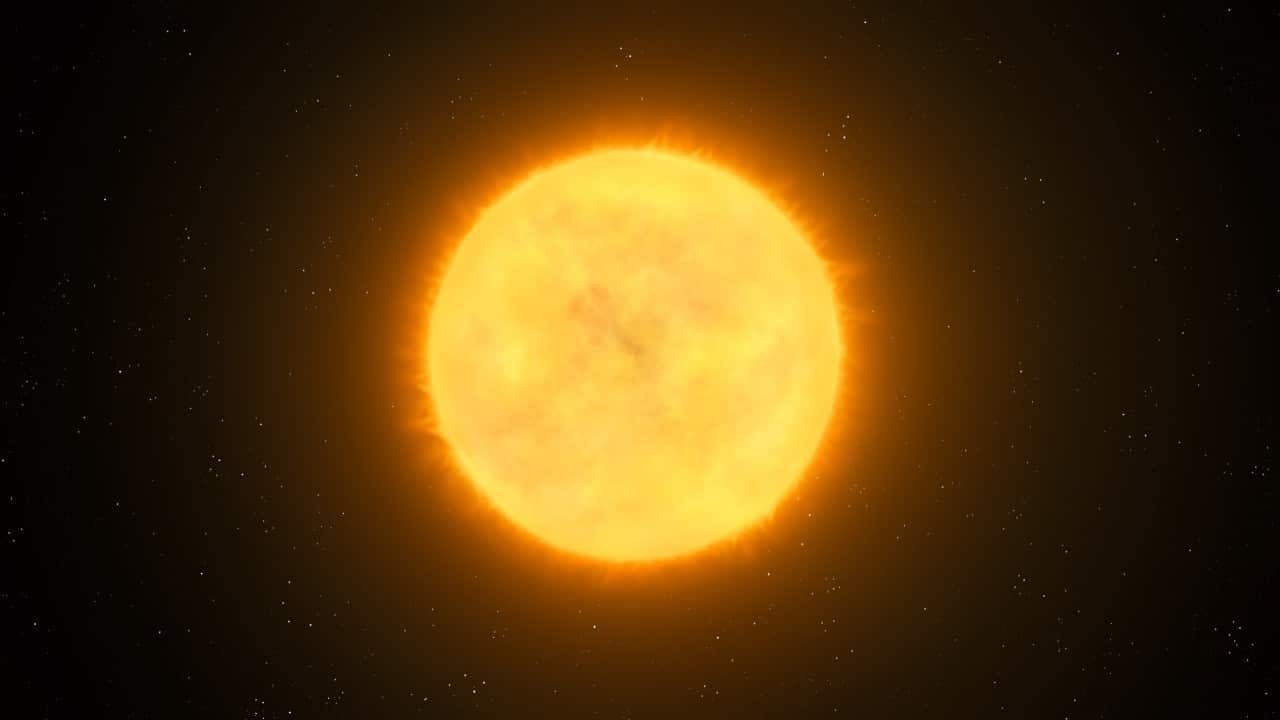
Continuous monitoring of magnetic loops
The magnetic loops formed in the active region represent field arcs that can release energy in flares. Observações daily data since Sunday confirm the presence of elevated structures, but no visible sunspots yet.
This configuration suggests a gradual warming cycle, common in areas emerging from Sol.
Experts predict that visibility will increase with solar rotation, increasing future risks.
Preliminary analysis indicates that the loops do not threaten immediate eruptions, but require constant vigilance.
Expected impact on the magnetosphere
The Terra magnetosphere responds to solar variations with fluctuations in the Kp index, which measures disturbances from 0 to 9. Para o KhMAO, the drop to Kp=1 means minimal interference in communication and navigation systems.
The current solar event, although large in scale, does not align charged particles directly with the planet at this early stage.
Possible effects on residents of KhMAO
People sensitive to geomagnetic changes in the district, which covers more than 500,000 square kilometers, may notice temporary relief in symptoms. The low index reduces the risk of headaches or fatigue associated with previous peaks.
The local population, estimated at 1.7 million, includes workers in extraction industries who rely on interference-sensitive equipment.
Outlook for the coming days
The calm on December 1st contrasts with forecasts for the subsequent period, including a moderate G2 storm forecast for December 3rd and 4th. Essa elevation results from a coronal ejection associated with an X1.9 flare recorded in the early hours of December 1, from region 4299.
NOAA’s Centro of Previsão of Tempo Espacial issued an alert for G2, with the potential for aurora borealis visible in mid-latitudes.
Origin of solar formations
Sol, in its 11-year cycle, produces active regions by twists in its internal magnetic dynamo. The formation of 800 units arises from convective flows that concentrate opposing magnetic fields, leading to loops and possible reconnections.
In the 25th cycle, started in 2019, Sol has already recorded class X flares that caused G4 storms in November 2025.
The third largest area of 2025 reinforces the upward phase, with peaks expected until 2026.
This dynamic explains the recent detection, observed by telescopes such as Learmonth at Austrália.
Preparing for future variations
Although the 1st offers stability, monitoring regions such as 4294 and 4274, which return to the visible disk, is essential. Essas areas can generate ejections that reach Terra in 2 to 4 days.
Authorities at research centers recommend tracking via global indices for adjustments to operations.
The 2025 history includes storms that affected satellites and electrical grids in November events.
Technical details of the observation
The December 1 X1.9 flare, peaking at 02:49 UTC, releases energy equivalent to billions of atomic bombs. Associada to region 4299, it propels particles that can disrupt the ionosphere.
The F10.7 solar radioflux index reached 166 units, signaling high general activity.
This data, collected by international networks, guides forecasts for the KhMAO and nearby Arctic regions.
Evolution of region 4294
Region 4294, detected on the eastern limb of Sol, exhibits activity complexes that rotate toward the center of the disk. Observações in far ultraviolet reveals plasma boiling in the last 24 hours.
Its emergence coincides with the return of another active area, ex-4274, responsible for previous flares.
Scientists highlight that multiple regions can synchronize ejections, magnifying geomagnetic impacts.
Full visibility occurs in the coming days, increasing scrutiny over potential flares.
Context of the current solar cycle
The 25th solar cycle, on the rise, has already exceeded expectations with G3 and G4 storms in 2025. Registros show that active areas such as 800 units contribute to 70% of annual coronal mass ejections.
In KhMAO, past events correlate with variations in local magnetometer readings.
The forecast for December includes at least five days of activity above Kp=4, concentrated in the second fortnight.
This trend reinforces the need for daily updates on global monitoring portals.




