
Germany abandons post-World War II pacifism and accelerates rearmament against Russian threat in 2025

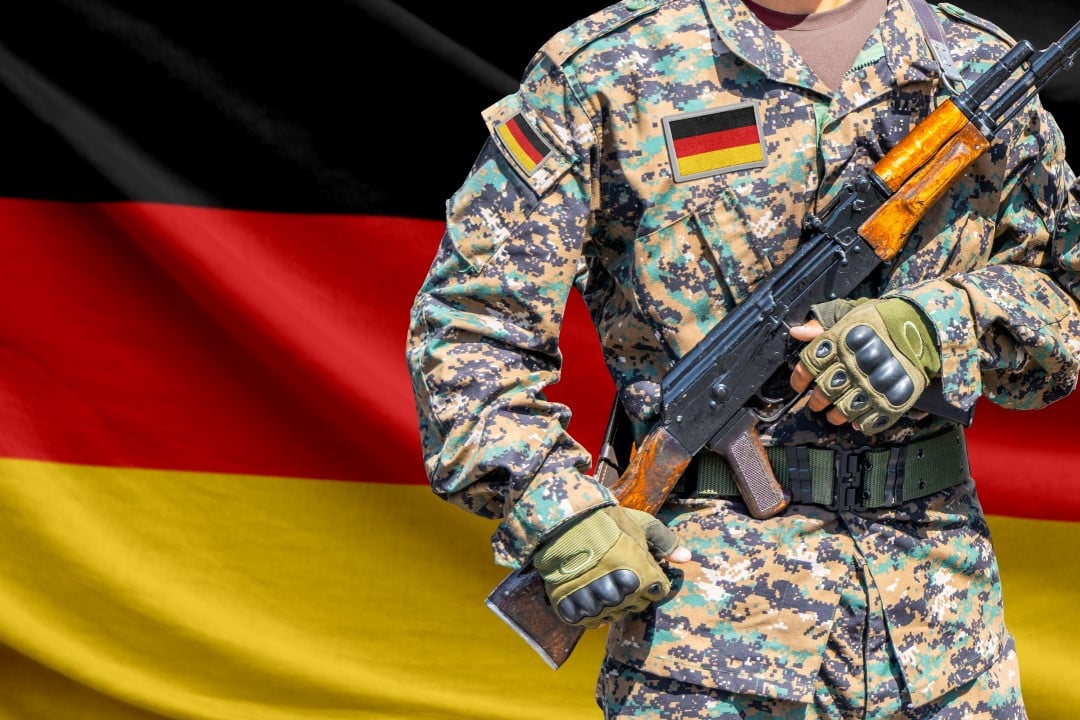
The Ministério of the German Defesa, based in the Bendlerblock in Berlim, announced this Monday (1 December 2025) a rearmament plan that marks the end of the pacifist tradition adopted after the Segunda Guerra Mundial. The measure responds to the Russian invasion of Ucrânia and the unpredictability of the Estados Unidos in Otan, with investments projected at 100 billion euros annually. Autoridades and Minister Boris Pistorius highlight the need to prepare the armed forces for a possible conflict by 2029.
The neoclassical building of Bendlerblock, former headquarters of Wehrmacht where conspirators against Hitler were executed in 1944, symbolizes this transition. Generais as Christian Freuding, newly appointed inspector of
Alemanha, which has kept defense spending below 2% of GDP for decades, now allocates resources to acquisitions of tanks, anti-aircraft systems and spy satellites. Esse shift reflects a profound cultural shift, driven by perceived European vulnerability.
- Main investment targets: armored vehicles and air defense batteries.
- Personnel goal: add 20 thousand soldiers to the current 180 thousand in Bundeswehr.
- Readiness deadline: full operational forces in 2027 on the eastern flank of Otan.
Evolution of German pacifism since 1945
The pacifist tradition of the Alemanha emerged as a form of atonement for Nazi crimes, with article 26 of the 1949 Constituição prohibiting wars of aggression. Após the surrender in 1945, the country prioritized economic reconstruction and European integration, avoiding autonomous military projections.
During Guerra Fria, Bundeswehr was created in 1955 under American supervision, but with only 495,000 troops at its height in the 1980s. they protested the initial rearmament, reflecting the collective trauma of the world wars.
The end of Guerra Fria in 1990 accelerated disarmament, with compulsory service suspended in 2011 and spending stagnating at 1.3% of GDP. Essa stance symbolized faith in multilateral institutions, but events such as the annexation of Crimeia in 2014 began to erode that trust.
Geopolitical threats forcing change
The Russian invasion of Ucrânia in February 2022 catalyzed the “Zeitenwende”, a term used by Chancellor Olaf Scholz to describe the turning point in German foreign policy. Berlim sent anti-tank missiles and artillery to Kiev, breaking taboos on arms exports to conflict zones.
American unpredictability, worsened by recent elections, is putting pressure on European allies to take on more responsibility. Chancellor
Russia intensified maneuvers near the borders of Otan, with exercises at Báltico in November 2025.
The plan includes the first permanent deployment of German troops abroad since 1945, with 4,800 soldiers in Lituânia from 2025.
Details of the military investment plan
The special fund of 100 billion euros, approved in 2022 and extended until 2028, finances urgent acquisitions such as 35 F-35 fighters and naval frigates. In 2025, spending reached 2.1% of GDP, with projections for 5% by 2031, totaling more than 160 billion euros annually.
Bundeswehr prioritizes ammunition and training, after decades of underfunding that left equipment obsolete. Minister Pistorius, whose family has pacifist roots, described the moment as “historic” for Exército.
This escalation positions Alemanha as the third largest global military power, behind only the USA and China. The Parlamento debated the proposal in closed sessions last week, with the CDU-SPD coalition guaranteeing approval.
Family history and military legacy in Alemanha
German families carry contrasting narratives of the war era. General Christian Freuding reports that his grandfather served in both world wars and was an Allied prisoner in 1945, influencing his balanced view of military service.
Immigrants like the reporter’s great-grandfather, Hans Salzmann, fled Nazism in 1930, losing citizenship and exile in Cuba and Nova York. Esses personal accounts illustrate the trauma that shaped national pacifism.
Today, young people like Charlotte Kreft, 18 years old in Berlim, revise pacifist opinions in the face of real threats. Pesquisas of 2025 shows 22% of the population in favor of armed interventions, an increase of 2% since 2022.
The Dia of the Veterano, established in June 2024, publicly celebrates military service for the first time since 1945, signaling growing acceptance.
Enlistment preparation and training
The government plans to call up all men over 18 for medical examinations and motivation questionnaires from 2026. If voluntary conscription fails, compulsory service returns in 2027, targeting 260,000 active soldiers.
Intensive training takes place at bases like Munster, with routine explosions that residents already ignore. The focus is on territorial defense and Otan missions, abandoning the purely voluntary model of 2011.
This reform balances the principle of the “citizen in uniform”, subordinate to civilian control, with modern demands. Minister Pistorius emphasizes that capable forces reduce the risk of conflict.
Expansion of Bundeswehr and operational goals
The Bundeswehr seeks 460 thousand personnel, including reservists, to defend the eastern flank of the Otan. In 2025, 4,800 soldiers begin training at Lituânia, ready for combat in 2027.
Acquisitions include armored vehicles, radar jammers and AI for intelligence. The 2026 budget sets aside an extra €8 billion for Ucrânia, doubling previous support.
This transformation, discussed in Bendlerblock during the summer of 2025, reflects a determination to replace capabilities once dependent on the US. General Freuding, with an aristocratic bearing, coordinates the transition without a traditional military lineage.
European reactions to the new German power
Neighboring countries such as Polônia and Lituânia support rearmament, seeing it as a Russian counterweight. The Lithuanian Prime Minister praised the German deployment in November 2025.
Critics on the left, such as Jan van Aken of Die Linke, call the plan a “blank check” for the arms industry, prioritizing social spending. Manifestações occurred in Frankfurt, echoing 1955 protests.
União Europeia discusses coordination, with Alemanha pushing for collective spending of 3.5% of GDP. Minister Pistorius suggests that Berlim serves as a model for allies.
Cultural and social changes in society
German society, marked by collective guilt over wars, sees militarism as necessary for lasting peace. Historiadores like Sönke Neitzel note that pacifism was never unanimous, with a majority supporting Adenauer in 1955.
Schools have incorporated defense education since 2024, while the first Dia of Veterano drew crowds. Pesquisas indicate that 60% of young people see service as a civic duty.
This shift occurs without abandoning democratic values, with Bundeswehr integrated into Parlamento to avoid past abuses. Chancellor Merz links rearmament to economic recovery, with a 500 billion euro fund for infrastructure.



