
Last supermoon of the year lights up the sky on December 4th with 30% greater brightness before Geminid meteors

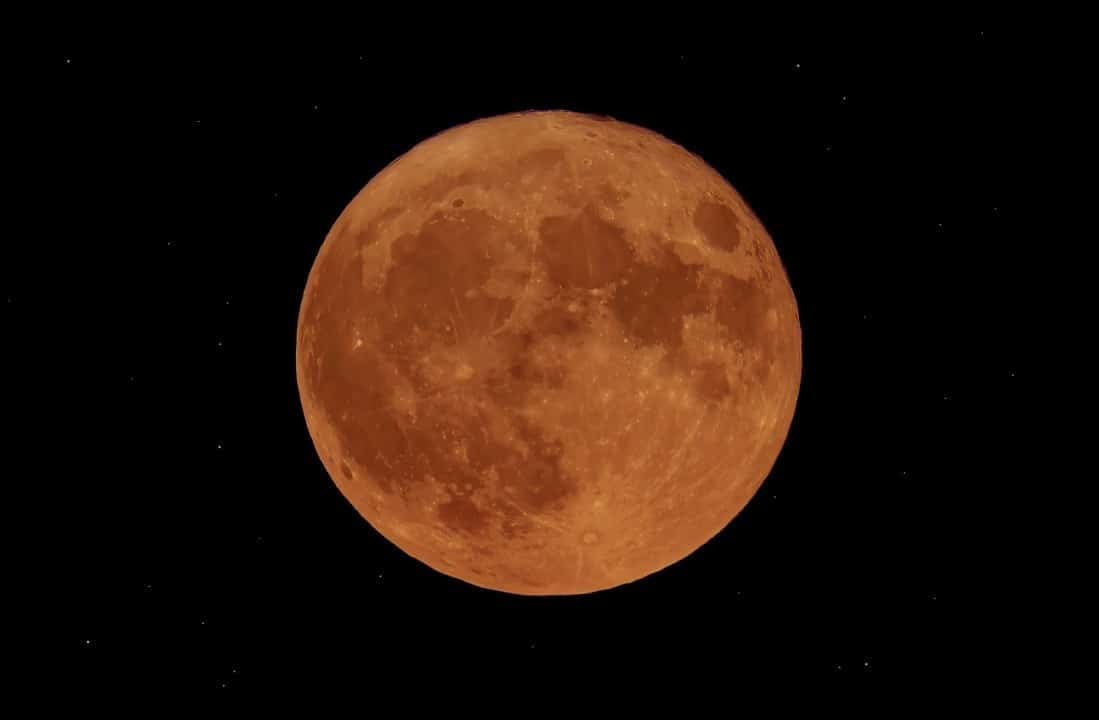
December begins with a remarkable lunar phenomenon. The supermoon occurs on the night of December 4, when the full Lua reaches perigee, its closest point to Terra. The event marks the third and final supermoon of the year, visible across the entire Brazilian territory without special equipment.
Astronomers predict that the natural satellite will appear 14% larger and 30% brighter than an ordinary full Lua. The exact distance reaches 357,219 kilometers, creating an accessible spectacle after sunset.
- Peak brightness at 8:14 pm at Brasília time;
- Visible for three consecutive nights, December 3-5;
- Origin of the name “Lua Fria” refers to indigenous traditions in the Hemisfério Norte.
Other events complement the month, such as the approach of Mercúrio on December 7th.
Origin of the supermoon and regional visibility
The alignment between the full phase and perigee defines the phenomenon. Essa orbital coincidence occurs three times in 2025, with the one in December standing out for its height in the sky.
In Hemisfério Sul, the rise of Lua gains emphasis due to the equatorial position. Observadores in São Paulo see the event at around 6:45 pm, while in Recife it occurs at 5:28 pm, adjusted to the local time zone.
Regions with clear skies favor observation. Poluição Bright in urban areas reduces contrast, but peripheral parks offer adequate conditions.
Geminid Meteor Shower Details
The Geminídeos meteor shower activates from December 4th to 20th. Seu peak occurs on the night of the 13th to the 14th, with a predicted rate of 60 to 120 meteors per hour in ideal skies.
Unlike comet showers, the Geminídeos come from the asteroid 3200 Phaethon. Partículas of debris burns in the atmosphere, producing multicolored luminous streaks, from white to green.
The waning Lua, with 3% illumination, minimizes interference. The radiant is located in the constellation Gêmeos, visible after 10pm.
Favorable conditions for observing the supermoon
Choose elevated locations with a clear horizon to the east. The phenomenon begins at dusk, when Lua appears enlarged against the twilight sky.
Binoculars highlight lunar craters and maria. Fotógrafos capture the effect with long exposures by setting ISO to 100-400.
- Avoid times of intense air traffic;
- Check cloud forecast via weather apps;
- Amateur astronomy groups organize events in national parks.
Climatic factors influence it, but December tends to be stable at Sul and Sudeste.

Peak of the Geminids and duration of the event
The meteors intensify after midnight on December 13th. Atividade maximum persists until dawn on the 14th, covering the sky in all directions.
Each meteor travels at 35 km/s, leaving trails of up to two seconds. By 2025, lunar conditions will increase visibility to 90% of maximum potential.
Observers count 50 to 80 dashes per hour on Brasil. The event spans 24 hours, allowing for extended night sessions.
The asteroidal origin guarantees annual consistency. Historical Registros shows peaks above 150 in active solar years.
Other astronomical highlights of the month
December includes nine notable events. Mercúrio reaches maximum elongation on December 7, visible at sunset in the west.
Comet 3I/ATLAS approaches on December 19, the third interstellar detected. Telescópios small capture their tail in mid-latitudes.
- Jupiter shines brightly after December 20;
- Órion Nebula culminates on December 15 at midnight;
- Conjunction Lua-Pleiades on December 4 complements the supermoon.
These alignments enrich the calendar.
Strategies for maximizing meteor viewing
Position yourself in rural areas with little artificial light. Deite to cover 180 degrees of sky, focusing on the radiant after 2am.
Patience counts: meteors appear sporadically, but clusters occur near the peak. Registre with long exposure cameras for compositions.
- Take warm clothes for cold nights;
- Stay hydrated and avoid excessive caffeine;
- Apps like Stellarium guide constellations.
Dry climate favors, with ideal light winds.
Historical context of annual supermoons
Records date back to 1979, coined by astrologer Richard Nolle. Critérios vary: distance below 360 thousand km or 90% of perigee.
In 2025, the three supermoons follow a lunar elliptical pattern. The one in December, at 357 thousand km, surpasses the annual average in brightness.
Cultural traditions name: Lua from Morango into Sul, Influências gravitational effects affect tides by 20% more.
Astronomers monitor orbital variations for accurate predictions.
Practical preparation for celestial events
Plan routes to observation sites in advance. Verifique spindles: Brasília serves as a reference, but adjust to Amazonas or Acre.
Minimum equipment includes a red flashlight to preserve night vision. Compartilhe coordinates with local groups via online forums.
- Monitor updates from NASA or Observatório Nacional;
- Integrate families with educational activities;
- Register photos for networks, respecting copyright.
These measures elevate the collective experience.




