
NASA confirms natural origin of comet 3I/ATLAS and reveals unprecedented chemical composition in space campaign

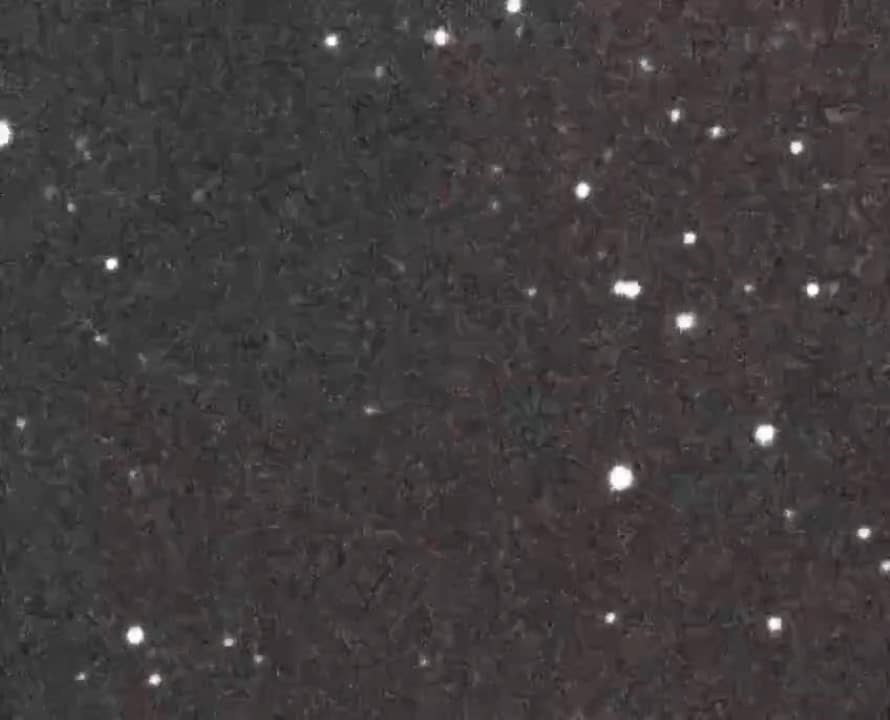
Agência Espacial Norte-Americana (NASA) announced the first results of the analysis of the interstellar comet 3I/ATLAS, confirming its natural origin and ruling out speculation about extraterrestrial technology. The discoveries were made possible by a coordinated observation campaign involving more than 20 missions and space telescopes, providing the most detailed view ever of an object from outside our solar system.
Discovered on July 1, 2025 by the ATLAS telescope, at Chile, the object is the third confirmed interstellar visitor to be detected by astronomers. The scientific mobilization sought to unravel the mysteries of the comet, which travels along a trajectory that does not pose any risk of collision with Terra, maintaining a minimum distance of 270 million kilometers from our planet.
Currently, 3I/ATLAS continues its journey out of the solar system, expected to cross the orbit of Júpiter during the spring of 2026. Analysis remains ongoing, with scientists from around the world poring over the data collected to better understand the formation of other planetary systems.
Analysis rules out any hypothesis of extraterrestrial technology
During the press conference, agency authorities were emphatic in stating that all characteristics observed in 3I/ATLAS are consistent with those of a common comet. Amit Kshatriya, associate administrator at NASA, highlighted that both the appearance and behavior of the object follow the standards expected for celestial bodies of this nature, eliminating any basis for theories about an artificial origin that circulated in digital environments. The comet’s visual appearance, although intriguing, does not deviate from known natural patterns.
Nicky Fox, from Diretoria of The safe distance at which the comet will pass Terra reinforces the absence of threats, allowing the scientific community to focus exclusively on its value as a rare sample from another star system.
An unprecedented observation campaign in space
The organization of a joint action in August was crucial to overcome initial observation difficulties. At the time of its discovery, the comet was positioned on the opposite side of Sol in relation to Terra, which limited visibility from ground-based observatories.
To overcome this obstacle, NASA mobilized more than 20 missions, including probes that orbit Marte and others on distant trajectories through the solar system. Cada one of these spacecraft contributed data and images captured from different angles.
This multifaceted approach allowed scientists to compile a three-dimensional view of the object. The analogy used by the researchers is that of watching a sporting event from various points in a stadium, which allows the detailed reconstruction of the comet’s coma and tail.
Chemical composition points to distinct star system
The analyzes carried out by Telescópio Espacial James Webb revealed a different chemical composition in 3I/ATLAS. Foi recorded a ratio of carbon dioxide to water significantly higher than that found in comets originating in our solar system.
Another highlight was the presence of gas rich in nickel compared to iron, an unusual characteristic. The dust released by the comet also has grains of a different size than the locally observed pattern.
The behavior of the dust, which was initially directed towards Sol before being repelled by the radiation, lasted longer than usual. Esses combined factors suggest that the comet formed in an environment with more intense radiation than that of our solar system.
The Telescópio Espacial Hubble images allowed the core’s size to be estimated at between 427 meters and 5.6 kilometers, a considerable range that is still being refined.
Multiple space probes contributed crucial data
The diversity of instruments involved in the campaign was fundamental to the success of the observation. The Mars Reconnaissance Orbiter probe, for example, captured the comet as a diffuse, white sphere at a distance of 145 million kilometers, while the MAVEN mission, also on Marte, detected signs of hydrogen in the ultraviolet at 32 million kilometers. In September, the Psyche mission recorded a faint spot at 53 million kilometers. The Lucy probe, in turn, observed the coma and tail in opposite directions, data that was essential for 3D modeling. The SOHO solar observatory managed to identify the object in October, and Telescópio James Webb obtained the first infrared image of an interstellar visitor, allowing it to estimate the rate of water production and map the structure of the dust.
Trajectory and speed of the interstellar object
The high speed with which 3I/ATLAS entered our solar system is strong evidence of its long journey through interstellar space. Analysis of its trajectory indicates that the comet probably originated in a star system older than ours.
This feature turns it into a time capsule, carrying material that offers a unique opportunity to study the primordial chemical composition of another planetary system, expanding the historical reach of astronomical analyses.
Unusual shape of the comet’s coma and nucleus
More detailed observations revealed that the comet’s coma, the cloud of gas and dust that surrounds the nucleus, has a pear shape in some of the images obtained. Essa atypical morphology is being studied to better understand the forces acting on the object.
[[_0]
Combining data from different telescopes helps to piece together a complex puzzle about the structure and dynamics of 3I/ATLAS, providing clues about its past and its journey to get here.
What scientists hope to discover next
The analysis of the data collected is only in its initial phase, and new observations are scheduled for the coming months, as the comet continues its trajectory out of the solar system. The scientific community hopes that future studies will reveal even more about the origin and evolution of 3I/ATLAS.



