
NASA detects anomalous structure in interstellar comet 3I/ATLAS, sparking scientific debate in 2025

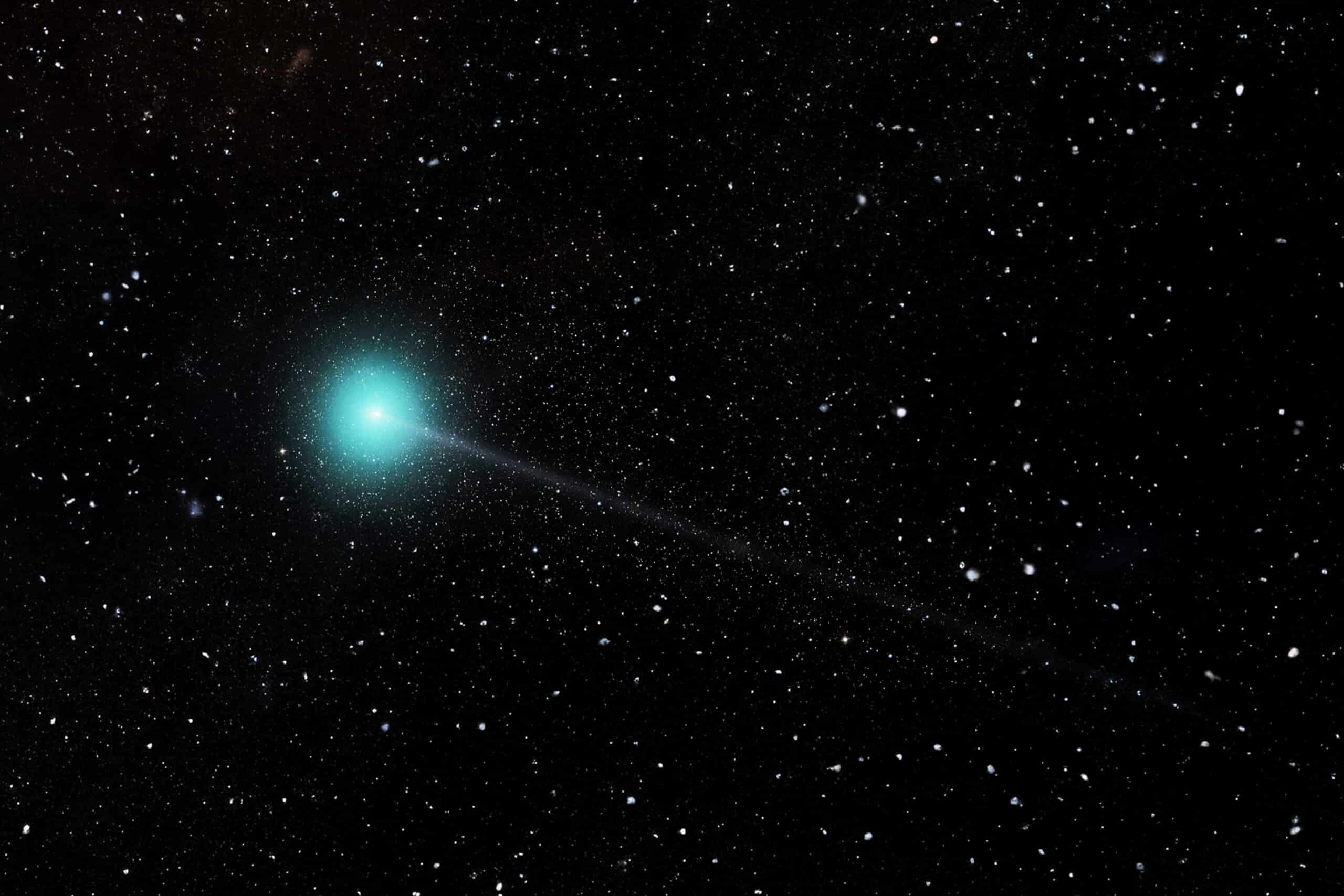
NASA identified an anomalous structure on the interstellar comet 3I/ATLAS on November 5, 2025, triggering an intense debate among astronomers about its origin and behavior. Este celestial body, observed by the ATLAS system since July, exhibits a peculiar fragmentation pattern never before seen in comets, extending for more than 56,000 kilometers, an event that challenges existing astronomical models and offers a unique opportunity to study celestial objects from outside our solar system.
The anomaly raises fundamental questions that intrigue the scientific community:
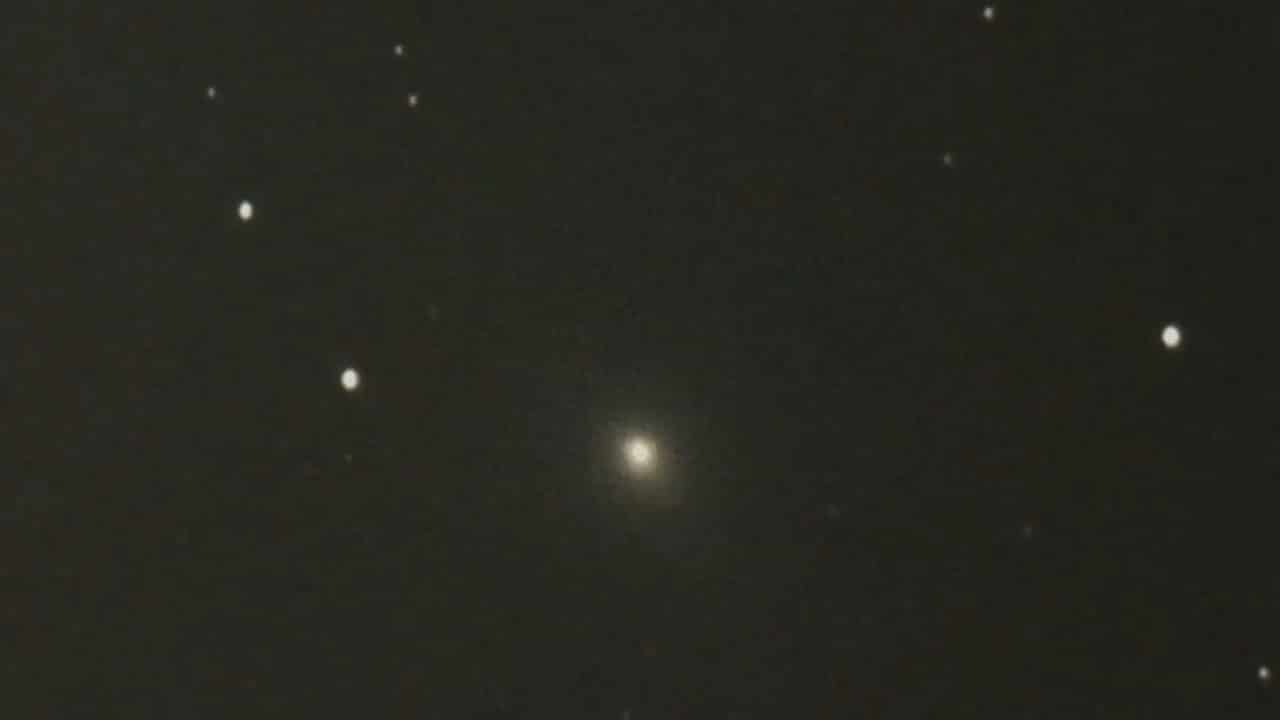
Scientists at Universidade Northwestern estimate that the comet traveled 2.7 billion kilometers from its home system. Observações detailed images from the Hubble space telescope revealed clear, symmetrical gas emission, indicating a unique event that deserves in-depth investigation.
Discovery and initial trajectory
The ATLAS system (Asteroid Terrestrial-impact Last Alert System) detected 3I/ATLAS on July 1, 2025, from its observatory on Haleakala. Subsequent Análises promptly confirmed its hyperbolic trajectory, an unequivocal indication of its extrasolar origin and its nature as a visitor to other stars.
This celestial body moves at an impressive speed of 58 kilometers per second, exceeding the gravitational escape velocity of Sol, which guarantees its definitive exit from our solar system. The Tal characteristic fundamentally distinguishes it from comets originating from Nuvem and Oort, which remain gravitationally bound to our Sol.
Chemical composition analysis
Detailed analysis carried out by the Hubble space telescope revealed an unusual chemical composition for 3I/ATLAS, with carbon dioxide, water and cyanide as the main identified components. Essa mix is already of interest, but other elements make it even more intriguing.
However, the presence of nickel stands out as a particularly surprising finding, as this element is rarely observed in significant concentrations in comets in our solar system. Essa particularity suggests that the comet formed in a stellar environment with distinct chemical characteristics and rich in metals, offering a window into the chemical diversity of other stellar systems.
In November, radio emissions were recorded at frequencies of 1.665 GHz and 1.667 GHz, marking the first detection of such signals from an interstellar comet. Estes evidence points to the existence of volatile organic molecules, providing clues about the object’s stellar system of origin and its formation conditions.
Morphological transformation of the comet
NASA images captured on November 3, 2025 showed the formation of a prominent tail, directed toward Sol, as the comet approached its closest proximity to Terra. Este early stage indicated typical cometary activity, although the magnitude was notable.
Just two days later, on November 5, this phenomenon disappeared completely, being replaced by a vast diffuse cloud that surrounded the comet’s nucleus, a transition that caught scientists by surprise due to its suddenness.
This rapid and drastic morphological change is attributed to intense gas emissions. Current hypotheses suggest an unusual interaction of volatile ice particles with solar radiation, causing the abrupt transformation of the comet’s structure.
Satellites such as SOHO and STEREO-A recorded the event between September and October, offering crucial chronological data on the evolution of the phenomenon. The irregular and intense fluctuations in the tail indicate a type of activity never before seen in other comets, pointing to unknown or rare physical processes.
Responses from the astronomical community
Astronomers describe modeling the behavior of 3I/ATLAS as an unprecedented challenge, given its anomalous fragmentation and observed rapid dissipation. Essas unusual features call into question current theories about the formation of interstellar objects and their evolution over vast cosmic distances, requiring a profound review of existing paradigms. The object has provoked intense debates in observatories such as Haleakala, where several hypotheses are discussed to explain its unique and unprecedented nature.
Astrophysicist Avi Loeb, from Universidade Harvard, emphasized the absence of a known physical explanation for such rapid dissipation, which adds urgency and complexity to the research. Embora a leading theory suggests a natural origin, with an atypical explanation for its behavior, NASA activated its Escritório of Coordenação of
Challenges and contributions of ATLAS
The ATLAS telescope, located at Haleakala, not only confirmed the object’s movement, but also detected a base of gas emission 45 million kilometers from Sol, providing crucial data for understanding its activity. Simultaneamente, data from Hubble revealed an irregular rotation, a feature that was later validated in the May 2025 TESS satellite archives, consolidating the observations. Adicionalmente, the MAVEN orbiter, in its position around Marte, recorded changes in the comet’s coma during its passage, providing vital comparisons with data obtained from previous interstellar objects such as ‘Oumuamua and Borisov, and deepening understanding of the multifaceted nature of these celestial bodies.
The future of interstellar research
The passage of 3I/ATLAS by Marte in March 2026 promises a significant gravitational interaction, and computer simulations already project a strong gravitational deflection outward from our solar system, making this event a crucial test for celestial mechanics models and the understanding of how interstellar objects interact with planetary systems.



