
NASA detects anomalous structure in the interstellar comet 3I/ATLAS and sparks debate about its origin

A discovery announced by Nasa on November 5, 2025 is generating intense debate in the global astronomical community. Detailed Observações of the interstellar comet 3I/ATLAS has revealed an anomalous structure and unexpected behavior, raising new questions about its composition and origin, possibly from outside our own Sistema Solar.
This celestial object is the third confirmed interstellar visitor to be detected crossing our cosmic neighborhood, following the passes of ‘Oumuamua in 2017 and 2I/Borisov in 2019. 3I/ATLAS exhibits a sharp hyperbolic trajectory, a clear indication that it is not gravitationally bound to Sol and follows a single-pass journey through our system.
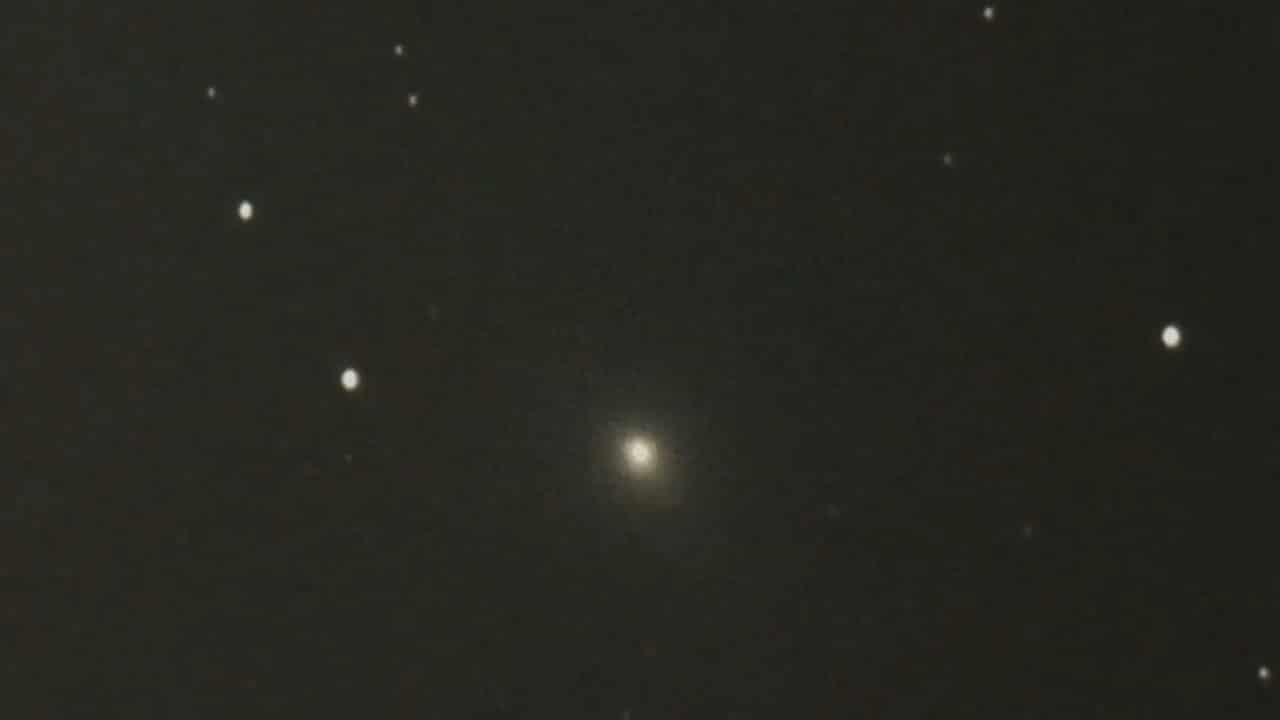
The anomaly was noticed after its maximum approach to Sol, the perihelion, which occurred on October 29th. Dados collected by multiple space observatories indicate that the comet’s nucleus underwent significant changes, an event that challenges current models about the structural integrity of celestial bodies traveling at extreme speeds through space.
The discovery and unusual trajectory
The comet was first identified on July 1, 2025 by the ATLAS system (Asteroid Terrestrial-impact Last Alert System), located at Havaí. Desde the beginning, its orbit caught the attention of astronomers because it was radically different from that of comets originating from Nuvem of Oort, the vast shell of icy bodies that surrounds Sistema Solar. The object travels at a speed exceeding 56,000 kilometers per second in relation to Sol, a mark that confirms its origins from another star system.
Analysis of its trajectory indicates that 3I/ATLAS will not be captured by solar gravity and will continue its journey through interstellar space after its passage. The forecast is that its closest approach to Terra will occur at a safe distance of 27 million kilometers. Esse path offers a unique opportunity to study material coming from elsewhere in the galaxy without the need to send a probe to prohibitive distances, providing direct data on the composition of other planetary systems.
Chemical composition that intrigues scientists
Preliminary analyzes carried out with Telescópio Espacial James Webb point to a distinct chemical composition. Foram detected signatures of complex organic molecules that do not match the patterns observed in comets native to our Sistema Solar.
This peculiarity suggests that 3I/ATLAS may have formed in an environment with very different chemical and physical conditions. The presence of these compounds fuels speculation about the diversity of “building blocks” of life in other regions of the galaxy.
In addition, radio emissions were detected at frequencies of 1.665 GHz and 1.667 GHz, which coincide with recent observations and indicate the presence of volatile materials being ejected from the comet’s surface more intensely than expected.
Drastic changes in the comet nucleus
After passing through perihelion, the 3I/ATLAS core, which has an estimated diameter of between 320 meters and 5.6 kilometers, began to exhibit erratic behavior.



Images captured by Telescópio Espacial Hubble revealed a change in its shape and a significant increase in brightness, suggesting a possible fragmentation event or the violent ejection of gas and dust.
This instability is surprising to researchers, considering the object’s high speed. Acredita It is believed that thermal and gravitational stress during the solar approach triggered these changes.
This unusual activity is being closely monitored, as how the comet disintegrates or evolves could provide crucial clues about its internal structure and material cohesion.
The role of multiple observatories
A coordinated, global observation campaign was mobilized to study 3I/ATLAS. Além of James Webb and Hubble, the SOHO and STEREO-A probes, which monitor Sol, followed the object between September and October, providing data on its interaction with the solar wind and radiation. The MAVEN probe, orbiting Marte, also adjusted its instruments to capture information about the comet’s tail of gas and dust as it approached the red planet. Essa multifaceted approach is essential to building a complete model of the comet’s behavior, combining data from different light spectrums and viewpoints to understand its dynamics, from the composition of the nucleus to the extent of its tail and its interaction with the interplanetary environment.
Next observation steps
The comet will continue to be a priority target for observatories in the coming months, especially during its approach to Marte, expected in March 2026. The pass by the red planet will offer another window of opportunity for detailed studies.
The data collected will help refine theories about the formation of planetary systems and the distribution of organic matter throughout the galaxy.
Implications for astronomy
The 3I/ATLAS investigation represents a milestone in the study of interstellar objects. Cada’s new information about its composition and behavior helps fill in gaps about how other stellar systems form and evolve, offering a rare glimpse into the raw material that makes up other “neighborhoods” in Via Láctea.
Veja Tambem em News (EN)

Research reveals that parents are unaware of how their children use artificial intelligence

Samsung releases new system update with new features for Galaxy Watch 4 users

Digital retail reduces the value of the Galaxy S25 5G smartphone with bank bonuses and device exchange

Amazon’s wireless CarPlay adapter has a 50% discount and high approval ratings from drivers

Zach Cregger’s new Resident Evil ignores games and focuses on an unprecedented story with new characters

Rumor suggests that Nintendo is preparing a special edition of the Switch 2 with a remake of Ocarina of Time

Apple accelerates production of the iPhone 17e and develops new Air model with dual camera system

Epic Games platform releases twelve high-budget games at no permanent cost for PC users

PlayStation 5 Pro price drop accelerates digital retail sales and eliminates global stocks

New Galaxy Watch 9 firmware appears on server and confirms progress in software development

Apple’s commemorative project tests cell phone with 1.1 millimeter edge and curved screen for 2027
