
Discovery of near-Earth asteroids exceeds 40,000 by the European Space Agency in 2025

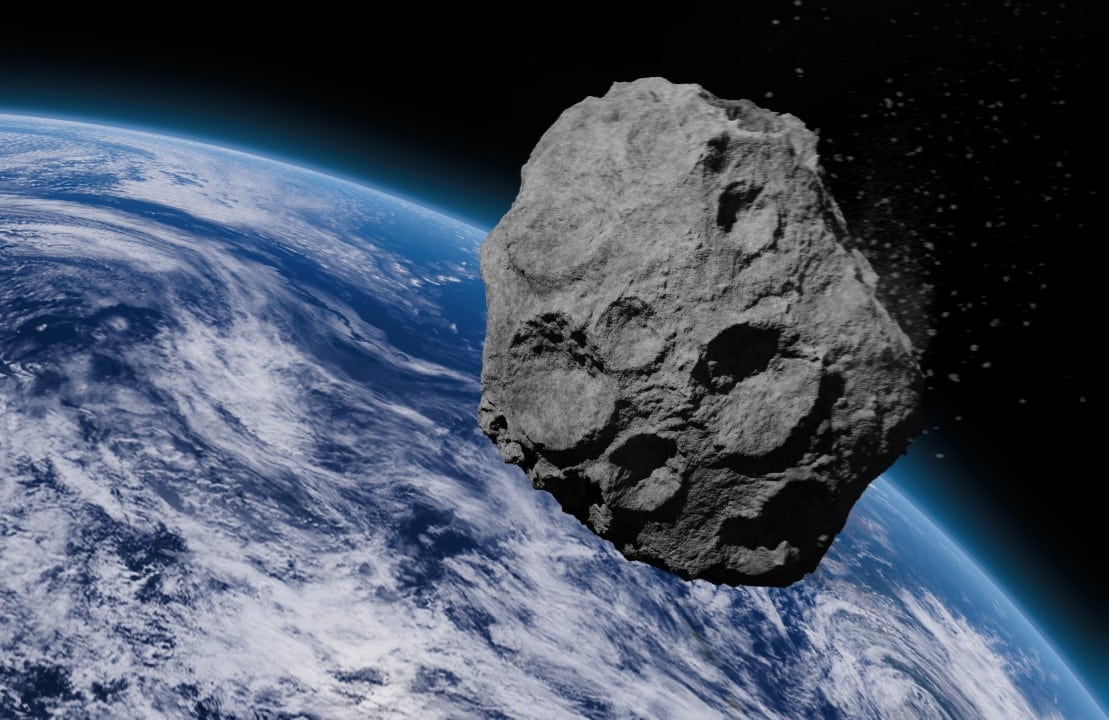
Agência Espacial Europeia (ESA) announced that the number of asteroids close to Terra surpassed the 40,000 discovery mark. The milestone was reached on November 20, 2025, with contributions from global observatories and advanced detection technologies.
These celestial bodies, known as near-Terra objects (NEOs), orbit at a perihelic distance of up to 1.3 astronomical units from Sol. The majority, around 99.7%, are classified as asteroids close to Terra (NEAs), while the rest are comets.
The accelerated growth reflects investments in planetary monitoring. Desde 2022, when the total reached 30 thousand, another 10 thousand were identified in just three years.
The initial detection occurred in 1898, with the asteroid Eros. Avanços in recent decades have transformed observation into a global priority for planetary defense.
Evolution of discoveries
Sporadic observations marked the 20th century, with an initial focus on amateurs. Starting in the 1990s, agencies such as NASA and ESA intensified efforts.
The impact of comet Shoemaker-Levy 9 on Júpiter in 1994 raised awareness about the risk of collisions. Similar Eventos can cause mass extinctions, like that of Cretáceo.
Automated telescope technologies and space missions have driven the pace. NASA’s NEAR Shoemaker spacecraft captured detailed images of Eros in 2000.
International projects catalog trajectories to predict approaches. Até 2025, the ESA database includes precise positions of all 40 thousand NEAs.

Definition and classification of NEAs
Asteroids close to Terra encompass subgroups based on orbits crossing the planet’s. The Atenas type has an orbital period similar to that of the Terra, while the Apolos cross the Earth’s orbit.
Nearby comets are rare due to the loss of ice in inner orbits. The criteria for NEOs requires an orbital period of less than 200 years for comets.
Minimum approaches occur regularly, but catastrophic impacts are infrequent. ESA monitors potential threats with kilometer precision.
- Eros: Primeiro NEA discovered, with a diameter of 34 km.
- Other notables: Incluem objects like 2023 BU, which passed within 2,200 km of Terra in 2023.
This data helps to calibrate risk models. Observatórios terrestrial and space-based combine efforts for total coverage.
Impact on planetary defense
Space agencies prioritize early identification to mitigate collisions. NASA’s DART mission successfully tested deflection in 2022.
ESA plans to expand telescope networks in the 2030s. Isso could double the number of annual discoveries.
Amateurs have contributed historically, but professionals dominate now. Programas and União Astronômica Internacional validate findings.
Past collisions shape current strategies. The Tunguska event in 1908 released energy equivalent to 10-15 megatons of TNT.
Historical mission contributions
The NEAR probe provided pioneering data on the mineral composition of NEAs. Eros revealed regolith similar to that of Lua.
Future missions, such as ESA’s Hera in 2024, will study binary asteroid systems. Isso improves trajectory predictions.
Telescopes like Pan-STARRS detect small objects. By 2025, the focus includes NEAs up to 140 meters in diameter.
The ESA catalog updates daily. Ferramentas online allows tracking of close approaches.
Projections for the coming years
Expansion of terrestrial and orbital observatories accelerates the pace. Até 2030, the total could exceed 100 thousand NEAs.
Government investments respond to global risks. Acordos international organizations coordinate responses to threats.
Research reveals that 1 in 6,000 NEAs larger than 1 km pose significant risk. Nenhum imminent impact is predicted for the century.
- Growth drivers: Telescópios robotics and AI for analysis.
- Challenges: Detecção of dark objects or at unfavorable angles.
These advances strengthen collective preparation. Continuous Monitoramento ensures timely alerts.
Technical aspects of observation
Optical telescopes capture solar reflections to measure sizes. Radar complements with precise distances.
Classifications include Amor, which do not cross Earth orbit. Dados spectra identify iron or carbon compositions.
ESA integrates contributions from more than 100 institutions. Colored Mapas illustrate orbital distribution of the 40 thousand NEAs.
Advances in software process billions of data points per night. Isso raises the detection rate to hundreds monthly.
The 2025 milestone reinforces the global commitment. Continuous Descobertas protect the planet from cosmic surprises.



