
NASA detects anomalous structure in interstellar comet 3I/ATLAS and sparks intense scientific debate

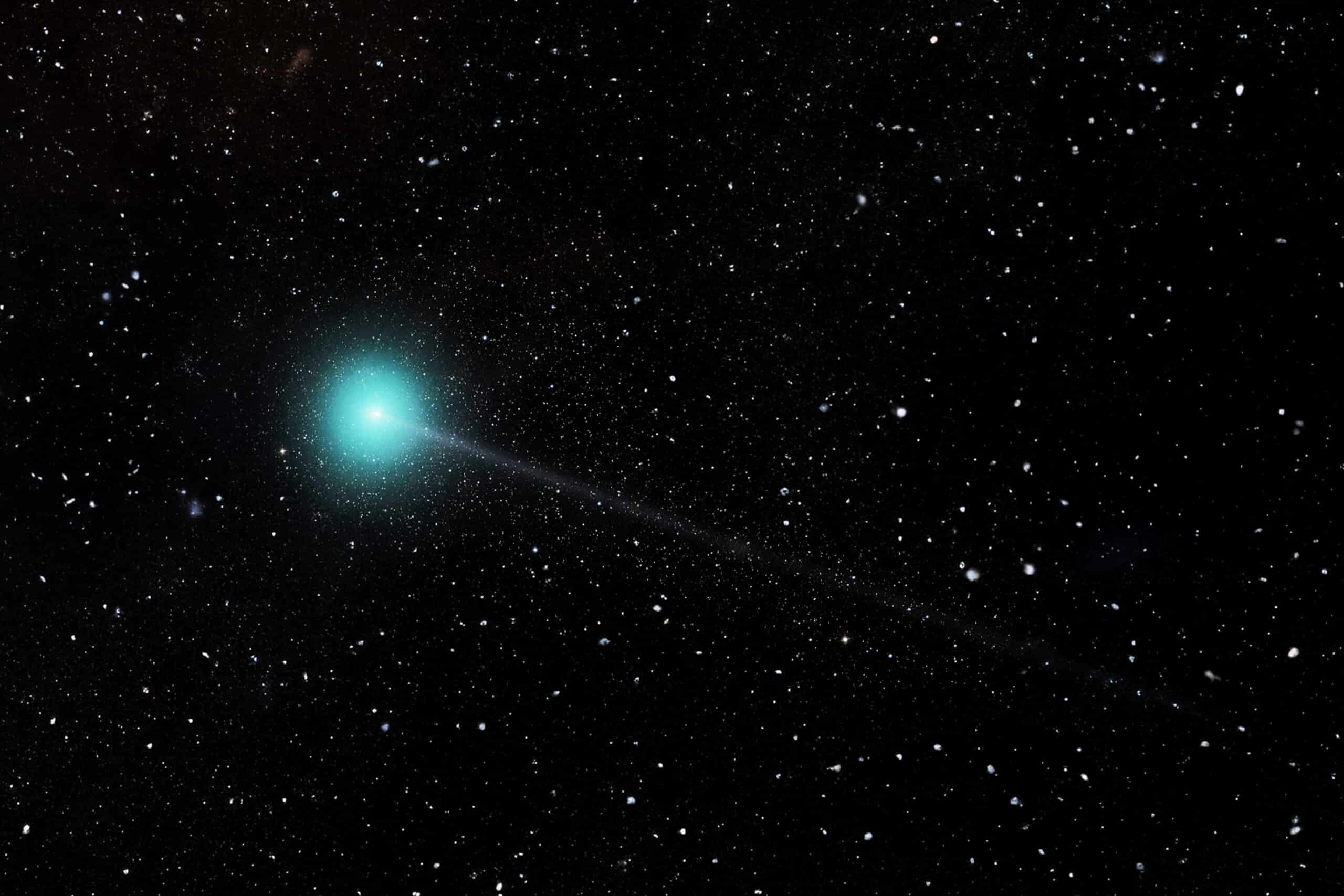
On November 5, 2025, an anomaly detected by NASA in the interstellar comet 3I/ATLAS triggered an intense debate among astronomers about its composition and trajectory. Este celestial body, initially sighted in July 2025 by the ATLAS program (Asteroid Terrestrial-impact Last Alert System), exhibited a highly elongated coma, an unprecedented morphology for a previously observed comet. The shape of the coma, described by some as similar to an anteater, stretched an impressive 56,000 kilometers, indicating unusual physical processes in its interaction with the space environment.
Scientists from Universidade to Norte to Arizona estimated that the comet passed within 27 million kilometers of Terra at its closest point. Observações carried out at Observatório Haleakala revealed a strong emission of gases, the origin of which, whether due to ionization or other mechanisms, remains uncertain. Estes phenomena have been closely monitored since October 29, after the comet reached its perihelion.
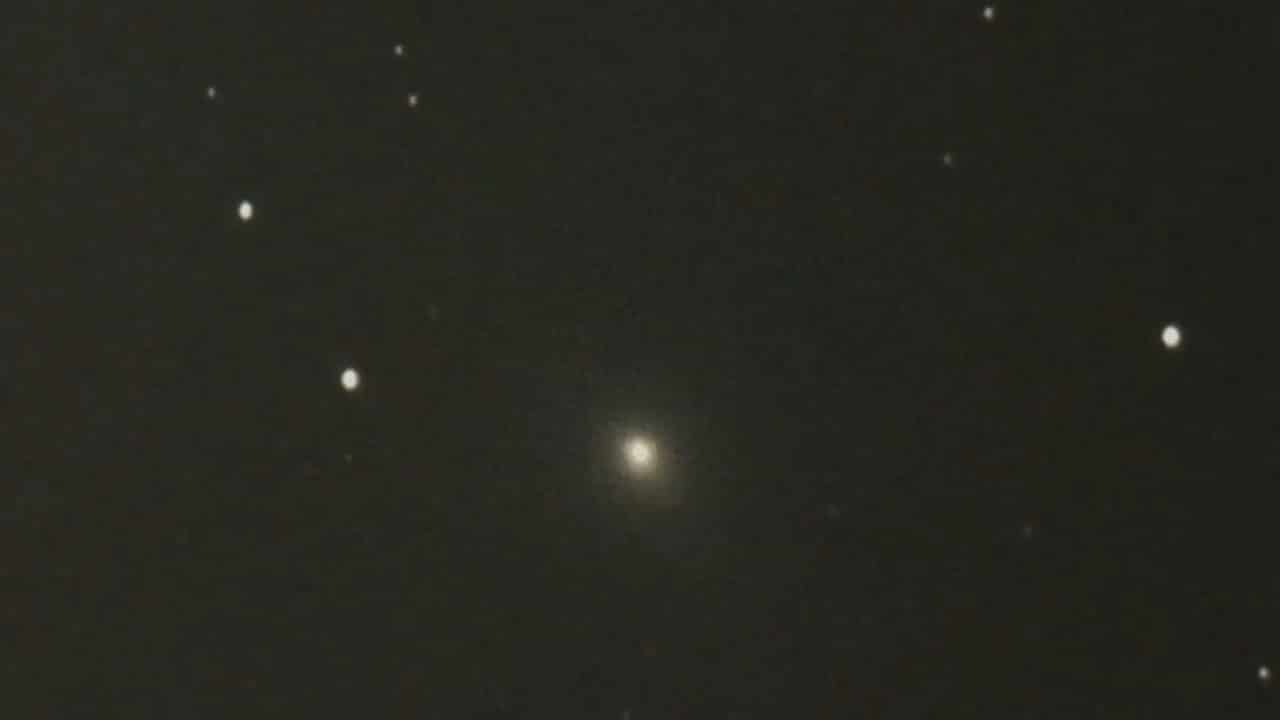
Researchers are now committed to studying similar behaviors in other objects, seeking to understand the uniqueness of 3I/ATLAS. Este is the third confirmed interstellar object, following Oumuamua (2017) and Borisov (2019), and its unusual features are challenging current astronomical models, promising significant advances in understanding the formation and evolution of celestial bodies outside our solar system.
Initial detection and hyperbolic orbit
The ATLAS system, operating from its location at Haleakala, at Esse singular path indicates that the object is not gravitationally bound to Sol and, consequently, will continue its journey out of our system.
Moving at a speed of 58 kilometers per second, 3I/ATLAS’s speed prevents it from being captured by solar gravity, ensuring it does not become a permanent member of our planetary system. The Esta property fundamentally differentiates it from comets that originate in the Nuvem of Oort or the Cinturão of Kuiper. Cálculos Astronomical scientists suggest that the comet traveled for millions of years through interstellar space before its entry into our cosmic neighborhood.
Chemical composition and unpublished signs
Spectroscopic analyzes conducted on Observatório Haleakala indicated a peculiar chemical composition that is not yet fully understood. The presence of dicarbon (C2) was predominant, accompanied by notable emissions of water and cyanogen. A particularly intriguing finding was the detection of nickel hydride, a molecule rarely observed in comets in our solar system, suggesting a unique formation environment in interstellar space.
In November, radio emissions were recorded at frequencies of 1.665 GHz and 1.667 GHz, marking the first time such signals had been detected from an interstellar comet. Essas radio signatures confirm the existence of exotic volatile substances and provide crucial clues about the comet’s unusual chemistry. Após its perihelion, 3I/ATLAS lost about 13% of its mass, a rate of sublimation much higher than expected for a body in the solar system.
Evolution of coma and scientific debate
Images captured by NASA on November 3, 2025 showed the comet’s coma distinctly elongating in the Sol direction. Apenas two days later, on November 5, this structure had completely disintegrated, giving way to a large ion tail that now stretches across interstellar space. Essa rapid and drastic evolution offers valuable insights into the mechanisms of gas release in comets.
Current theories suggest that the unusual interaction of highly volatile molecules with the solar wind may have caused such an abrupt morphological change in the comet. Satélites as SOHO and STEREO-A recorded the event between September and October, providing a wealth of imaging data on its evolution. Analysis of the velocity data revealed a complex and irregular acceleration, demonstrating a type of activity never before observed in other comets.
Scientists are closely monitoring these developments as they could be key to understanding the interaction between cometary bodies and interstellar matter. The complexity of the phenomenon challenges pre-existing models and drives the scientific community to reevaluate theories about the formation and behavior of objects outside our solar system.
Crucial Telescope Observations
Observatório Haleakala confirmed the acceleration of comet 3I/ATLAS, attributing it to a release of water vapor 45 million kilometers from Sol. Simultaneamente, data from Haleakala revealed unexpected changes in its core, information that was corroborated by files from the TESS satellite in May 2025.
The MAVEN probe, in orbit around Marte, also played a key role, monitoring changes in the comet’s tail during its passage close to the planet. Essas confirmations deepen understanding of the multifaceted nature of these celestial bodies. The union of data from different instruments and observation locations allows a more complete and robust view of the observed phenomena, essential for deciphering the mysteries of 3I/ATLAS.
Implications for interstellar research
Comet 3I/ATLAS offers a rare glimpse into other solar systems, challenging current models of comet formation in early solar systems. Sua unusual acceleration and chemical composition suggest much greater diversity in the dynamics and evolution of these bodies than previously thought. The global scientific community, with programs like Comet Interceptor from Agência Espacial Europeia (ESA), is stepping up data analysis to extract the most information.
The participation of amateur observers also proved crucial, providing valuable data through high-quality images during the comet’s appearance. Embora the object is expected to leave our solar system relatively soon, the anomalies observed during its passage provide unprecedented clues about interstellar dynamics. Astrônomos hope that the discovery of such objects will become increasingly common as observation capabilities improve, opening new frontiers for space exploration.
The future of the comet and new surveys
The passage of comet 3I/ATLAS close to Marte in March 2026 could induce significant gravitational disturbances. Simulações computational predictions predict complex and unpredictable deflections of its trajectory outside the solar system, making this anomaly a crucial test for celestial mechanics models.
Radio surveys carried out on November 13, 2025 mainly identified the composition of water, differentiating it from comets in our solar system. Técnicas of radio astronomy allowed “tracking” the trajectory of the interstellar comet, and models related to its internal primordial composition were explored. Cientistas plan new observations using larger arrays to analyze these emissions in more detail.



