
NASA detects anomalous structure in interstellar comet 3I/ATLAS, sparking debate about its formation and route.

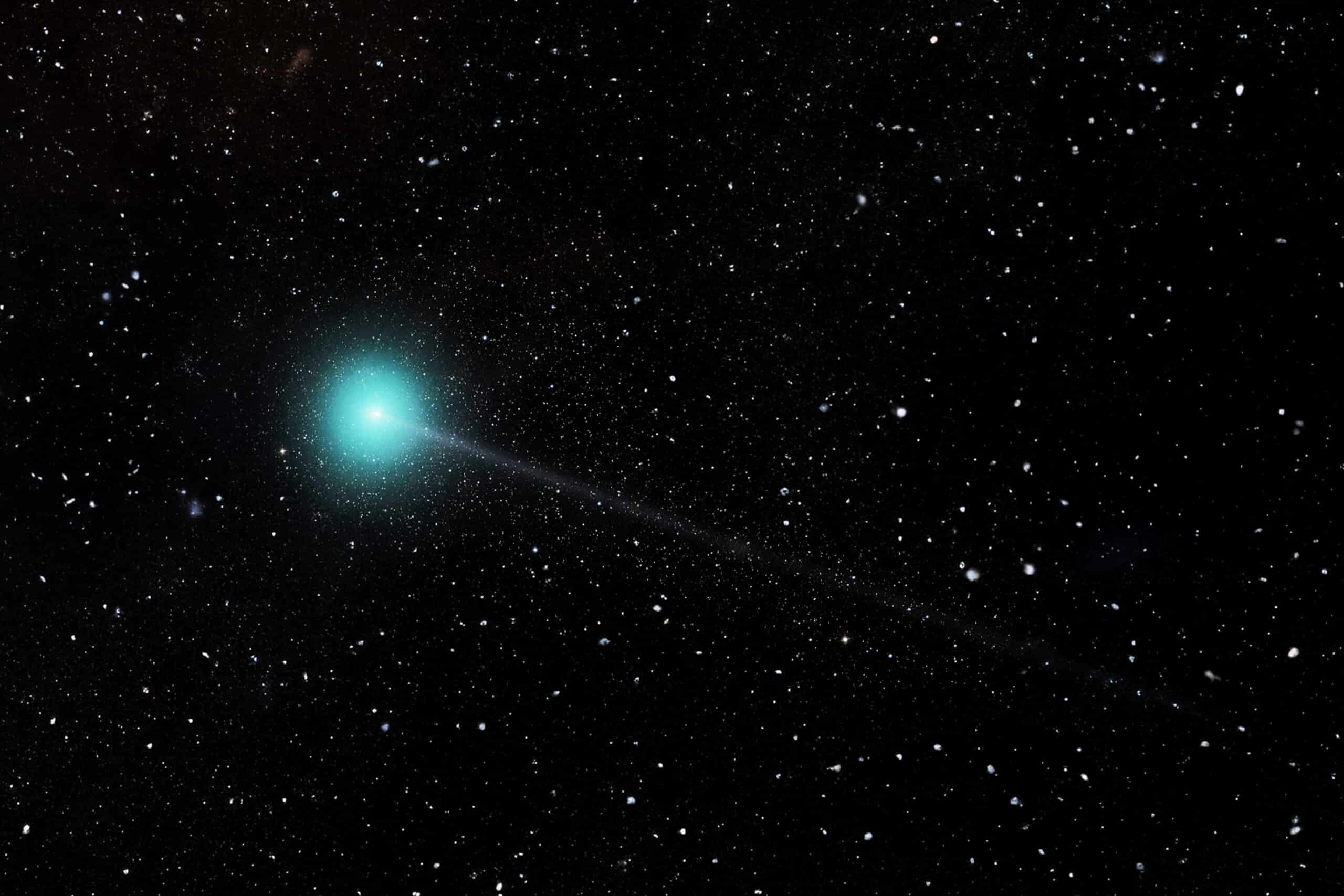
On November 5, 2025, NASA announced the detection of a unique structure in the interstellar comet 3I/ATLAS, sparking an intense debate among astronomers about its composition and trajectory.
The celestial body, spotted in July by the ATLAS survey, displayed an unusual tail that pointed directly at Sol, a feature never before observed in comets. Essa formation has been described as a “neck” approximately 56,000 kilometers long.
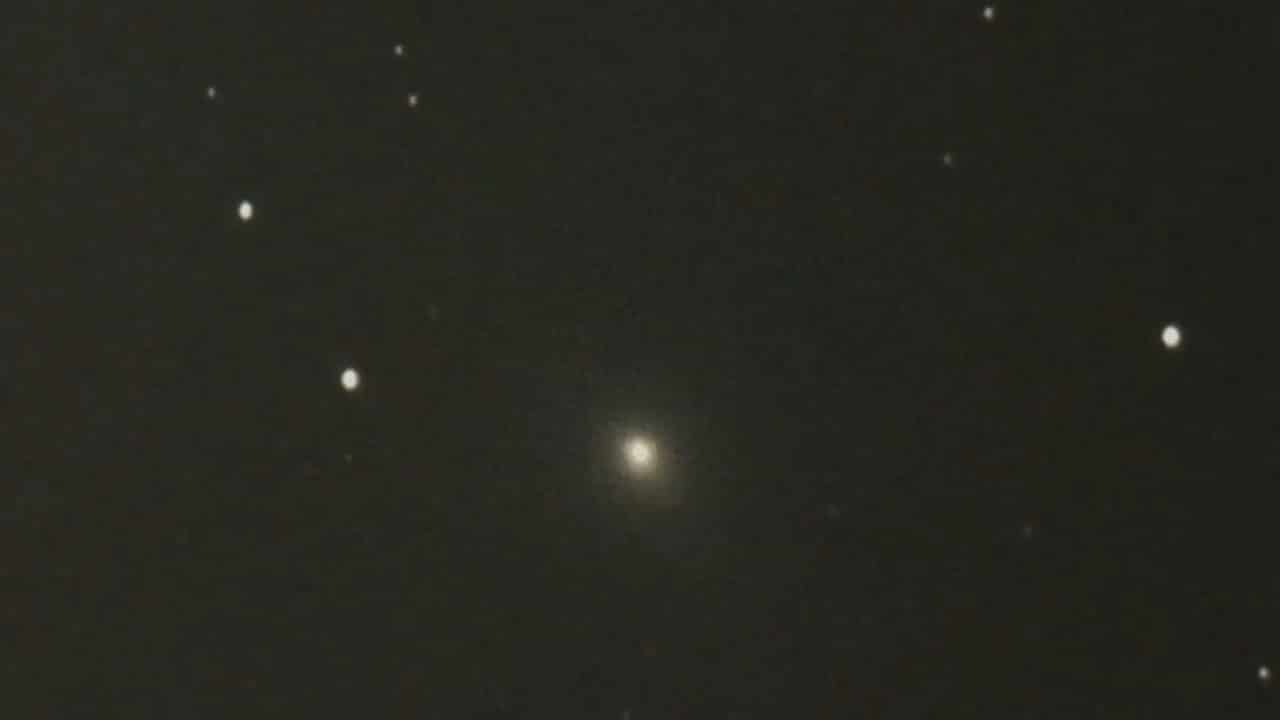
Observations of Telescópio Espacial Hubble revealed that the emission of gases, mainly diatomic carbon, was not uniform throughout the structure, challenging existing models and deepening the mystery of its origin.
[[_0] ]
[[_0]
Initial discovery and unique trajectory
The ATLAS survey (Asteroid Terrestrial-impact Last Alert System) identified comet 3I/ATLAS on July 1, 2025, from its station at Havaí. Initial analysis of its trajectory confirmed its interstellar origin, indicating that its route extends beyond the solar system.
Moving at 58 kilometers per second, the object is not captured by solar gravity, ensuring its unique passage through our system and fundamentally distinguishing it from comets formed in the Oort cloud.
Intriguing chemical characteristics
The spectral analysis carried out by Telescópio Espacial Hubble revealed a surprisingly heterogeneous chemical composition in comet 3I/ATLAS, highlighting the presence of diatomic carbon, water and cyanide.
Most notably, the presence of a nickel band, rarely seen in solar system comets, and the absence of other features normally associated with comets from distant regions, indicate formation in a distinct and peculiar stellar environment.
In November, radio emissions at 1.665 GHz and 1.667 GHz were detected, marking the first record of methanol at these frequencies for an interstellar comet. Esses signals confirm the existence of volatile materials beyond Earth’s orbit and offer crucial clues about the chemistry of objects in other systems.
Evolution of the observed structure
NASA images, captured on November 3, 2025, recorded the formation of a “neck” extending into Sol, a visible manifestation of the comet’s activity.
Just two days later, on November 5, this structure had completely dissipated, leaving a large halo of ions in the wake of the comet, which was already at its closest approach to Terra.
This rapid change in behavior challenges existing models of gas emission and comet fragmentation, suggesting a complex and previously unknown interaction between the comet nucleus and the space environment.
Probes such as SOHO and STEREO-A monitored the object between September and October, providing chronological data that helps track the comet’s anomalous evolution and its irregular emission of gas and dust.
Scientific reactions and models
The international scientific community is committed to modeling the behavior of 3I/ATLAS to understand the causes of its rapid transformations. Observations of their tail and changes in their physical structure raise fundamental questions about how these interstellar objects form and how they interact with the force fields of other stars before reaching our system. Há an active discussion about whether the anomaly is the result of a natural process of disintegration or an intrinsic characteristic of its origin.
An astronomer at Universidade of Maryland, Avi Loeb, has highlighted that the absence of clear structural support for the observed “neck” is an enigma. Ele suggested that the structure may have been the result of a high-speed material ejection process. NASA’s planetary protection team had already started, in October 2025, a contingency plan to monitor any potential fragmentation of the object, although the probability of impact was considered extremely low.
Space telescope observations
The MAVEN spacecraft, orbiting Marte, recorded changes in the comet’s coma during its passage, offering a unique perspective on the object’s interaction with the solar wind. Essas confirmations, combined with previous data from interstellar objects such as Oumuamua (2017) and Borisov (2019), provide crucial evidence for the diversity of these celestial bodies, which exhibit properties challenging to conventional astronomical models. Observatório Lowell, in turn, confirmed a dust trail of 45 million kilometers, and files from the TESS satellite from May 2025 complement the understanding of the comet’s luminosity and activity at different phases of its journey.
Potential for interaction with planets
The passage of 3I/ATLAS through Júpiter, scheduled for March 2026, represents a crucial moment for research. Simulações computational predictions predict that Jovian gravity can induce large perturbations in the comet, offering an opportunity to test celestial mechanics models and better understand the gravitational influence on high-speed objects.
Radio data and future prospects
Radio observations on November 13, 2025 revealed the comet’s predominantly ice composition, reinforcing the idea of an origin in cold, distant stellar environments. The unique features of 3I/ATLAS, such as the solar tail, suggest the need to revise comet formation models to accommodate such anomalies and expand our understanding of:
The astronomical community, with the support of programs such as ESA’s Cometa Interceptor, intensifies analysis and plans new observations with large arrays, aiming to deepen knowledge about the nature and formation of these objects.



