
Comet A3 Tsuchinshan-ATLAS: Rare 2025 cosmic visitor promises global astronomical spectacle

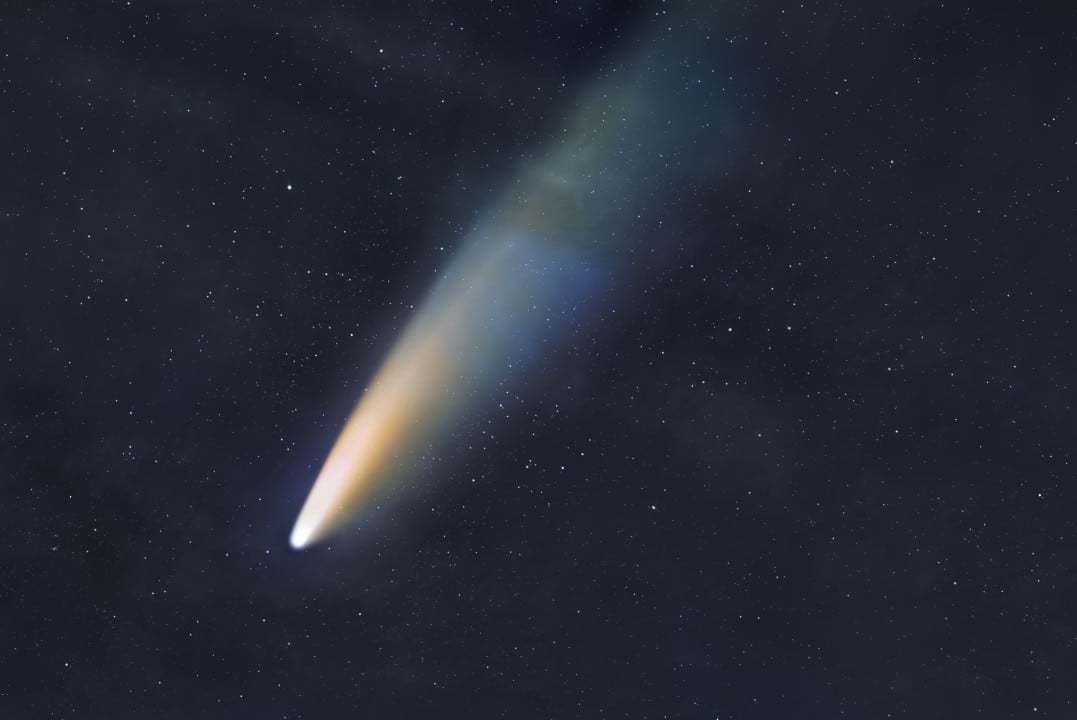
Astronomers from several global institutions are on high alert for the approach of Cometa A3 Tsuchinshan-ATLAS, which is expected to offer a rare spectacle in the sky in 2025. of its trajectory.
The scientific community closely monitors its evolution, calculating its route and the best periods for observation. The comet is expected to reach its perihelion, the closest point to Sol, and its closest proximity to Terra over the next year, providing a unique opportunity for enthusiasts and researchers.
This comet, with a hyperbolic orbit, represents an object originating from the outermost regions of the solar system, such as Nuvem of Oort. Sua arrival offers valuable data for understanding the composition and primordial conditions of our planetary system, sparking renewed interest in astronomy and space exploration.
The cosmic journey and the origin of the comet
The journey of the Cometa A3 Tsuchinshan-ATLAS began millennia ago in the frigid depths of the Nuvem of Sua orbit, which brought it into the vicinity of Sol, is an event that occurs on astronomical timescales, making each passage a singular and scientifically relevant event for understanding the origins of our planetary system.
The initial discovery, made by Observatório of Montanha Púrpura (Tsuchinshan) on China and confirmed by the ATLAS system (Asteroid Terrestrial-impact Last Alert System) on África of Telescópios around the world have been contributing data to refine its trajectory and predict its behavior as it approaches solar heat, which will determine its brightness and the formation of its tail.
Visibility and planning expectations in 2025
The observation of Cometa A3 Tsuchinshan-ATLAS in 2025 promises to be one of the highlights for amateur and professional astronomy. Especialistas indicate that the best periods of visibility will vary depending on geographic location, with the northern hemisphere having a greater chance of observation in the autumn months, while the southern hemisphere may have windows of visibility at other times of the year.
For those wishing to follow the comet, simple tools such as binoculars can highlight details of the tail and nucleus, although naked-eye visibility is possible under ideal dark conditions. Locais away from large urban centers, with little light pollution, will be the most suitable for a complete and immersive experience of the celestial phenomenon.
Challenges to successful observation include weather conditions and the phase of Lua, which can obscure fainter objects in the night sky. Therefore, keeping up with forecasts and updated celestial maps will be crucial to planning observation sessions and ensuring the best experience possible.
The scientific singularity of the A3 Tsuchinshan-ATLAS
Cometa A3 Tsuchinshan-ATLAS stands out not only for its potential luminosity, but also for unique orbital characteristics that classify it as a long-period comet. Sua composition, presumably rich in volatile materials and untouched dust since the formation of the solar system, offers scientists a cosmic time capsule, allowing the study of primitive elements.
Studying the comet’s tail and coma as it heats up as it approaches Sol could reveal crucial information about the chemistry of the early solar system. Spectroscopic analysis of gas and dust emissions will make it possible to identify the elements and molecules present, deepening knowledge about the origin of water and other compounds essential to life on Terra.
The comet’s hyperbolic orbit suggests it is a rare visitor, one that may never return to the vicinity of Sol on human timescales. Essa feature increases the urgency and scientific value of your observation, as each pass offers a limited chance to collect data on such distant and little-explored objects.
Its trajectory provides a unique opportunity to test models of planetary formation and comet evolution, contributing to a more complete understanding of the dynamics of our solar system and other exoplanetary systems.
Preparations by the global scientific community
The approach of Cometa A3 Tsuchinshan-ATLAS mobilized observatories and research centers around the world. Grandes Space and ground-based telescopes are being aligned to collect as much data as possible, from high-resolution images to detailed spectral analyzes of the comet’s composition.
In addition to research, there is considerable effort to engage the public. Universidades and planetariums are planning educational events, lectures and public observation sessions so that everyone can learn about and appreciate this phenomenon. The dissemination of clear and accessible information is essential to demystify the event and promote interest in science and astronomy.
Essential tips for observing the celestial phenomenon
For those who want to observe comet A3 Tsuchinshan-ATLAS, some practical tips can significantly improve the experience, ensuring that the astronomical spectacle is enjoyed to the fullest. It is essential to plan in advance, choose the right location and use the appropriate equipment to take advantage of the comet’s visibility, which promises to be one of the highlights of the 2025 astronomical calendar.
The centuries-old fascination with cosmic travelers
The appearance of comets has always held a deep fascination for humanity, from ancient civilizations that saw them as omens to the modern era, where they represent windows into the universe’s past and a source of knowledge.



