
James Webb reveals TWA 7b: first direct image of gaseous exoplanet in young system challenges limits of astrophysics

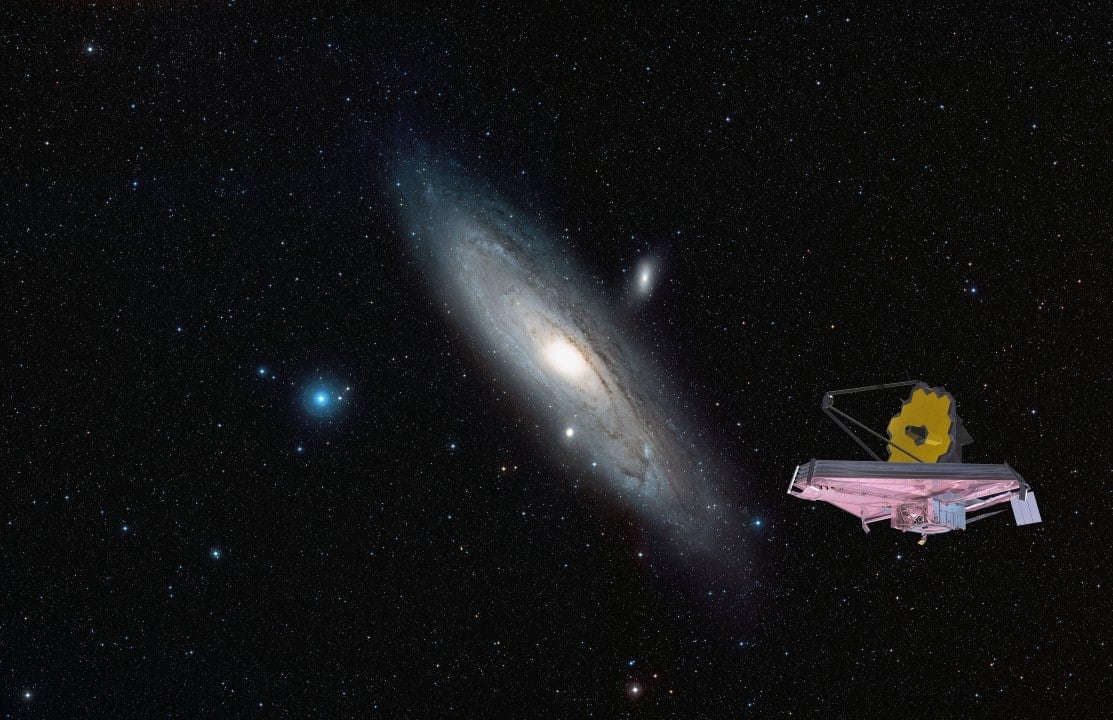
In an astronomical milestone for 2025, the James Webb space telescope, the most advanced ever built, captured the first direct image of an exoplanet, TWA 7b, located 111 light-years from Terra. The discovery, published on June 25, 2025, was led by French scientists from the Centro Nacional of Utilizando an innovative coronagraph technique, Webb revealed TWA 7b, a gas giant with a mass similar to that of Saturno, orbiting a young star still surrounded by space debris, opening new and promising possibilities for the observation of smaller, potentially habitable worlds in the future.
TWA 7b, detected in the TWA 7 star system, stands out for being ten times lighter than other exoplanets already imaged directly, marking a significant advance in the ability to detect lower mass worlds. The image, taken with the MIRI (Mid-Infrared Instrument) instrument, shows the planet as an orange speck in a vibrant disk of dust and rocks, where new celestial bodies continue to actively form.
This finding reinforces the crucial importance of Webb in exploring young planetary systems, which offer fundamental clues about the formation and evolution of planets, including those that make up our own Sistema Solar. The relevance of the feat transcends the image itself, demonstrating the telescope’s ability to observe planets in complex environments, such as protoplanetary disks, where the presence of debris traditionally makes detection difficult.
Some important data about the discovery include:
– TWA 7b mass: Comparável to that of Saturno, representing approximately 30% of the mass of Júpiter.
–Orbital distance: Cerca is 52 times greater than the average distance between Terra and Sol.
–System age: The star TWA 7 is estimated to be 6.4 million years old.
–Technique used: Emprego of the MIRI instrument’s coronagraph to block the star’s intense light.
Historical image and overcoming challenges
Photographing exoplanets represents one of the most complex tasks in contemporary astronomy. Esses celestial bodies emit or reflect a tiny amount of light compared to their host stars, making them practically invisible to even the most powerful telescopes currently available. In the specific case of TWA 7b, the proximity to the star TWA 7, at a distance of 111 light years from Terra, exponentially amplified the challenge, as the much more intense starlight could easily cover up any faint signal from the planet.
To overcome this technical obstacle, the research team, led by Dra. Anne-Marie Lagrange of Observatório of Paris, used the advanced coronagraph of the James Webb telescope. Esse device works in an ingenious way, acting as a mask that selectively blocks light from the central star, creating an effect analogous to an artificial eclipse. With this precision tool, scientists were able to isolate the infrared light emitted by TWA 7b, which is still hot due to its recent formation, significantly facilitating its detection in the infrared spectrum.
The TWA 7 system, which was already known to astronomers for its three concentric rings of debris, had not had the presence of a planet confirmed until this recent observation. The detailed image captured by Webb revealed TWA 7b precisely positioned in the center of a narrow ring, surrounded by remarkably empty areas, a clear indication that its gravitational pull is actively shaping the protoplanetary disk around it.
Details of the exoplanet TWA 7b
The exoplanet TWA 7b is a gas giant that exhibits characteristics that significantly distinguish it among directly imaged worlds. Sua mass, equivalent to approximately 100 times that of Terra, is considerably smaller than that of other exoplanets captured by direct images, which generally have masses close to or even greater than that of Júpiter. Essa’s relative lightness positions TWA 7b as an important milestone in the ongoing search for smaller planets, approaching in size the gas giants we know from our own Sistema Solar.
The planet orbits the star TWA 7 at an impressive distance, about 52 times greater than the orbit of Terra around Sol, which implies an orbital period of hundreds of years. Esse scenario contrasts with exoplanets detected by indirect methods, such as transit, which tend to be closer to their stars. The location of TWA 7b within a debris disk suggests a constant interaction with the surrounding material, possibly influencing the formation of other celestial bodies within the same system.
– Composition: Provavelmente is a gas giant, with characteristics similar to those of Saturno.
–Temperature: Ainda hot due to its recent formation process, emitting detectable infrared radiation.
–Environment:Orbitando in a dynamic protoplanetary disk, rich in dust and rocks.
The coronagraph and the precision of the Webb
The success of the unprecedented TWA 7b image is directly attributed to the use of the coronagraph, a fundamental tool for modern high-resolution astronomy. Desenvolvido in collaboration with Centro of Astronomia Extragaláctica of Universidade of Essa Advanced technology allows celestial objects close to the star, such as planets or debris disks, to be observed without the blinding interference of light from the central star.
In the specific case of TWA 7b, the coronagraph was carefully adjusted to observe the TWA 7 system from a perspective known as “pole on”, that is, directly to the plane of the protoplanetary disk. Essa privileged view made it possible to reveal the concentric rings and the exact location of the planet in the center of the narrowest ring, confirming scientists’ suspicions about the gravitational influence of a celestial body on the complex structure of the disk.
The technique used also highlights the versatility and revolutionary capacity of the James Webb. Desde its launch in December 2021, the telescope has transformed astronomy with its unmatched ability to observe in the infrared spectrum, capturing details of distant, cold objects that remain undetectable to other telescopes.
[[_1]
]
[[_0]
]
TWA 7 system: cradle of planets
The TWA 7 star system, also identified as CE Antliae, is remarkably young, with an estimated age of just 6.4 million years, establishing it as an ideal natural laboratory for studying planetary formation processes. The central star, located 111 light-years from Terra, is surrounded by a dynamic protoplanetary disk, composed of a complex mixture of dust, rocks and gas, which appears in three distinct rings, the narrowest being precisely the place where TWA 7b was discovered.
The observed rings are separated by areas that appear almost empty, a feature that strongly suggests the presence of massive bodies, such as planets, which, through their gravitational force, clear the material in their respective orbits. The recent discovery of TWA 7b validates this hypothesis, conclusively demonstrating that the planet is actively shaping the structure of the disk around it. The gravitational interaction between the planet and the material in the disk generates the gaps and rings, a process believed to be analogous to what occurred in the early days of our own Sistema Solar.
The detailed image of the system, which combined data from Webb’s MIRI instrument with that from Very Large Telescope’s SPHERE (VLT) on Chile, illustrates TWA 7b as a distinct, bright spot at the center of the narrower ring. Essa high-resolution visualization is a testament to the Webb’s unprecedented ability to capture sharp, informative images in complex and challenging cosmic environments.
Advances in the search for exoplanets
The discovery of TWA 7b represents a fundamental step in the ongoing search for smaller, cooler exoplanets. Até to date, most of the directly imaged exoplanets were gas giants with masses close to or greater than that of Júpiter, primarily due to their greater light or heat emission, which facilitated their detection. TWA 7b, with its mass comparable to that of Saturno, demonstrates an improved ability of Webb to detect significantly less massive planets, bringing us closer to the goal of observing rocky worlds, with characteristics more similar to those of Terra.
The ability to image planets in young star systems like TWA 7 also offers valuable and unprecedented insights into the complex processes of planet formation. Esses systems serve as perfect analogues of what our Sistema Solar was billions of years ago, allowing scientists to study the conditions and mechanisms that led to the formation of giant planets like Júpiter and Saturno, as well as rocky worlds like Terra.
– Technological advancement: The Webb’s coronagraph makes it possible to clearly observe planets close to bright stars.
–Young systems: Estrelas like TWA 7 are ideal laboratories to further study planetary formation.
–Future of astronomy: The recent discovery paves a promising path for detecting rocky planets.
–International collaboration: Equipes research from França, Reino Unido and other nations were crucial to the achievement of the feat.
Perspectives for rocky worlds
Although TWA 7b is classified as a gas giant, its discovery significantly raises hopes that James Webb could, in the near future, directly image rocky planets. Esses worlds, which are intrinsically smaller and cooler, are prime candidates in the search for potentially habitable environments outside of Sistema Solar. Contudo, its direct detection still constitutes a formidable challenge, mainly due to its very low light emission and its small size.
Scientists hope that future advances in coronagraphs and other observation instruments will allow the detection and study of planets with masses equivalent to just 10% of the mass of Júpiter. Next-generation Telescópios, both space and terrestrial, will be equipped with even more sophisticated technologies designed specifically for the search and characterization of rocky exoplanets.
The discovery of TWA 7b also underscores the critical importance of studying protoplanetary systems in detail. Esses environments, rich in dust and gas, are the cradles where new planets are born, and their in-depth analysis can reveal how different types of worlds form and evolve over time.
Scientific collaboration and the future of exploration
The successful discovery of TWA 7b is the direct result of an international and multidisciplinary effort, which brought together brilliant minds from different parts of the world. The research team, led by Dra. Anne-Marie Lagrange, had the essential collaboration of prestigious institutions such as Observatório of Paris, Universidade of The development and improvement of the coronagraph, a centerpiece of this discovery, involved researchers from Reino Unido, demonstrating the importance of global cooperation in large-scale astronomical projects.
A new cycle in astronomy
The image of the TWA 7b transcends a mere technical achievement; it symbolizes a new cycle in the exploration of distant and unknown worlds. Cada exoplanet that is discovered adds a valuable piece to the complex puzzle that seeks to unravel how planetary systems form and evolve over billions of years. TWA 7b, with its peculiar orbit in a debris disk and its relatively low mass, offers an unprecedented window into the dynamic processes that shaped the universe in its earliest stages.
Telescópio Espacial James Webb continues to push the boundaries of what is considered possible in modern astronomy. With its unparalleled ability to observe in the infrared spectrum and its cutting-edge technology, the telescope is perfectly equipped to unlock more secrets about exoplanets, forming stars and distant galaxies. The discovery of TWA 7b is just the beginning of an era of exploration that promises to radically transform our understanding of the cosmos and our place in it.



