
NASA reveals detailed images of the interstellar comet 3I/Atlas in its unprecedented approach to Earth in December

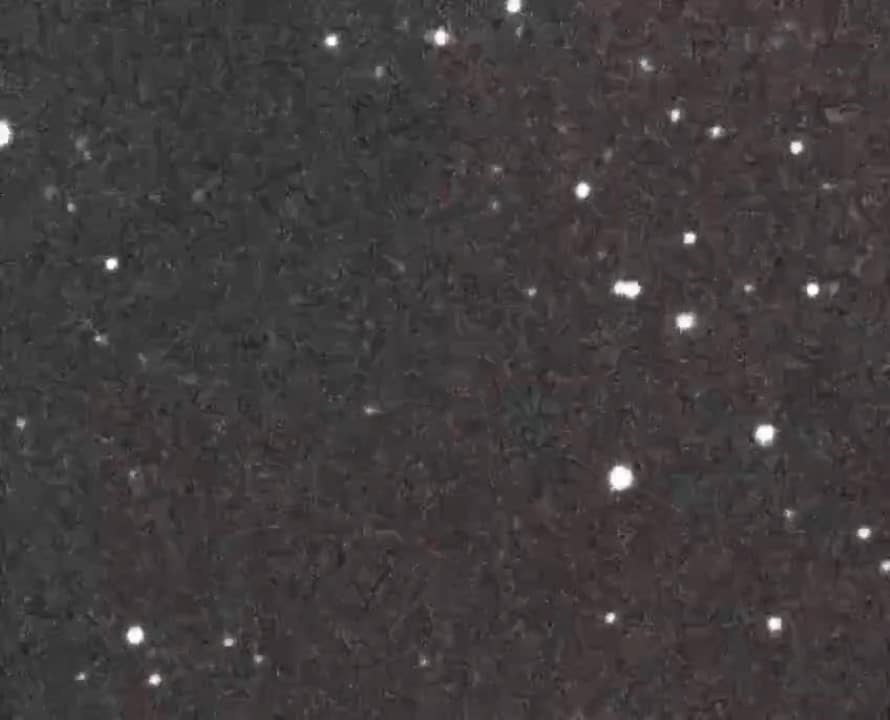
The interstellar comet 3I/Atlas, discovered in July 2025 by the Atlas telescope on Chile, follows a hyperbolic orbit that will take it outside Sistema Solar after its passage. Este celestial body, which approaches Sol on October 30 and Terra on December 19, 2025, has been the target of an intense observation campaign coordinated by Nasa and international agencies, seeking to map its composition and speed of 125 thousand miles per hour, without presenting any risk of collision. Sua unique journey offers a rare window into the study of material from outside our star system, providing valuable data on the formation of other planetary systems.
Scientists estimate that 3I/Atlas is approximately seven billion years old, with its origin traced to the thick disk of Via Láctea. Sua mass is estimated at around 33 billion tons, and its surface is covered by ice which, when sublimated, forms the characteristic coma and tail that make it visible.

The initial discovery was formalized on July 1, 2025, although pre-discovery observations had already been recorded in June of the same year. The proximity to Marte, reached on October 3, 2025, allowed orbiters of the red planet to capture detailed images, revealing the presence of micrometric dust grains in its structure.
Unraveling the composition of comet 3I/Atlas
Analysis of the composition of 3I/Atlas has revealed the presence of complex irradiated organic compounds, known as tholins, which are responsible for giving a notable reddish color to its coma. Esses materials, often found in objects in the outer solar system, provide essential clues about the chemical conditions prevalent in other regions of the galaxy, before the formation of stars and planets, and how these elements may have been transported through interstellar space.
The comet’s coma, the cloud of gas and dust that surrounds its nucleus, demonstrated significant expansion, going from 13,000 kilometers in diameter in June to 18,000 kilometers in July. Essa rapid dilation is a clear indication of the intense release of dust and gases as the comet approaches Sol, a process that intensifies its visibility and allows for a more in-depth study of its internal dynamics and interactions with solar radiation.
Initial observations and atypical trajectory
Since its detection, ground-based telescopes have been monitoring 3I/Atlas, capturing images that show it with a conical shape and a distinct greenish glow, confirming its classification as a comet. Esses initial records were crucial to establish its nature and begin monitoring its trajectory.
Data provided by Nasa indicate that the comet maintains a stable route, without presenting irregular changes in its trajectory, refuting initial speculations about possible unexpected deviations. Compliance with gravitational laws allows for accurate predictions about your future course.
Global mobilization for monitoring
Rede Internacional of Alerta of
Historical images of space missions
Telescópio Espacial Hubble was one of the first to record 3I/Atlas, capturing images on July 21, 2025, when the comet was 277 million miles from Terra. The photos revealed a dust cocoon with a characteristic teardrop shape around the core.
The Lucy mission, currently en route to the Júpiter Trojan asteroids, also contributed significant observations. The probe stacked a series of photos on September 16, 2025, from a distance of 240 million miles, managing to identify the comet’s nucleus as a faint point of light.
Additionally, the Psyche mission, on its journey to a metallic asteroid, performed four detailed observations on September 8 and 9, 2025, just 33 million miles from the comet. Esses initial recordings were essential to detect the formation of the coma in its primary stages.
The Orbitador of Reconhecimento of Marte (MRO) also played a role, capturing images in October 2025, from a distance of 90 million miles. The MRO photos displayed the comet as a fuzzy ball composed of dust and ice, adding yet another piece to the complex puzzle of its structure.
Observed anomalies and scientific theories
3I/Atlas has exhibited unusual behaviors, such as a tail that, at certain times, points toward Sol instead of away, and bluish color changes when close to the star. Essas anomalies are attributed to phenomena such as the release of hydrogen and the presence of fine dust, which react in different ways to solar radiation, challenging conventional models of comets and requiring new interpretations by researchers.
Although researchers noted about 12 irregularities, including a steep path through the galaxy, analyzes confirm that the comet conforms to gravitational laws. Essas Detailed observations are crucial to refining our understanding of the dynamics of interstellar objects and the forces that govern them on their cosmic journey, contributing to the advancement of astrophysics.
Ongoing planetary defense exercise
The Organização of the Nações Unidas (UN) activated planetary defense protocols, incorporating the 3I/Atlas in diversion simulations. Este exercise, which includes the use of advanced radars, satellites and machine learning, is scheduled for testing on December 29, 2025.
Renowned space agencies, such as Agência Espacial Europeia (Esa) and Agência Japonesa of Exploração Aeroespacial (Jaxa), are joining this effort. The collaboration aims to validate and improve automatic detection and interception systems, preparing humanity for potential future threats.
Crucial contributions from amateur astronomers
Amateur astronomers from around the world, including Canadá, Japão, Espanha and Chile, have played a key role in the 3I/Atlas observations. Suas contributions include the capture of clear images, such as the one recorded by Paul Craggs on November 21, 2025, which surpassed in definition many of the initial photos released by Nasa.
These observations complement the data collected by professional instruments, enriching the catalog of images available for spectroscopic analysis and morphological studies. The passion and dedication of these astronomy enthusiasts are essential to expanding the scope of research.
Professor Avi Loeb, from Universidade of Harvard, also joined the efforts, taking photos on November 22 and 24, 2025.
The journey of 3I/Atlas after perihelion
After reaching perihelion, the point of closest proximity to Sol, 3I/Atlas will continue its journey. Ele will pass through Vênus on November 3, 2025, at a distance of 0.65 astronomical units, and then through Júpiter on March 16, 2026, at 0.358 astronomical units.
Observations continue with the help of missions such as PUNCH, which combined images from September to October 2025. Esses records showed an elongation of the comet’s tail, which was 231 to 235 million miles away from
The ultraviolet instrument of the Maven mission, orbiting Marte, also played an important role. On October 9, 2025, he mapped the hydrogen atoms present around the comet, providing valuable data on the composition and interaction of 3I/Atlas with the space environment.
The future of interstellar object detection
The arrival of 3I/Atlas, the third confirmed interstellar visitor, strongly reinforces the importance and effectiveness of detection networks such as the Atlas system for early warning of celestial objects that cross our solar system. The detailed data obtained from this comet is crucial for improving planetary defense models, allowing simulations of responses to potential real threats without generating unnecessary public alarm, while the prolonged observability of 3I/Atlas offers a unique opportunity for the study of interstellar dust, comparable only to 2I/Borisov, contributing significantly to the understanding of galaxy formation and the distribution of matter in the universe.



