
Scientists monitor the historic approach of interstellar comet 3I/Atlas and reveal crucial data

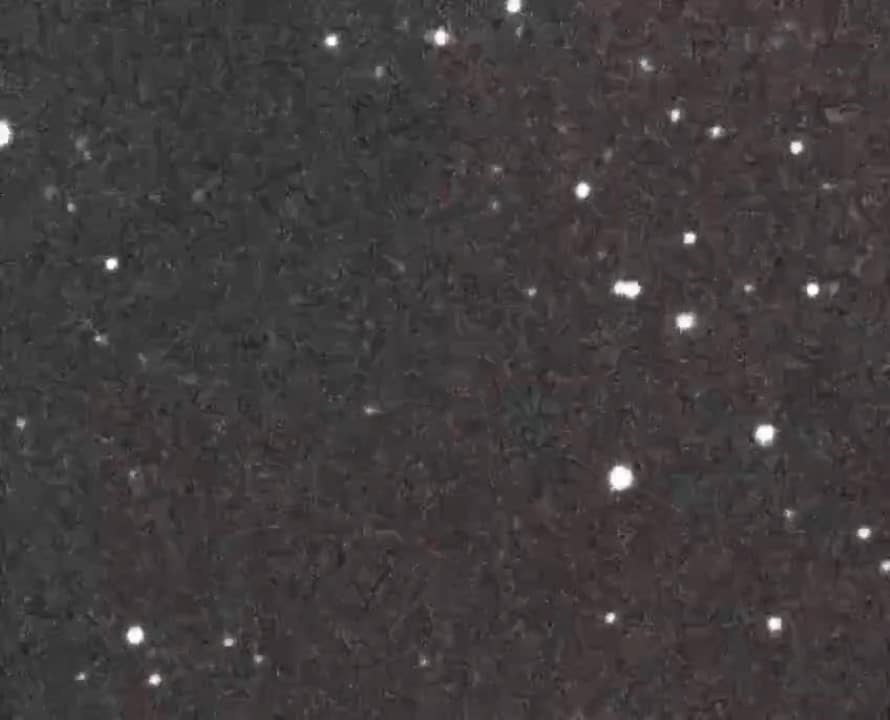
Interstellar comet 3I/Atlas, discovered in July 2025 by the Atlas telescope at Chile, continues to intrigue the international scientific community as it approaches Terra. Seguindo a hyperbolic orbit that will take it outside of Sistema Solar after its passage, this celestial object is under intense observation by several space agencies, who are coordinating efforts to map its composition and impressive speed. Sua trajectory brings it closer to Sol on October 30, 2025, 1.4 astronomical units away, and to Terra on December 19 of the same year, 1.8 astronomical units away, without any risk of collision.
Scientists at Nasa, in collaboration with international agencies, are focused on deciphering the mysteries of this cosmic visitor, who travels at speeds of 125 thousand miles per hour. Pre-discovery observations, dating back to June 2025, already indicated the comet’s uniqueness and the need for continuous monitoring to understand its origin and behavior.

The estimated age of 3I/Atlas is seven billion years, suggesting an origin in the thick disk of Via Láctea, with an approximate mass of 33 billion tons. Sua surface, covered by ice, is responsible for the formation of a spectacular coma and tail, which become more visible as the comet approaches Sol.
Unraveling the composition and structure of 3I/Atlas
The composition of 3I/Atlas reveals the presence of irradiated organic compounds, such as tholins, which give a distinct reddish color to its coma. Essa characteristic is indicative of its formation in distant cosmic environments and its exposure to intense radiation over billions of years.
The comet’s coma, a cloud of gas and dust surrounding the nucleus, has expanded from 13,000 kilometers in June to 18,000 kilometers in July 2025. Tal expansion signals a progressive release of dust and gases as the object heats up, providing researchers with valuable information about its internal activity.
Initial observations and the peculiar nature of the comet
Ground-based telescopes were able to capture the conical-shaped object, displaying a characteristic greenish glow, confirming without a doubt its cometary nature. Initial data from Nasa indicate that the comet does not change its route irregularly, which contradicts some speculations about its behavior. Essa stability in the trajectory is crucial for the accuracy of predictions of its passage and for planning future observations. The proximity to Marte on October 3, 2025, for example, has already allowed detailed images to be obtained by orbiters, revealing the presence of micrometric dust grains in its structure.
Global space monitoring efforts
Rede Internacional of Alerta of
The UN has activated planetary defense protocols, including diversion simulations, using radars, satellites and machine learning. Testes are scheduled for December 29, 2025, aiming to improve global response capacity to potential celestial threats.
Agencies such as Agência Espacial Europeia (ESA) and Agência Japonesa of Exploração Aeroespacial (JAXA) are integrating this international effort, validating automatic detection and interception systems. Global cooperation underlines the importance of a unified approach to space security.
Image Captures by Featured Missions
Telescópio Espacial Hubble recorded 3I/Atlas on July 21, 2025, at a distance of 277 million miles from Terra, revealing a teardrop-shaped dust cocoon surrounding its core. Essas images are essential for studying the comet’s morphology.
The Lucy mission, on its journey toward the Trojan asteroids of Júpiter, stacked photos on September 16, 2025, when the comet was 240 million miles away. Images captured by Lucy showed the comet’s nucleus as a faint but noticeable spot.
The Psyche mission obtained four important observations on September 8 and 9, 2025, at a distance of 33 million miles, detecting the initial formation of the comet’s coma. Esses data provides an early snapshot of 3I/Atlas activity.
Orbitador of Reconhecimento of Marte (MRO) captured images in October 2025, 90 million miles away, displaying a fuzzy ball of dust and ice. The comet’s proximity to Marte allowed a unique perspective on its structure.
Anomalies and the scientific debate about their orbit
Comet 3I/Atlas displays an inverted tail and bluish color changes as it approaches Sol, phenomena attributed to the release of hydrogen and fine dust. Essas particularities offer clues about the composition and dynamic behavior of the object.
Researchers noted 12 irregularities in its trajectory, such as a steep route through the galaxy, but confirm that the comet complies with gravitational laws. Essas observations challenge existing models and drive new research.
In-depth analysis of 3I/Atlas anomalies is crucial to understanding the diversity of interstellar objects and how they interact with the gravitational fields of different stellar systems, providing a more complete view of cosmic dynamics.
The vital contribution of amateur astronomers
Amateur astronomers in several parts of the world, including Canadá, Japão, Espanha, and Chile, have provided clear images of 3I/Atlas. The image captured by Paul Craggs on November 21, 2025, for example, surpassed in definition some of the initial photos released by Nasa.
These contributions from the amateur community complement the data collected by professional instruments, significantly expanding the catalog of images available for spectroscopic analysis and detailed studies of the comet’s morphology.
The comet’s journey after Earth’s passage
After perihelion, 3I/Atlas will continue its cosmic journey, passing through Vênus on November 3, 2025 at 0.65 astronomical units and through Júpiter on March 16, 2026 at 0.358 astronomical units. Observações continue missions like PUNCH, which combined images from September to October 2025, showing a tail elongation 231-235 million miles from Terra.
The legacy of 3I/Atlas for space science
The identification of 3I/Atlas as the third known interstellar visitor reinforces the importance of telescope networks like Atlas for issuing early warnings. The ability to detect and track these objects is a significant advance in astronomy.
The data collected from 3I/Atlas improves planetary defense models, allowing the simulation of responses to potential real threats without generating public panic. Essa is a critical area for humanity’s security and preparedness.
The comet’s prolonged observability enables detailed studies of interstellar dust, comparable to those carried out with 2I/Borisov. Essa research is critical to understanding galactic formation and evolution, offering a glimpse into the primordial conditions of the universe.



