
2026 World Cup draw defines Brazil against Morocco, Haiti and Scotland in group C

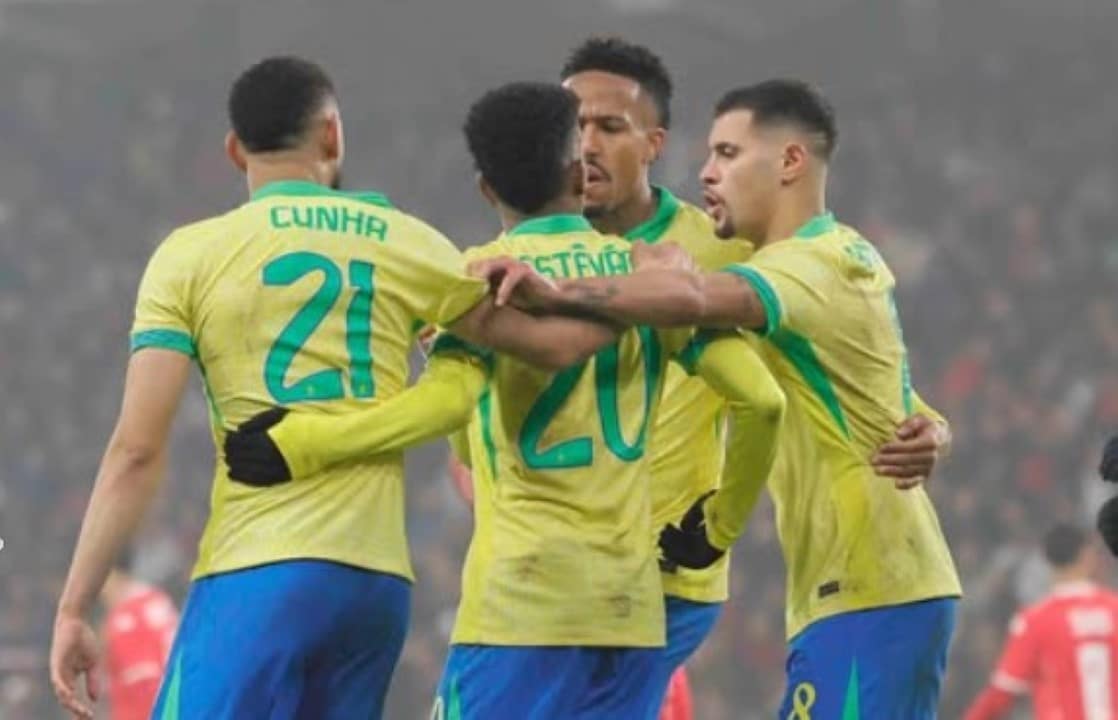
FIFA held the group draw for the Copa of the 2026 Mundo this Friday in Washington, D.C., defining the brackets for the expanded competition. The Brazilian team, under the command of Carlo Ancelotti, was allocated to Grupo C, where it will face the teams of Marrocos, Haiti and Escócia. Esta edition of the tournament, which promises to be the biggest in history, will feature 48 participating teams.
The Brazilian team’s first games will be played in several cities in the Estados Unidos, including Boston, Nova York, Filadélfia, Miami and Atlanta. The debut of the green and yellow team is scheduled for June 13, 2026, in a long-awaited clash against Marrocos.
The competition, with an unprecedented format of 104 matches, will be held between June 11 and July 19, 2026, spread across three host countries: Estados Unidos, Canadá and México. Esta expansion aims to include more nations and diversify the world football scene.
Brasil’s opponents in group C
Marrocos arrives at this Copa of Mundo in 2026 with the status of one of the big surprises of the previous edition, having reached the semi-finals in 2022. The African team, currently in 13th position in the FIFA rankings, has a robust squad with players who play in prominent European leagues, promising a considerable challenge.
Haiti, in turn, will make its debut in Copas of Mundo, after a successful qualifying campaign for Concacaf. The Caribbean team, ranked 87th in the ranking, seeks to surprise its opponents with a strategy focused on attacking speed and a compact defense, characteristics that could make life difficult for the favorites.
The unprecedented format of Copa 2026
The Copa of the 2026 Mundo marks a historic transformation in global football, introducing a format with 12 groups of four teams each, totaling 48 participating teams. Essa restructuring aims to expand continental representation and offer more opportunities for nations from different regions of the world to demonstrate their potential on the international stage.
The top two from each group will advance directly to the knockout stage, which will now include a round of 32 teams before the round of 16. Além In addition, the eight best third-placed teams will also guarantee a place in the next stage, increasing the competitiveness and excitement in all group stage matches.
FIFA estimates record attendance at stadiums, with around 5.5 million fans expected to attend games throughout the tournament. The full calendar, with detailed local times, will be released soon, while the official opening is scheduled for Estádio Azteca, at México, with the game between the host team and a team to be determined.
Path of the selection in the knockout stage
Projections for the path of Brasil in the knockout phase of Copa of Mundo in 2026 indicate complex but defined scenarios. Caso the Brazilian team takes the lead in Grupo C, their opponent in the round of 16 will be the runner-up in Grupo F, a group that includes teams like Holanda and Japão, known for their strength and for having already faced Brasil in recent competitions.
Advancing to the quarterfinals, a possible awaited clash would be against the vice-leader of Grupo E, which includes Alemanha and Equador. The semi-final, in turn, could pit Brasil against powers such as Argentina or Espanha, depending on the crosses and the teams’ performance in the previous stages of the tournament, promising duels of high technical level and rivalry.
[[_2]
[[_0]
Overview of other groups
The distribution of the groups from Copa to Mundo in 2026 revealed a series of interesting and balanced clashes, in addition to the Brazilian group. Grupo A, for example, will host México, who will face África from Sul and Coreia from Sul in their search for a place in the next phase. No Grupo B, Canadá, another host country, will face off against Suíça and Nova Zelândia, promising intense duels.
Other keys also stand out, such as Grupo D, where Estados Unidos, also hosts, will face Austrália and Jordânia. Alemanha leads Grupo E, which includes Equador and Arábia Saudita, while Holanda heads Grupo F, alongside Japão and Tunísia. Bélgica begins its journey in the Grupo G against Irã and Gana, and the Espanha leads the Grupo H with Uruguai and
Preparation of Ancelotti and team
Carlo Ancelotti took command of the Brazilian team in 2025, focusing on a process of tactical renewal and the consolidation of new talents. Jogadores like Vinícius Júnior and Rodrygo are seen as fundamental pillars in the team’s attack, representing the new generation that will seek the long-awaited six-time championship. Confederação Brasileira of Futebol (CBF) plans a series of strategic friendlies in 2026 to test formations and improve squad cohesion.
The expectation is that preparatory training will take place in centers of excellence in the Estados Unidos, ensuring the athletes’ adaptation to the local environment before their debut. The presence of a vast Brazilian fan base is expected, with projections of up to 70 thousand fans supporting the team in the games, reinforcing the Copa atmosphere of Mundo.
Global impact of the tournament
The official draw for the Copa groups of the 2026 Mundo generated a massive response, attracting more than 200 million online views on digital platforms and television broadcasts. FIFA projects a historic global audience record for the tournament, with broadcasts scheduled for more than 200 countries, consolidating the event as one of the biggest sporting spectacles on the planet and boosting the local economy by billions of dollars in the host countries.
[[_3]
[[_1]
All competition groups
The complete distribution of the 48 teams into 12 groups offers a detailed overview of the challenges each team will face in the initial phase. The host countries – México, Canadá and Estados Unidos – were strategically allocated into fixed groups (A, B and D, respectively), guaranteeing home games and facilitating the initial logistics of the tournament.
Six places are still up for grabs depending on the results of the playoffs to be held in March 2026, adding an extra layer of expectation to the final makeup of some groups. The geographical diversity and the strength of the clashes are elements that promise an exciting and unpredictable group stage.



