
Putin and Modi strengthen ties in Delhi with focus on energy and billion-dollar trade

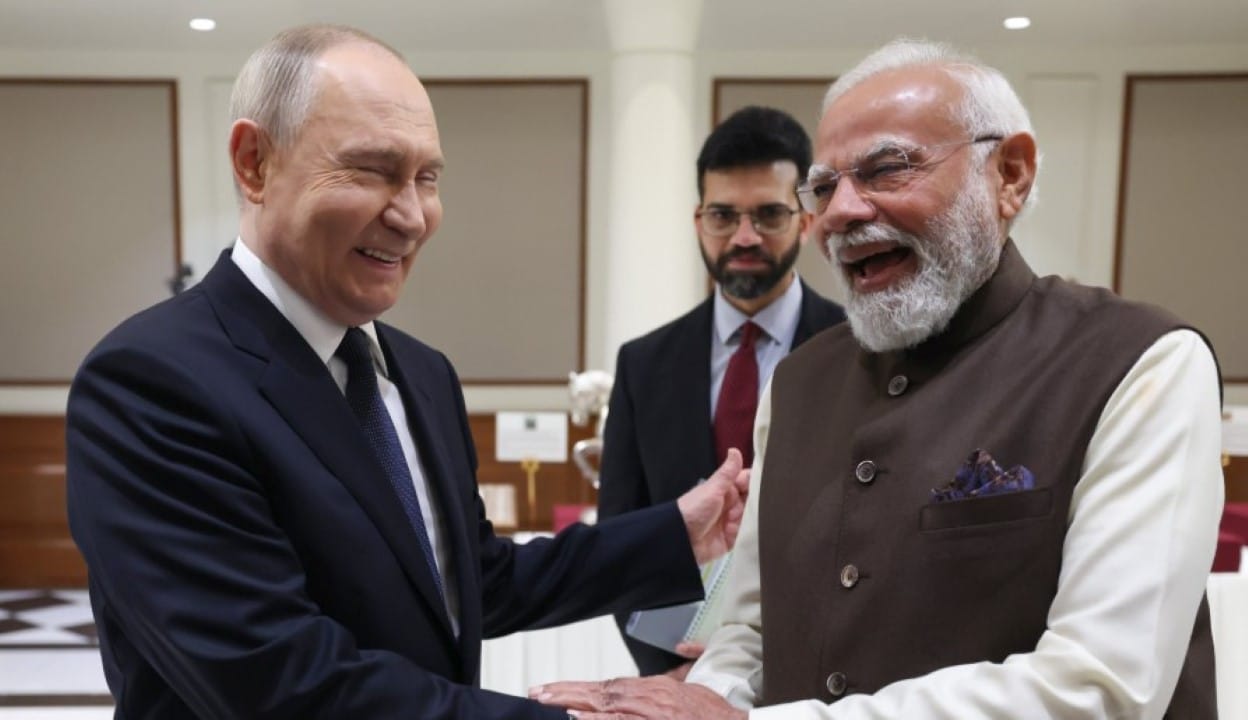
Russian President Vladimir Putin concluded this Friday (5) his two-day visit to Índia, where he met with Prime Minister Narendra Modi in Nova Délhi. The meeting, the first since the start of the war in Ucrânia in 2022, highlighted the search for greater economic cooperation amid Western pressure. Líderes signed agreements in areas such as energy, trade and defense, aiming to overcome global challenges.
The reception included military honors at Rashtrapati Bhavan and a private dinner at Modi’s residence, signaling the closeness between the governments. Putin arrived on Thursday (4), received personally by Modi at the airport, breaking usual protocols. The main objective was to strengthen the strategic partnership, with an emphasis on market diversification.
Discussions took place at the 23rd Cume Anual Índia-Russia, covering topics such as US sanctions and tariffs imposed by Donald Trump. Índia, the biggest buyer of Russian oil, faces accusations of financing the conflict in Kiev. Ambos the sides reaffirmed commitments to energy stability and bilateral growth.
- Signed agreements include an economic cooperation program until 2030.
- Focus on critical minerals and supply chains for key industries.
- Partnership in pharmaceuticals, with joint factory in the Kaluga region, in Rússia.
Warm welcome reinforces historic alliance
The arrival of Putin to Nova Délhi was marked by symbolic gestures that highlight the decades-long relationship between the countries. Modi greeted him with a hug at the airport, a gesture reserved for close allies, and the two leaders shared an informal dinner on Thursday. Esse private meeting allowed discussions on sensitive issues, such as the international situation and bilateral ties.
Indian President Droupadi Murmu hosted a banquet at Rashtrapati Bhavan, with a vegetarian menu that celebrated regional Indian cuisine. Putin laid flowers at Mahatma Gandhi’s memorial in Raj Ghat, reinforcing the tone of mutual respect. Analistas see these acts as a response to Russian diplomatic isolation post-2022.
Russian media praised the protocol, describing the 340-room presidential palace as an ideal setting for the visit. Para to Índia, the event projects autonomy amid tensions with Ocidente, especially after the re-election of Trump.
Trade agreements boost ambitious goal
Bilateral trade jumped from $8.1 billion in 2020 to $68.72 billion in March 2025, driven by Indian purchases of discounted Russian oil. Líderes set a target of US$100 billion by 2030, with an emphasis on diversification beyond energy. Putin highlighted Russian readiness for uninterrupted shipments of oil, gas and coal, meeting India’s demand for energy security.
Modi has pushed for greater access to Russian markets for Indian products such as pharmaceuticals and machinery. Acordos include visa facilitation for up to 1 million skilled Indian workers in Rússia and investments in new shipping routes. Índia seeks to balance 50% US tariffs on its exports, using the partnership with Moscou as a counterweight.
Negotiations have progressed towards a free trade agreement with the União Econômica Eurasiana (EAEU), which covers Rússia, Armênia, Belarus, Cazaquistão and Quirguistão. Essa structure will facilitate exchanges across multiple sectors, reducing dependence on traditional routes.
The Índia-Russia business forum brought together delegations to discuss “Make in India”, with Putin praising Modi’s initiatives for technological sovereignty. Resultados include joint ventures in agriculture, healthcare and shipbuilding.
Energy at the heart of sensitive negotiations
Putin has promised stable fuel supplies despite Western sanctions that reduced Indian imports to three-year lows in December. Índia, which absorbs 40% of Russian oil exported by sea, sees the partnership as an anchor against price volatility. Modi emphasized diversification of sources, including liquefied natural gas (LNG) and routes via Irã and Turquia.
Discussions touched on small modular nuclear reactors, with cooperation on projects such as Kudankulam 7-12. Rússia has committed to supporting the expansion of Indian nuclear capacity, in line with the target of 22,480 MW by 2031. Critical Minerais, essential for batteries and electronics, have entered into joint supply agreements.
Pressure from Washington, with accusations of Russian war financing, was indirectly addressed. Líderes agreed to protect payments via the ruble-rupee mechanism, isolating exchanges from dollar sanctions.
For Índia, maintaining cheap energy flows controlled internal inflation, benefiting 1.4 billion citizens. Putin, in turn, gains stable market amid European losses.
Defense without major announcements, but with firm commitments
No blockbuster defense contracts were revealed, but leaders agreed to reshape ties to prioritize Indian self-reliance. Isso includes joint research and production of advanced platforms such as BrahMos missiles and S-400 systems. Entregas outstanding S-400 projects, delayed until 2026 due to the Ukrainian conflict, received deadline guarantees.
Speculation about fifth-generation Su-57 fighters persists, but without confirmation. The Índia seeks to fill gaps in the air force, especially following Pakistani acquisitions of Chinese J-35 jets. The renewal of a 10-year military logistics pact secures Russian spare parts, crucial for 60% of India’s arsenal.
Modi reiterated the need for timely deliveries, while Putin highlighted Rússia as a historic pillar of Indian defense. Cooperação on sailor training for polar waters and shipbuilding was extended.
Partnerships in new sectors open horizons
Healthcare agreements include pharmaceutical factory in Kaluga, producing generics for mutual markets. In education, Universidade of Délhi partnered with Universidade Superior of Economia of Moscou for a space mirror laboratory. Isso boosts research in optics and astronomy.
Tourism gained with free 30-day e-visa for Russians, and labor mobility facilitates migration of Indian professionals. In agriculture, joint ventures target fertilizers, with a Russian plant for export at Índia.
Leaders condemned terrorism, referencing attacks in Pahalgam (India, April 2025) and Crocus City Hall (Russia, March 2024). Compromisso combating terrorist financing strengthens security ties.
Modi presented Putin with Russian translation of Bhagavad Gita and black tea of Assam, cultural gestures that complement economic ones.
Global and regional commitments in focus
The talks addressed Ucrânia, with Modi reaffirming India’s stance for peace. Putin rejected recent American plan, citing Russian advances on the front. Índia navigates balance between Moscou and Washington, negotiating a trade agreement with the USA despite tariffs.
Against China, both see opportunities in Arctic and Eurasian routes. EAEU-India accelerates, countering Chinese influence in Ásia. No Sul Global, the partnership reinforces Indian leadership in the BRICS, with recent expansion.
Putin praised India’s growth, attributing it to Modi policies. The visit, amid Russian isolation, projects Moscou as a global actor via Délhi.
The Russian delegation included businesspeople who signed 28 memorandums, from navigation to civil nuclear energy.



