
Interstellar comet 3I/Atlas gains four new detailed images before approach

The interstellar comet 3I/Atlas, the second object confirmed to come from outside Sistema Solar, appears in unprecedented images captured by different space missions. The observations took place between November and early December 2025, when the visitor approaches perihelion and Terra. The closest point to the planet occurs on December 19, at 269 million kilometers.
The new images show the comet’s bright nucleus and tails in never-before-seen detail. Telescópios and probes that did not have 3I/Atlas as their main target were able to register it thanks to advanced processing techniques.
- Approximate current distance: 280 million kilometers from Terra
- Perihelion date (closest to Sol): December 23, 2025
- Relative speed: about 60 km/s
Observation of Telescópio Hubble
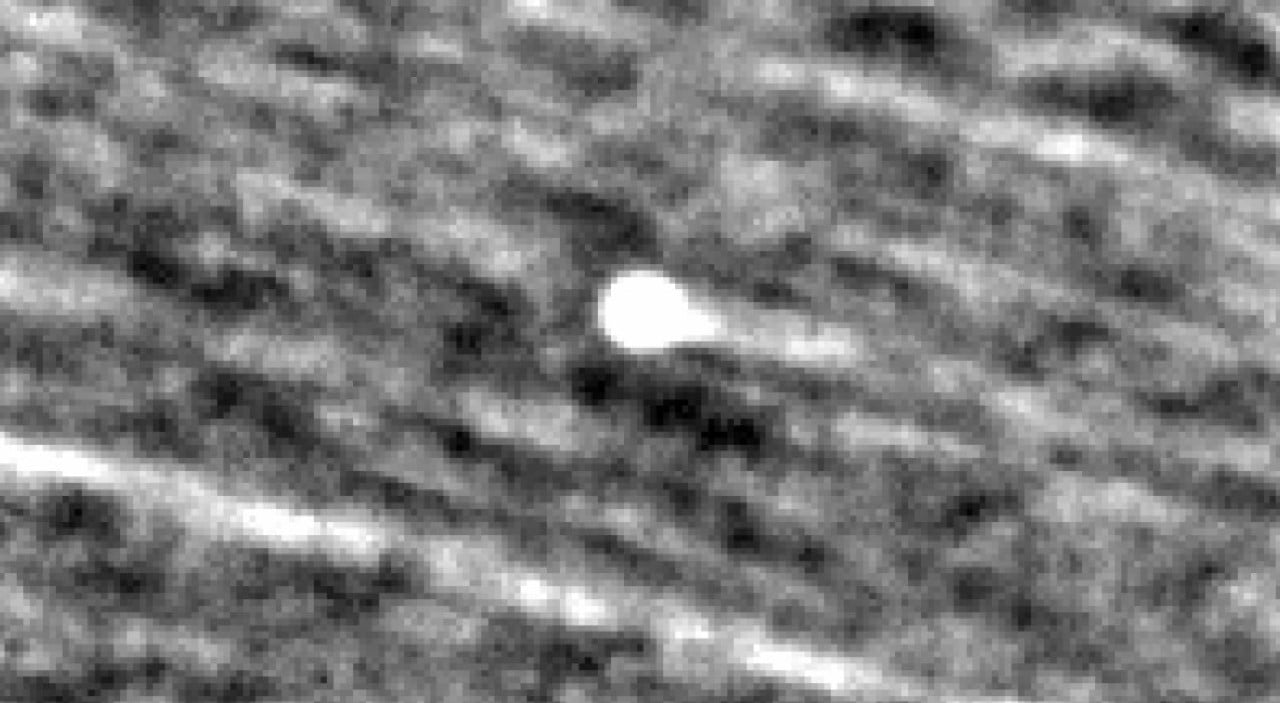
Telescópio Espacial Hubble captured the comet on November 30. In the image, 3I/Atlas appears brighter than in the first observations in July.
The background stars appear as long dashes because the telescope has tracked the object’s rapid motion. Prolonged exposure highlighted increased nucleus activity.

Unexpected registration by the JUICE probe
The JUICE probe, from Agência Espacial Europeia, recorded the comet in November as it headed towards Júpiter. The spacecraft was just 66 million kilometers from 3I/Atlas.
The partially downloaded image reveals two distinct tails. The plasma tail points away from the Sol, while the dust tail reflects light from larger particles.
An antitail also appears, formed by large grains that are in front of the nucleus in orbit. The phenomenon occurs from the perspective of the Terra-comet-Sun line of sight.

Accidental captures by PUNCH and STEREO missions
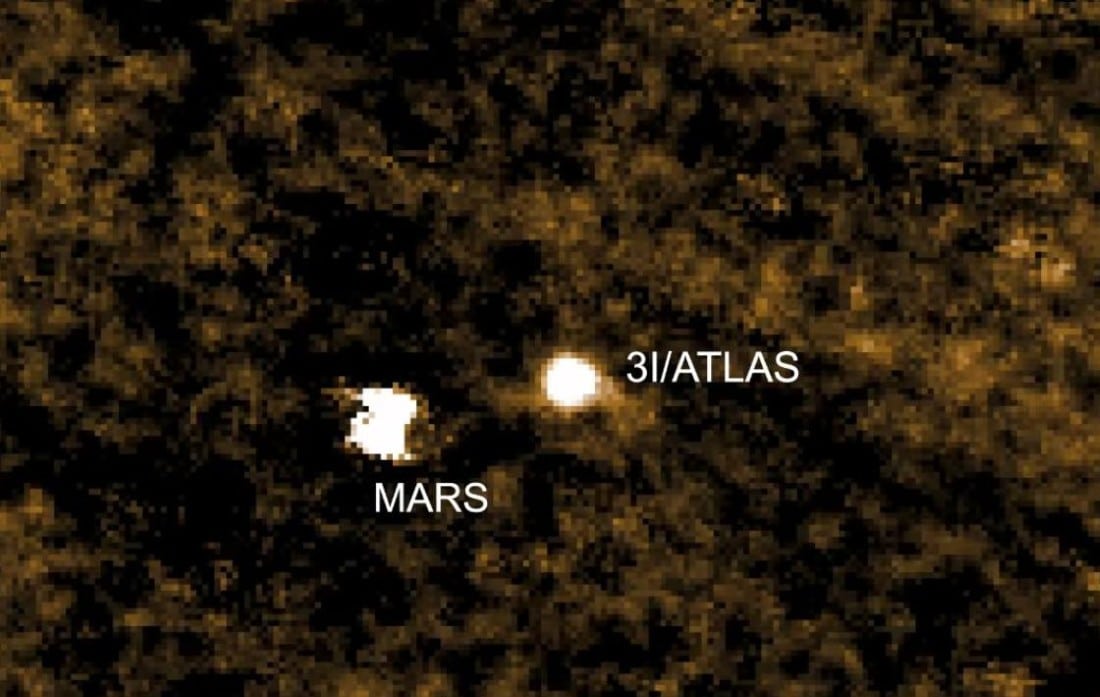
NASA’s PUNCH mission was monitoring another comet when 3I/Atlas entered its field of view. Combined processing of several exposures revealed the object as a central bright spot.
The STEREO probe, dedicated to the study of Sol, also caught the comet unexpectedly. Inicialmente considered very weak, the visitor gained visibility after advanced image processing.
Appearance in veteran SOHO
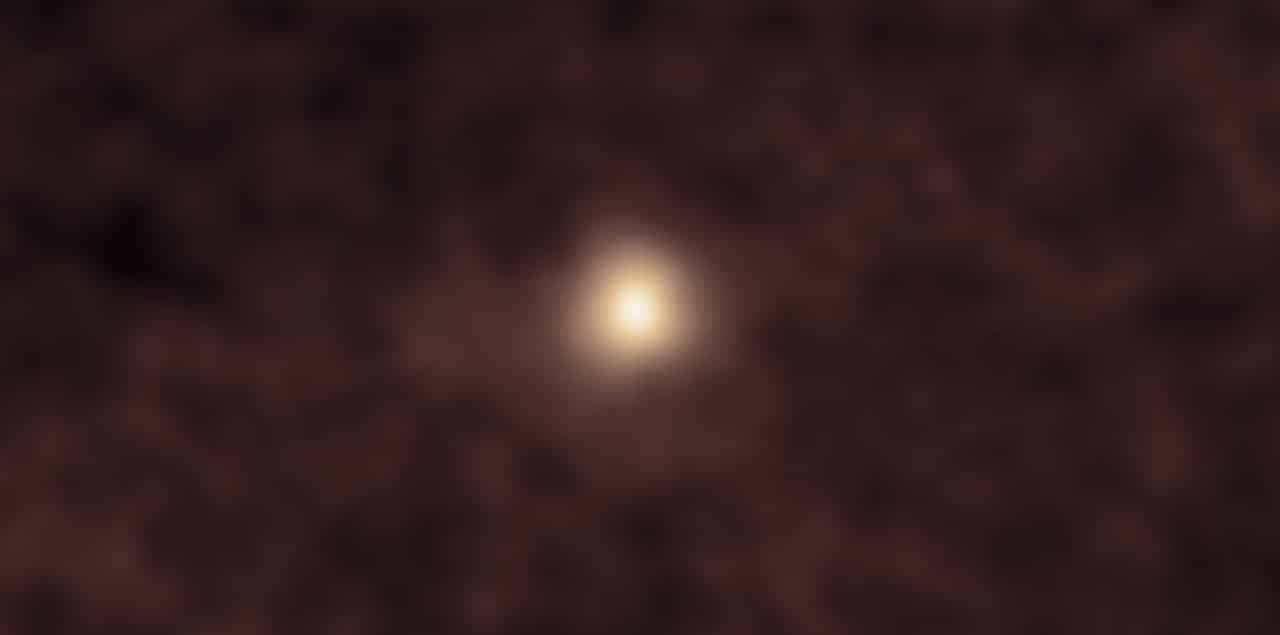
The SOHO mission, a partnership between NASA and ESA, identified 3I/Atlas in its coronal observations. Posicionada at the point of Lagrange L1, the probe has discovered more than 5 thousand comets since 1995.
Registration was only possible with special background subtraction and frame addition techniques. The comet appears as a discrete point near the blocked solar disk.
Confirmed visitor characteristics
3I/Atlas maintains a hyperbolic trajectory, confirming an interstellar origin. Descoberto in July 2025, the object has an estimated core between 1 and 10 kilometers in diameter.
Activity has increased significantly in recent weeks. The release of gases and dust forms extensive comas and tails that reach millions of kilometers in length.
Astronomers follow the comet with ground-based and space telescopes. The current window allows detailed studies before the object definitively moves away from Sistema Solar.



