
Nasa confirms unprecedented trajectory of newly discovered comet 3I Atlas, sparking global astronomical interest

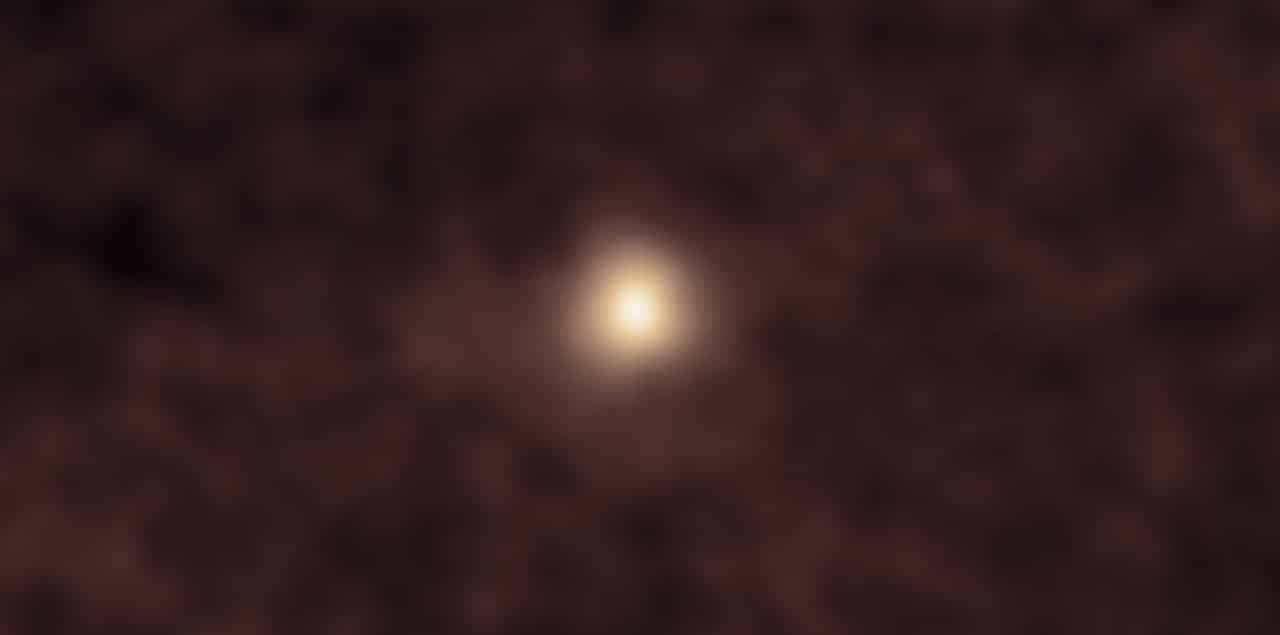
The scientific community is buzzing with excitement following NASA’s confirmation of comet 3I Atlas’s highly unusual trajectory, marking a significant moment for astrophysics in early 2025. This newly identified celestial body, believed to originate from beyond our solar system, is currently being tracked by multiple observatories and space agencies, offering an unparalleled opportunity to study pristine material from interstellar space. Its unique orbital path suggests it is merely passing through, rather than being gravitationally bound, making it a rare and invaluable target for researchers seeking clues about the universe’s earliest epochs and the formation of planetary systems far from our sun. The sheer speed and inclination of its approach have prompted an accelerated response from NASA, deploying advanced instruments to gather as much data as possible before its eventual departure from our cosmic neighborhood. This event provides a direct window into the composition of other star systems, promising to reshape our understanding of cosmic chemistry.
Initial observations indicate that comet 3I Atlas exhibits characteristics distinct from typical solar system comets. Its spectral analysis reveals an unexpected molecular signature, hinting at a composition that could challenge current astrophysical models regarding the distribution of elements in the interstellar medium. This discovery underscores the dynamic nature of our cosmic neighborhood and the continuous influx of material from distant stellar nurseries.
Scientists are particularly eager to analyze its volatile compounds, which could provide direct insights into the chemical conditions present in other star-forming regions. The data collected will be crucial for understanding:
Tracking the interstellar visitor
NASA’s Jet Propulsion Laboratory has established a dedicated task force to continuously monitor comet 3I Atlas, employing a robust network of ground-based telescopes, including facilities like the Keck Observatory, and the advanced capabilities of the Hubble Space Telescope. The comet’s swift movement across the celestial sphere necessitates constant recalibration of observational instruments to maintain precise tracking, a challenge met by innovative adaptive optics and sophisticated predictive algorithms. This intensive effort aims to accurately map its exact trajectory and predict its closest approach to the sun, an event anticipated to occur in late 2025, which could dramatically increase its visibility and activity.
The data streaming in from these observations is being processed at an unprecedented rate, providing astronomers with real-time updates on its velocity, brightness, and any signs of outgassing activity as it reacts to solar radiation. Such detailed tracking is vital for understanding how interstellar objects interact with a star’s gravitational field and radiation pressure, potentially revealing new physical processes.
International collaboration intensifies
The arrival of comet 3I Atlas has spurred an exceptional level of international collaboration, with space agencies and scientific institutions across continents pooling resources and expertise. The European Space Agency (ESA) and various national observatories are actively contributing to the observation effort, sharing data through secure global networks. This coordinated response ensures comprehensive coverage and diverse perspectives on the comet’s behavior.
Such a unified approach allows for multi-wavelength observations, capturing different aspects of the comet’s properties, from its icy nucleus to its expansive gas and dust tails. This synergy enhances the scientific return, providing a richer dataset than any single agency could acquire alone.
Unique composition and origins unveiled
Early spectroscopic analysis of comet 3I Atlas suggests a chemical fingerprint unlike any comet previously studied within our solar system, indicating a truly unique origin. Researchers have detected higher-than-expected concentrations of complex organic molecules and volatile ice compounds, potentially preserved in their pristine state from its immense journey through interstellar space. This finding strongly supports the hypothesis that the comet originated in a much colder, more distant environment than our own solar nebula.
The presence of these specific organic compounds could offer profound insights into the raw materials available for planet formation in other star systems, potentially revealing commonalities or striking differences in cosmic nurseries. Scientists are meticulously comparing these molecular signatures with those found in meteorites and comets native to our own solar system, hoping to identify universal building blocks or unique interstellar components that have never been observed directly before. This comparative study is anticipated to rewrite sections of current astrophysical textbooks by providing empirical evidence from beyond our local stellar neighborhood. The data also suggests an unusually high dust-to-gas ratio in its coma, which could indicate a unique formation process, a different evolutionary history, or a distinct interaction with interstellar radiation during its long voyage.
Observational campaigns and future missions
Astronomers worldwide have mobilized to participate in a coordinated observational campaign targeting comet 3I Atlas, leveraging every available instrument from Earth-based giant telescopes to orbiting space observatories. Professional observatories, alongside a growing number of citizen scientists and amateur astronomers, are contributing valuable data, enhancing the collective understanding of this rare visitor and fostering a global sense of shared discovery. The collaborative nature of this effort highlights the global scientific community’s commitment to unraveling cosmic mysteries.
NASA is also actively considering potential rapid-response mission concepts to further study 3I Atlas, although the tight timeline and the comet’s high velocity present significant engineering challenges that require innovative solutions. Such ambitious missions would aim to gather in-situ data, providing direct measurements of the comet’s coma and nucleus, which would be invaluable for validating remote sensing observations and understanding its pristine composition up close. Any proposed mission would need to launch with extreme urgency to intercept the fast-moving object before it recedes too far into interstellar space.
Scientific implications for cosmic understanding
The arrival of comet 3I Atlas provides an exceptional opportunity to test long-standing theories about the origins of life and the distribution of matter in the universe, pushing the boundaries of astrophysical inquiry. By studying an object that has traveled vast distances between star systems, scientists can gain direct evidence of materials that might have seeded early Earth with essential building blocks for life, offering a tangible link to abiogenesis. This direct sample of interstellar material, albeit remotely observed, is a treasure trove of information that promises to deepen our cosmic perspective. Understanding its unique chemistry and physical properties could refine models of stellar and planetary evolution, offering unprecedented insights into how other solar systems form and evolve. It offers a tangible connection to star systems far beyond our own, bridging critical gaps in our knowledge of the cosmos and providing empirical data to inform future theoretical frameworks. The insights gleaned from 3I Atlas will undoubtedly shape future astronomical research agendas for decades to come.
Public engagement and viewing opportunities
As comet 3I Atlas approaches its perihelion in late 2025, public interest is expected to surge, creating a unique moment for global engagement with space science. NASA and various astronomical organizations are actively preparing comprehensive educational outreach programs to inform the public about the comet’s significance and potential viewing opportunities. Although primarily observable through powerful telescopes, some projections suggest it might become faintly visible to the naked eye under optimal dark sky conditions in certain regions, offering a rare celestial spectacle that captures the imagination.
This event serves as a powerful reminder of the vastness and mystery of space, inspiring a new generation of scientists and space enthusiasts with its profound implications.


