
Comet Tsuchinshan Atlas shines in the skies of 2025, promising an astronomical spectacle

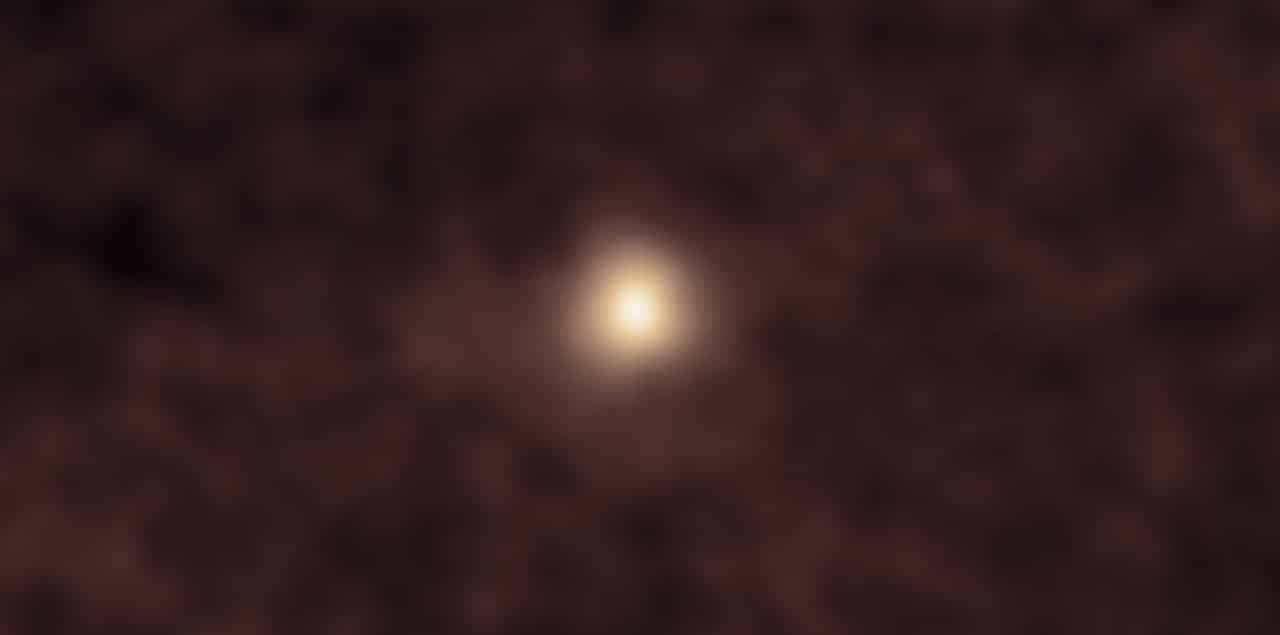
The scientific community and astronomy enthusiasts are eagerly awaiting the passage of comet C/2023 A3, known as Tsuchinshan-ATLAS, which promises to be one of the most notable celestial events of 2025. Descoberto in January 2023, this cosmic visitor has generated great interest due to its unique trajectory and the possibility of considerable brightness, making it visible to the naked eye in some regions of the planet.
This comet, traveling from a distant region of the solar system, will reach its perihelion – the closest point to Sol – in September 2024, before approaching Terra in early 2025.
Astronomers from several institutions have been monitoring Tsuchinshan-ATLAS since its discovery, using powerful telescopes to trace its orbit and predict its behavior. The analysis of its composition and trajectory provides crucial data for understanding the formation and evolution of the solar system.
The comet’s journey through the solar system
Comet C/2023 A3 was initially detected by Observatório from Montanha Púrpura (Tsuchinshan) on China and later confirmed by the ATLAS system (Asteroid Terrestrial-impact Sua’s orbit indicates that it comes from the Oort cloud, a vast reservoir of icy objects that surrounds the solar system at its edges.
This type of long-period comet takes thousands of years to complete an orbit around Sol, making its passage a rare opportunity. With each approach to the star, the ice and dust that compose it sublime, forming a shiny mane and one or more spectacular tails that reflect sunlight.
Expectations for unprecedented brightness
Initial projections about the brightness of Tsuchinshan-ATLAS in 2025 are quite optimistic, with some models suggesting that it could reach a visual magnitude similar to that of medium-bright stars, or even rival the brightest ones. Contudo, the exact behavior of a comet is always unpredictable, and the brightness can vary drastically.
The high point of its visibility for observers in Hemisfério Sul, including parts of América of Sul, is expected to occur in the first months of 2025, shortly after its passage through perihelion. Nessas weeks, observation will be most favorable during the twilight hours or just after sunset, when the dark sky allows for better contrast with the celestial object.
How to observe the phenomenon in 2025
For those who want to observe comet Tsuchinshan-ATLAS in 2025, some recommendations are essential. Primeiramente, it is crucial to look for a location with low light pollution, far from big cities. Áreas Rural or mountainous areas offer the best conditions for clear viewing.
Secondly, patience will be an ally. Embora If naked-eye visibility is expected, binoculars or small telescopes can significantly enhance the experience, revealing more details of the comet’s tail and coma. Consultar astronomy apps or updated sky maps will be key to locating your exact position in the sky.
Finally, it is recommended to follow updates from observatories and groups of amateur astronomers. Eles often share real-time information about the comet’s location and brightness, helping you plan the best time and place for observation.
The Science Behind Icy Visitors
Comets are primordial remnants of the solar system’s formation process, containing materials dating back 4.6 billion years. Eles are composed mainly of ice (water, methane, ammonia, carbon dioxide), dust and rocks. As they approach Sol, the heat causes these materials to freeze and turn into gas, creating the characteristic mane and tails.
Studying these icy objects provides valuable information about the initial conditions of the solar system and the distribution of elements that may have been crucial to the emergence of life. Analyzing the composition of comets helps understand where Terra’s water and other organic compounds came from.
Historical comets and current expectations
The history of astronomy is punctuated by famous comets that captivated humanity, such as comet Halley, which returns every 76 years, and Hale-Bopp, which enchanted the skies in 1997.
Tsuchinshan-ATLAS, with its potential magnitude and prolonged visibility, promises to follow this tradition. Ele is a vivid reminder of the constant dynamics of the cosmos and the beauty that hides in the depths of space. With each new passage, comets invite us to look up and reflect on our place in the vast universe.
Technology and the future of observation
Technological advances in telescopes and digital cameras have revolutionized the way we observe and study comets. Equipamentos technology allows us to capture high-resolution images and collect spectral data that reveal the chemical composition of these celestial bodies. Satélites and space probes, such as ESA’s Rosetta mission, have also played a key role, investigating comets up close and sending back detailed information that was previously impossible to obtain.



