
Neptune ends its retrograde movement this Wednesday and resumes its normal trajectory in the sky

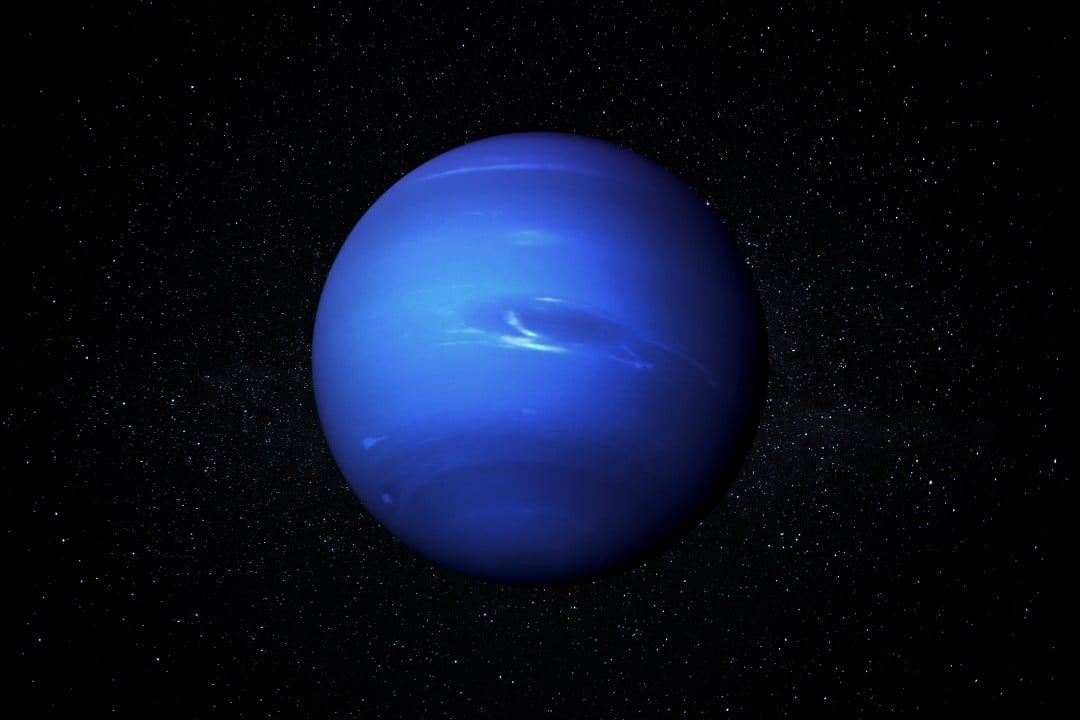
The planet Esse phenomenon, which began on July 4, lasts about 158 days and affects the visual perception of terrestrial observers.
Astronomers explain that the apparent westward movement forms a “loop” in the night sky, common to planets with orbits outside Terra, such as Júpiter and Urano.
The event occurs shortly after the opposition of Netuno, when the planet is positioned on the opposite side of Sol in relation to Terra, intensifying its visibility.
During the retrograde period, Netuno initially transited Áries, returning to Peixes on October 22, marking a significant transition in its 165-year orbit.
Explanation of the illusory phenomenon
The retrograde movement arises from the interaction between the orbits of Terra and Netuno, creating an optical illusion. As the faster-orbiting Terra passes Netuno every 12 months, the distant planet appears to reverse its direction in the sky.
This perspective changes the apparent positions of the celestial bodies, overlapping the eastern path of the constellations.
The greater the distance from Sol, the longer the retrograde period, reaching up to six months for Netuno. Astrônomos use ephemerides like DE430 from Jet Propulsion Laboratory to calculate these events accurately.
History of observations of Netuno
Neptune was discovered in 1846 by Urbain Le Verrier and Johann Galle, based on gravitational perturbations observed at Urano.
Its first space exploration took place in 1989, with the passage of Voyager 2, which revealed 16 moons and faint rings. The probe, launched by Estados Unidos, has traveled more than 20 billion kilometers and continues to send data.
In 2025, China plans a 15-year mission to orbit Netuno and study its moon Tritão, using gravity assist. The article in Chinese Journal of Aeronautics details in-depth observations, expanding knowledge about the ice giant.
Impacts on current astronomy
Voyager 2 captured images of auroras in Netuno predicted 36 years ago, recently confirmed by analysis.
Discoveries beyond the orbit of Netuno, such as trans-Neptunian objects, alter theories about the formation of Sistema Solar. Urano and Netuno, classified as ice giants, may have compositions similar to terrestrial planets, according to recent studies.
- Telescopic observations reveal winds of up to 2,400 km/h at Netuno.
- Its atmosphere contains methane, giving it an intense blue color.
- The 28-degree axial tilt causes extreme seasons of 40 years each.
This data drives future missions to explore subsurface oceans on moons like Tritão.
Astrological transition underway
Neptune began its journey in Áries on March 30, 2025, after 14 years in Peixes, influencing collective cycles. The return to Peixes during the retrograde, from October 22nd to December 10th, closes a chapter of more than a decade.
This phase coincides with retrogradations of other planets, such as Saturno and Urano, creating observable overlaps. Especialistas in astronomy monitor how these alignments affect nighttime visibility.
Space exploration towards Netuno
The proposed Chinese mission aims to enter orbit, unlike Voyager 2, which only flew over the planet.
The 15-year journey will include trajectory adjustments via gravity of Tritão, allowing for extended studies. Tritão, captured from another celestial body, displays nitrogen geysers and a retrograde orbit.
- The largest moon of Netuno has a diameter of 2,710 km.
- Its surface is covered with ice and volcanic craters.
- Observations of Voyager indicate active cryovolcanic activity.
- The Chinese mission will prioritize spectral mapping of the atmosphere.
Practical observation for enthusiasts
Neptune remains visible in the twilight sky for weeks after the end of the retrograde, reaching maximum altitude four minutes earlier each night.
Amateur telescopes can detect it in constellations such as Aquário, with an apparent magnitude of 7.8. Plataformas as well as In-The-Sky.org provide guides for tracking the retrograde “loop” in real time.
The phenomenon illustrates basic principles of orbital mechanics, accessible to science students.
Recent scientific advances
In 2025, analyzes of Voyager 2 confirmed auroras at Netuno, detected by radio emissions. Objetos in addition to Netuno, like Sedna, suggest the existence of a hypothetical ninth planet.
Comparative studies with Urano reveal similar dynamic atmospheres, with polar storms.
- Neptune orbits 4.5 billion km from Sol.
- Its year lasts 165 Earth years.
- Equatorial diameter measures 49,244 km.
These measurements refine models of planetary evolution.
Preparation for future missions
The Chinese proposal integrates ion propulsion technologies for efficient trajectories. Colaborações international companies, including NASA, may accelerate the launch schedule.
Triton offers data on gravitational capture, relevant to distant exoplanets. Astrônomos predict that the extended orbit will reveal seasonal variations in Netuno’s atmosphere.



