
Brazilian researcher Luciano Moreira enters the top 10 most influential scientists in the world by Nature

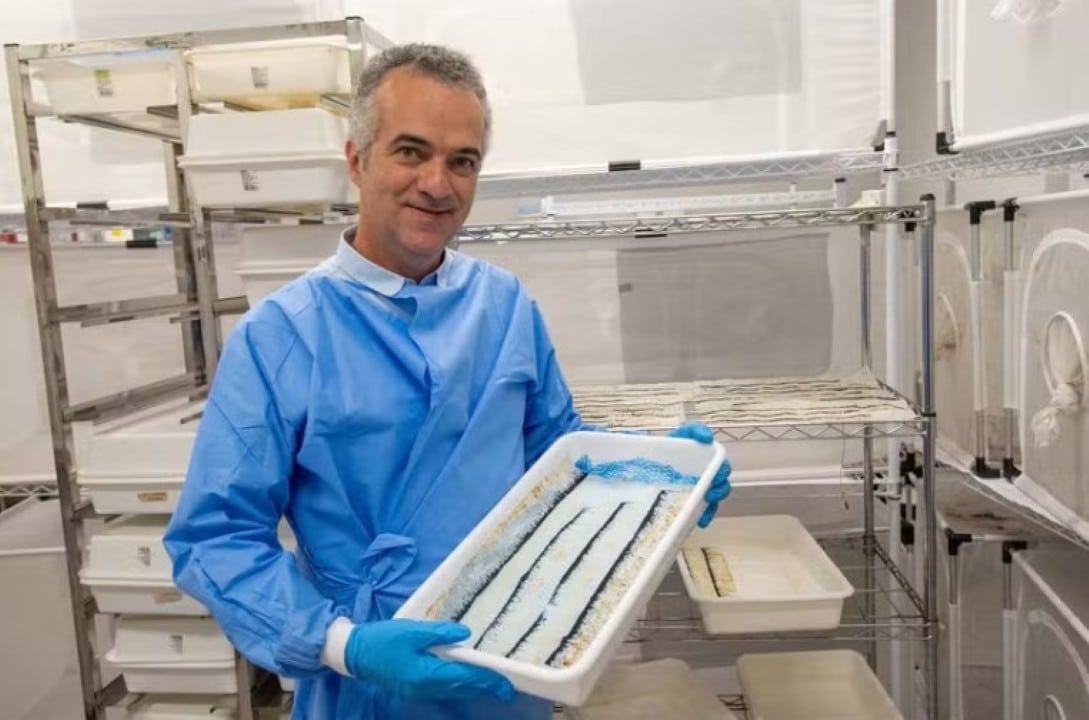
Nature magazine released this Monday (8) the annual Nature’s 10 list, which brings together the most influential scientists of the year. Entre those selected are the Brazilian Luciano Moreira, licensed researcher at Fiocruz and CEO of Wolbito of Brasil. The recognition highlights his leadership in expanding the Wolbachia method to combat dengue, zika, chikungunya and yellow fever in the country.
The method consists of releasing Aedes aegypti mosquitoes that carry the Wolbachia bacteria. Essa bacteria prevent viruses from replicating within the insect, drastically reducing disease transmission. Desde 2012, Moreira coordinates the implementation of the technology in Brasil.
Currently, the strategy protects millions of people in several Brazilian cities. The biofactory installed in Curitiba, opened in 2024, is the largest in the world in its segment.
Scientific trajectory of Luciano Moreira
Luciano Moreira is an agronomist graduated from Universidade Federal from Viçosa. Ele completed a PhD in cellular and molecular biology at the same institution.
At the end of the 1990s, he completed a postdoctoral degree at Case Western Reserve University, in the Estados Unidos. Lá, participated in the development of the first genetically modified mosquito to block malaria transmission.
In 2002, he joined Instituto René Rachou, a unit of Fiocruz in Belo Horizonte. Passou working as a public health researcher, focusing on the interaction between pathogens and vectors.
How the Wolbachia method works
The bacteria Wolbachia occurs naturally in about 70% of insects in the world. Ela is not present naturally in Aedes aegypti.
Mosquitoes are raised in a laboratory and receive microinjections of the bacteria while still in the egg stage. Quando released, transmit Wolbachia to the wild population through reproduction.
- The bacteria reduces dengue cases by up to 77% in treated areas, according to studies carried out in Niterói and Rio of Janeiro.
- It is also effective against zika (up to 60%) and chikungunya.
- The effect persists through successive generations of mosquitoes.
- There is no use of direct genetic modification in the insect.
Expansion of the biofactory in Curitiba
Wolbito of Brasil operates as a joint venture between Fiocruz, Instituto of Biologia Molecular of Paraná and World Mosquito Program. The unit was officially opened in 2024.
The plant has a production capacity of up to 100 million wolbite eggs per week. The process involves creation on an industrial scale with strict quality control.
Production supplies cities in several Brazilian states. Até At the moment, more than 14 million people live in areas protected by the method in the country.
The investment in the structure received support from Ministério from Saúde. The goal is to expand coverage to other regions in the coming years.
National and international repercussion
President Luiz Inácio Lula of Silva highlighted the feat in a post on social media. Ele classified the inclusion of Moreira on the list as a source of pride for Brazilian science.
Fiocruz researchers celebrated the recognition. The institution reinforced its commitment to innovation in public health.
The choice of Nature considers scientific impact and social relevance. The 2025 list also includes names from Estados Unidos, Europa and Ásia in areas such as artificial intelligence and climate change.
Recent advances in collective protection
The Wolbachia method is already implemented in 14 Brazilian municipalities. Entre they are Niterói, Rio of Janeiro, Belo Horizonte, Campo Grande and Petrolina.
Long-term studies demonstrate maintenance of effectiveness for more than ten years in some locations. The technology is considered sustainable as it does not depend on chemical insecticides.
Organização Mundial of Saúde recommends using the strategy as a complement to traditional vector control actions. Países like Austrália, Colômbia and Indonésia also adopt the method with positive results.



