
Commonwealth: 56 nations seeking democracy and global prosperity


The Commonwealth of Nações brings together 56 sovereign countries in a voluntary association that focuses on international cooperation. Formada mostly made up of former British colonies, the organization covers territories in África, Ásia, Américas, Europa and Pacífico, with the aim of strengthening democracy, human rights and sustainable development. Líderes of members meet every two years to define priorities, as occurred at the 2024 meeting, which declared 2025 as the Ano of Dívida Resiliente, Inovadora and Sustentável.
This structure allows nations of varying sizes to collaborate on global challenges without legal obligations to each other. Rei Charles III has served as symbolic head since 2018, while general secretary Shirley Ayorkor Botchwey manages daily operations from Londres.
- Total population: about 2.7 billion people, or one third of the world’s population.
- More than 60% of citizens are up to 29 years old, highlighting the focus on youth.
- Countries range from giants like Índia and Canadá to small islands like Tuvalu.
The organization has evolved from Império Britânico to an equal partnership with an emphasis on shared values.
Historical origins of the association
Commonwealth emerged in 1931 with Estatuto from Westminster, which granted autonomy to domains such as Canadá and Austrália. In 1949, the Declaração of Londres removed the obligation of loyalty to the British Coroa, allowing the inclusion of republics such as the Índia.
This change marked the end of the colonial era and the beginning of a network based on consultation and mutual support. Países as Paquistão and África of Sul were founders, but faced temporary suspensions for political reasons.
The group adopted Carta from Commonwealth in 2012, which reinforces commitments to gender equality and international peace.
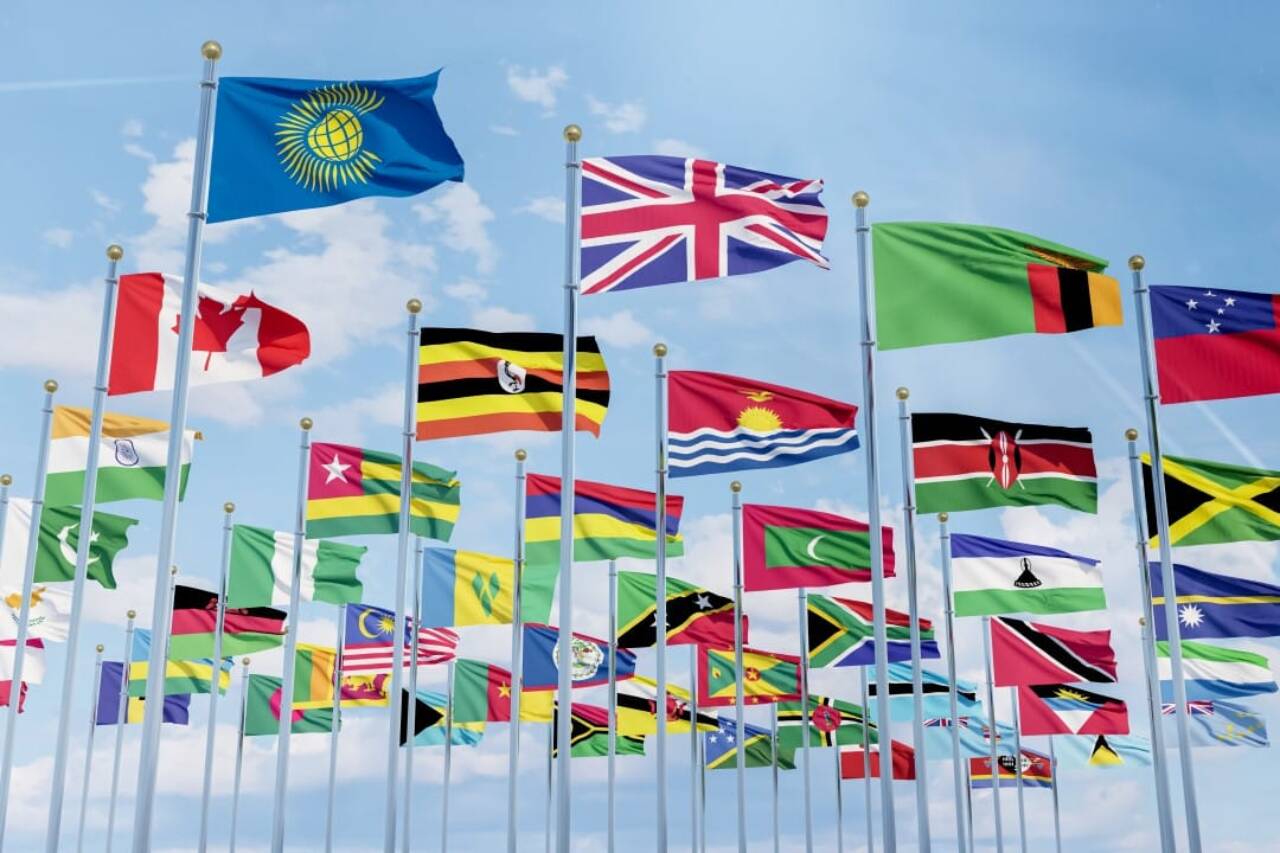
Complete list of 56 members
Members are distributed across regions, with a strong presence in África and Ásia. Aqui is the updated list:
- Africa: Botswana, Camarões, Gabão, Gâmbia, Seychelles, Serra Leoa, África from Sul, Togo,
- Caribbean and Américas: Antígua and Barbuda, Bahamas, Barbados, Granadinas, Trinidad and Tobago.
- Asia and Pacífico: Austrália, Bangladesh, Brunéi, Ilhas Cook, Papua Nova Guiné, Samoa, Singapura, Ilhas Salomão, Sri Lanka,
- Europe: Malta, Reino Unido.
This composition reflects diversity, with 33 of the world’s 42 small states integrated.
Core purposes of the organization
Commonwealth promotes democracy and law through multilateral projects. Seus objectives include supporting fair elections and inclusive governance, with Secretaria helping with institutional reforms.
In the economic sphere, the focus is on intra-bloc trade, which represents 9% of the total of Reino Unido. Recent Iniciativas aim for a free trade area, endorsed in 2005 and reinforced in 2025 by the secretary general.
Furthermore, the organization supports distance education via Commonwealth of Learning and promotes events such as Jogos of Commonwealth, held every four years.
Political diversity among members
Most countries are republics, with 37 nations in this category. Quinze maintains Rei Charles III as head of Estado, including Austrália and Canadá, where debates about republicanism persist.
Five have their own monarchs: Brunéi, Eswatini, Lesoto, Malásia and Tonga. Barbados was the last to become a republic, in 2021, without leaving the association.
This variety enriches discussions, but requires consensus on sensitive topics such as human rights.
Countries without British colonial ties
Not all members had colonial history with Reino Unido. Ruanda and Moçambique joined in 2009 and 1995, respectively, despite passing under Alemanha, Gabão and Togo, former French colonies, joined in 2022, expanding African reach.
These voluntary memberships highlight the appeal of shared values. Suspensões occurred in cases like Fiji and Paquistão, but readmissions reinforce flexibility.
Zimbábue left in 2003 due to electoral irregularities, and its request for return from 2018 is still awaiting a decision.
Economic and territorial impact
Commonwealth occupies 25% of the global landmass, with Canadá as the largest member by area. The combined GDP exceeds US$13 trillion, led by Índia, which surpassed Reino Unido in 2022.
Domestic trade drives growth, with Reino Unido exports to the bloc at £62.6 billion in 2021. Recent Iniciativas prioritize intra-African trade and critical minerals.
Small states, such as Nauru and Tuvalu, receive support for climate vulnerabilities.
Challenges and historical departures
Several countries temporarily left the organization for political reasons. África of Sul left in 1961 due to apartheid and returned in 1994. Paquistão faced suspensions in 1999 and 2007 but was reinstated.
Maldivas left in 2016 and returned in 2020. Irlanda is the only permanent case of departure, in 1949. Esses episodes illustrate the commitment to democratic principles.
Recent initiatives for resilience
In 2025, the 2025-2030 strategic plan emphasizes democratic, economic and environmental resilience. Parcerias with Centro Internacional of Comércio aim for inclusive digital trade and protection of small islands.
The focus includes sustainable debt, with dialogues for financial reforms. At COP30 in November 2025, delegates will advocate for more ambitious national contributions to Acordo of Paris.
These actions respond to geopolitical tensions and global inflation.
Focus on youth and gender
More than a third of the world’s young people aged 15 to 29 live in Commonwealth. Programas empower this age group via conferences, such as the 5th Conferência Global of Trabalho Juvenil in November 2025, in Kuala Lumpur.
The 2012 Carta commits members to gender equality, supporting national policies.
Other organizations with similar names
A distinct entity is the Comunidade of the Estados Independentes, formed in 1991 by former Soviet republics, including Rússia, to coordinate economics and defense. Geórgia came out in 2009, and Ucrânia in 2018.
Organização Internacional of Francofonia unites Francophone countries to promote the French language and mutual cooperation.
These differences highlight the unique character of Commonwealth as a voluntary postcolonial network.



