
Intense solar storm forecast for Tuesday affects aviation and global infrastructure in the US

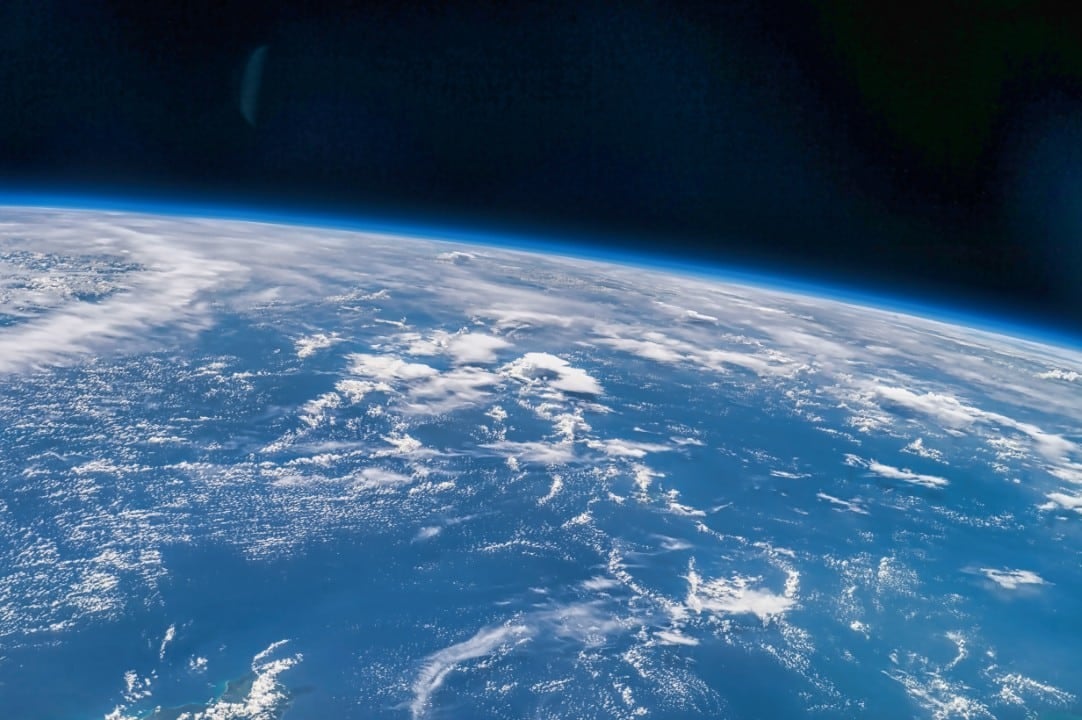
The Centro of Previsão of the Tempo Espacial of NOAA, the federal agency of the
The event should start between early morning and noon US Leste time (ET), around 10am local time. Especialistas indicate that the intensity may vary, with the possibility of peaks that affect technological systems in mid-latitudes.
The CME, associated with the active region AR3512 on Sol, travels at high speeds and must interact with the magnetic field of Terra for several hours. Autoridades have been monitoring the phenomenon since Saturday to assess precise risks.
This forecast comes in the middle of solar cycle 25, which reached its maximum in 2024 and still records above-average activity, according to data from Observatório Solar and Boulder.
- Main expected impacts: disturbances in high-frequency radio signals, especially in polar routes;
- Visibility of auroras: extending to the American West Meio and Oregon under clear skies;
- Affected sectors: aviation, satellite navigation and commercial satellite operations;
- Approximate duration: G3 conditions persisting until the end of Tuesday, with remnants on Wednesday.
Origin of the solar flare and trajectory of the CME
The M8.1 flare erupted from region AR3512 at 20:39 UTC on December 6, generating a full-halo CME observed in coronagraphs on Nasa. Modelos as WSA-ENLIL forecast arrival between 4am and 8am UTC on December 9, aligning with NOAA’s warning.
Independent analysts confirm the direct trajectory for Terra, with the solar plasma loaded with particles and magnetic fields. The Kp index, which measures geomagnetic disturbances, can reach 6 to 8, confirming the G3 level on the agency’s five-degree scale.
Potential consequences for communications
A G3 storm can degrade radio communications by 10 to 20% in affected regions, according to similar event histories. Operadores of HF reports intermittent signal losses during the day lit by Sol.
Satellites in low orbit face increased atmospheric drag, which requires orbital adjustments to avoid collisions. Empresas such as SpaceX and OneWeb have already activated contingency protocols based on advance warning.
Polar aviation, common on transatlantic routes, sees diversions in 15% of flights during G3 peaks, according to FAA reports of past storms.
GPS and marine navigation systems suffer from accuracy errors of up to 10 meters in high latitude areas, impacting commercial operations.
Expanded visibility of the Northern Lights
Auroras should become visible at lower latitudes due to the intensity of the storm. In November 2024, a G5 event allowed sightings in Flórida, and this G3 may repeat the pattern in states such as Illinois and Iowa.
Factors such as the absence of clouds and low light pollution favor observation after 10pm ET. Aplicativos auroral forecasts, like NOAA’s, indicate peaks between midnight and 4 a.m. Wednesday.
Continuous monitoring and intensity scaling
NOAA classifies geomagnetic storms as G1 to G5, with G3 representing strong but manageable conditions. Eventos of 2024, like May, caused global auroras without widespread failures in electrical grids.
Centro of Previsão issued the alert on Sunday, December 7, after analyzing images from Solar Dynamics Observatory. Atualizações occur every three hours to refine predictions.
Electrical infrastructure under surveillance
Transmission networks in the US record geomagnetic inductions that raise voltages on long-distance lines during G3. NERC, the sectoral regulator, advises utilities to isolate sensitive transformers in 5% of cases.
In 1989, a G5 in Quebec knocked out power to 6 million people for nine hours; Lessons from there have improved current protections. Para this Tuesday, operators monitor loads in real time.
Effects on satellites and navigation
More than 5,000 active satellites orbit Terra, and a G3 can alter trajectories by 1-2 km for 20% of them. Agência Espacial Europeia reports that recent flares have affected data from 10 scientific missions.
Global positioning systems experience interruptions in low-frequency signals for up to 30 minutes. Pescarias and autonomous offshore deliveries adjust routes based on NOAA alerts.
Recent solar event history
Cycle 25 has recorded 12 G3 storms since 2023, with peaks in October 2024. An X1 flare in November caused R3 radio blackouts, similar to the one on December 6.
GOES-16 data shows that solar activity declines, but active regions like AR3512 remain at high risk until January 2026.
Preparations for Observers and Critical Sectors
Aurora enthusiasts prepare equipment with light filters to capture the phenomenon. Parques nationals in Alasca and Canadá expect an influx of overnight visitors.
Defense sectors activate redundancies in military communications, while the FAA issues NOTAMs for 50 air routes. Prior preparation minimizes disruptions in 90% of G3 scenarios.
Real-time updates from NOAA
The Space Weather Prediction Center website offers maps of Kp and email alerts. Engenheiros adjust satellites based on data from DSCOVR, positioned 1.5 million km from Terra.
The storm is expected to dissipate by December 10, with residual G1. Monitoramento global coordinates efforts between NOAA, ESA and Asian agencies.



