
Nasa plans 2025 mission to study enigmatic 3I atlas comet remnants, unraveling solar system origins

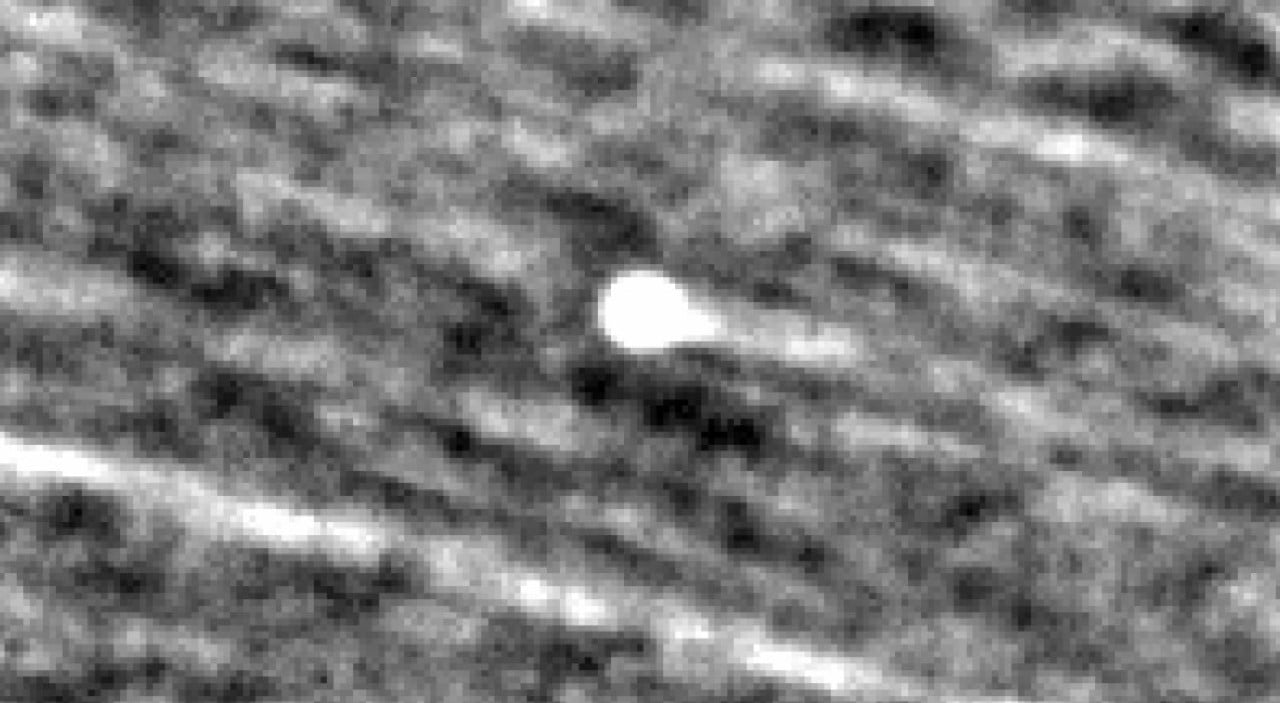
The National Aeronautics and Space Administration (Nasa) is preparing a comprehensive observation campaign for 2025, focusing on the dispersed remnants of comet C/2019 Y4 ATLAS, commonly known as 3I Atlas. This ambitious initiative aims to leverage advanced telescopic capabilities and orbital assets to scrutinize the debris field left behind by the comet’s dramatic disintegration in 2020. Scientists anticipate that these renewed observations will yield unprecedented data, providing crucial insights into the processes of cometary fragmentation and offering a unique window into the primordial conditions of our solar system’s formation. The mission represents a significant effort to understand the lifecycle of icy bodies and their volatile interactions with solar radiation, ultimately enhancing our predictive models for future cometary events.
Originally discovered in December 2019, 3I Atlas captured the attention of astronomers worldwide due to its rapid brightening and subsequent unexpected breakup, making it a prime candidate for long-term study. Its fragmentation offered a rare opportunity to observe the interior material of a comet, usually hidden beneath its icy crust, which is paramount for understanding its composition and structure.
The 2025 campaign is expected to employ a diverse array of observational tools and methodologies, ensuring a multifaceted approach to data collection. Key components of this strategy include:
- High-resolution imaging from the James Webb Space Telescope (JWST) to capture faint debris.
- Spectroscopic analysis from ground-based observatories to identify chemical signatures.
- Radar mapping from orbital assets to precisely track fragment trajectories and velocities.
Nasa’s renewed focus on cometary fragmentation
The scientific community places immense value on studying fragmented comets like 3I Atlas, as these events act as natural probes into the early solar system’s building blocks. When a comet breaks apart, it exposes pristine material that has been preserved since the solar system’s infancy, offering direct clues about the conditions and composition of the protoplanetary disk. Understanding the dynamics of these fragmentations helps researchers refine models of cometary evolution and stability, which are vital for predicting the behavior of other celestial visitors.
Data expected from the 2025 observations will include detailed spectral profiles of the liberated dust and gas, allowing for a more accurate assessment of volatile content and refractory materials. This information is critical for distinguishing between different theories of cometary formation and for understanding the delivery of water and organic molecules to early Earth.
Advanced telescopic observations planned for 2025
For the 2025 campaign, Nasa plans to harness a powerful combination of both ground-based and space-based telescopes. Observatories such as the Hubble Space Telescope will provide invaluable long-term monitoring, while the James Webb Space Telescope’s infrared capabilities will be crucial for detecting the thermal signatures of cold, distant debris. Additionally, new generation ground observatories equipped with adaptive optics will offer unparalleled resolution for tracking the smallest fragments and their individual trajectories.
Scientists are particularly keen to collect precise data points on the velocities and dispersion patterns of the 3I Atlas remnants. This will enable them to reconstruct the forces that led to the comet’s demise, whether primarily thermal stress from solar proximity, rotational instability, or the sudden release of internal gases. The comprehensive dataset will also aid in identifying any residual activity from larger fragments, indicating ongoing sublimation or further decay.
Unraveling the mystery of 3I atlas’s demise
The initial discovery of 3I Atlas in 2019 by the ATLAS survey system quickly led to excitement among astronomers, as it showed signs of becoming a remarkably bright object. Its subsequent rapid brightening, however, culminated not in a spectacular display but in its unexpected and dramatic disintegration into dozens of fragments in April 2020.
Theories regarding the comet’s breakup have ranged from extreme thermal stress as it approached the sun to internal structural weaknesses or even the sudden release of trapped volatiles. The precise mechanism remains a subject of intense debate within the planetary science community.
The 2025 study is specifically designed to test these competing hypotheses. By analyzing the composition and dynamics of the debris field with new observational technologies, researchers aim to gather definitive evidence that could point to the primary cause of its demise. This direct evidence will be instrumental in settling the debate.
Ultimately, a clearer understanding of 3I Atlas’s fragmentation holds broader implications for predicting the stability and behavior of other long-period comets, many of which originate from the distant Oort Cloud and represent some of the most pristine objects in our solar system.
International collaboration and data sharing
Space science, by its very nature, thrives on international cooperation, and the 2025 3I Atlas observation campaign will be no exception. Global partners, including the European Space Agency (ESA) and various national observatories, are expected to contribute their resources and expertise, forming a collaborative network dedicated to this unique scientific endeavor. This collective effort ensures broader coverage and a more robust dataset.
The open sharing of data and scientific findings across borders will significantly accelerate the pace of discovery. By pooling resources and intellectual capital, researchers from around the world can collectively analyze the complex information, leading to more comprehensive interpretations and fostering a global scientific understanding of cometary phenomena.
Potential for new cometary discoveries
Intensified observation campaigns, even when focused on a specific target like 3I Atlas, frequently lead to serendipitous discoveries. The heightened scrutiny of specific regions of space, coupled with advanced detection capabilities, often results in the identification of other, previously uncataloged comets or asteroids that pass through the field of view.
Citizen science initiatives also play a crucial role in these discoveries. Amateur astronomers globally contribute significantly to early detections and the initial tracking of celestial bodies, providing valuable preliminary data that can alert professional observatories to new objects.
These ongoing efforts are vital for mapping the solar system’s population of small bodies, a task crucial not only for understanding solar system dynamics but also for planetary defense strategies against potential impactors.
Impact on future space missions
The insights derived from the 2025 3I Atlas observations will profoundly influence the planning and design of future space missions targeting comets and asteroids. A deeper understanding of cometary composition, structural integrity, and fragmentation processes will enable engineers and scientists to develop more effective instruments and mission profiles for exploring these primitive objects, thereby enhancing our overall capabilities in solar system exploration.


