
Miami elects Eileen Higgins, first woman and Democrat mayor in almost three decades

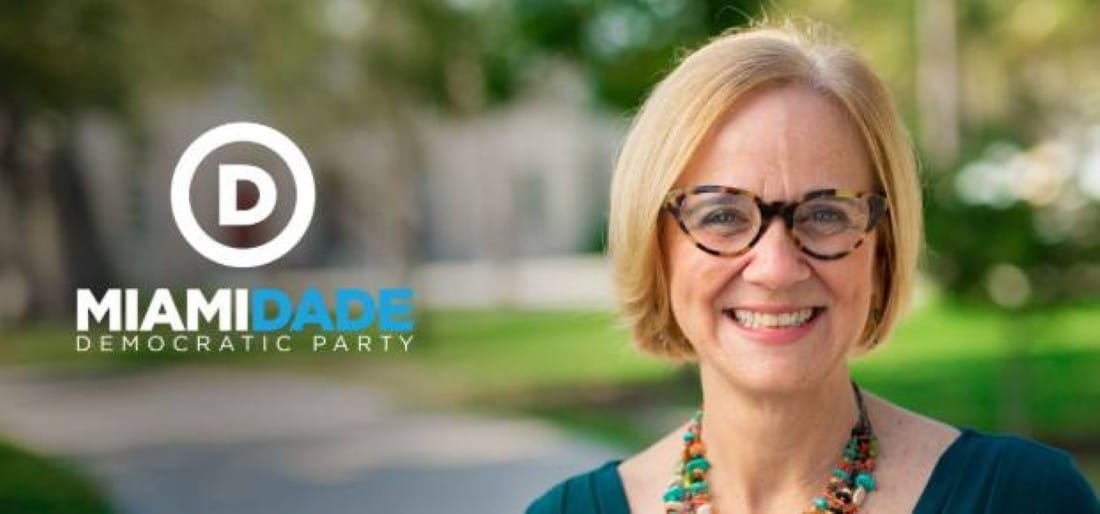
In a close election held on Tuesday, December 9, 2025, in Miami, Flórida, the former county commissioner of Miami-Dade, Sua victory over Republican Emilio González, who obtained 40.7%, represents a historic milestone, ending a 28-year Republican dominance in office and electing the first Democrat since 1997, in addition to being the first woman to lead the city.
The dispute, although officially non-partisan, gained national attention with the engagement of prominent political figures on both sides. The election took place against a backdrop of intense debates over the city’s growing affordable housing crisis and recent corruption scandals that have shaken the local administration.
During the campaign, Higgins focused on government efficiency and providing practical solutions to pressing urban challenges such as seasonal flooding and rapid population expansion. On the other hand, González defended an agenda of deregulation and the strengthening of municipal policing. Low electoral participation, with only 21.8% of voters turning up to the polls, totaled around 36 thousand votes.
Career and experience of the new mayor
Eileen Higgins built her professional career in areas of public service, with a strong presence in infrastructure and sustainable development. Sua training in mechanical engineering led her to manage transport projects at América Latina as director of Corpo at
She later served as a foreign service officer in the US Departamento of Estado, where she dedicated herself to economic development in nations such as África of Sul and México. In 2018, Higgins was elected county commissioner of Miami-Dade County in a majority Republican district, where she earned the nickname “La Gringa” due to her non-Hispanic heritage.
Throughout her eight years as commissioner, Higgins was an active voice in advocating for the expansion of public transportation, driving projects such as the Better Bus bus network and the Metrorail, as well as leading crucial initiatives to promote affordable housing. In October 2025, it secured the direction of funds to Museu and Biblioteca of Brigada 2506 of Baía of Porcos, located in Sua resigned from the position of commissioner in November 2025, to run for mayor, strictly followed the law on resignation for candidacy in force in Flórida. Having raised US$386,500 for her campaign, Higgins invested heavily in television advertisements, which positioned her with a significant advantage since the first round on November 4, where she received 35% of the vote against 19% for González.
National polarization marked the campaign
The dispute for mayor of Miami, despite being a local election, took on a national dimension due to the involvement of high-ranking political figures. The Comitê Nacional Democrata (DNC) mobilized volunteers and issued endorsements, including that of Pete Buttigieg, former secretary of Transportes.
On the weekend before the decisive vote, Higgins participated in several events alongside important Democratic figures, such as senator Ruben Gallego, from Do Republican side, Emilio González, retired colonel of Força Aérea, received direct support from former President Donald Trump and Governor Ron DeSantis. González, who had previously served as director of the US Serviço and Imigração, promised a deregulation task force to support small businesses and the modernization of municipal services, aligning himself with a conservative platform.
Political scenario and urban challenges
The second round in Miami, a rare occurrence that had not occurred since 2001, gave an atypical character to the electoral process. In June 2025, city commissioners had voted to postpone the election until November 2026, justifying the decision with the expectation of cost savings and greater participation. However, González challenged the measure in court and won, ensuring the maintenance of the original date of the election and avoiding an extension of the mandates of the then mayor Francis Suarez and others.
Suarez, who was barred from re-election after two terms, had sought the Republican nomination for president in 2023 but withdrew from the race after just two months. Sob During his tenure, Miami experienced a significant influx of affluent residents following the Covid-19 pandemic, which resulted in a substantial increase in living costs. Contudo, the city has also established itself as a hub for global events, guaranteeing the holding of Copa and Mundo FIFA games in 2026 and the G20 summit in Doral, a neighboring city.
In the first round, which featured 13 candidates, Higgins demonstrated his electoral strength by leading in all five of the city’s commissioner districts. Sua victory aligns with a series of Democratic advances seen in 2025 off-cycle elections, including an impressive performance in a special election for Câmara in Tennessee. Nikki Fried, president of Partido Democrata of Flórida, interpreted the result as indicative of the party’s continued organization and resilience in the state.
Schedule from Eileen Higgins to Miami
The new mayor will take office in January 2026, succeeding Francis Suarez in a period of international expansion for Miami. The city is preparing to host Copa and Mundo matches, an event that promises to boost tourism and the local economy, but which also intensifies existing challenges, such as housing inequality and seasonal flooding. Higgins promised to speed up municipal approval processes and invest in innovative technologies to improve the city’s public services and infrastructure.
As a Democrat in an Miami-Dade county that voted for Trump by an 11-point margin in 2024, Higgins has demonstrated her ability to build a diverse coalition, transcending ethnic and partisan barriers. Sua victory by 18 points, which corresponds to approximately 6,700 votes, reflects strong support in central districts, including the area she previously represented as commissioner. The position of mayor, although with limited executive powers, acts as an ambassador for the city. Higgins plans a close collaboration with the county’s Democratic mayor, Daniella Levine Cava, who was re-elected in 2024 without the need for a runoff, seeking synergies to face regional challenges.
Repercussions for the Democratic Party in Flórida
Democrats in Flórida face a significant disadvantage of 1.4 million registered voters in a state that has historically been a political swing state. Higgins’s victory in Miami, however, reinforces the party’s message about accessibility and local governance, echoing successes seen in recent special elections. The Comitê Nacional Democrata (DNC) sees this result as a crucial test for the 2026 elections, with a renewed focus on grassroots organizing and voter mobilization.
On the Republican side, Evan Power, chairman of the state party, downplayed the impact of the result, describing Miami as a city “leaning toward D.” Ainda Thus, the end of Republican control of city hall represents a setback, especially following endorsements from high-profile political figures. Emilio González, who started his campaign with a grassroots strategy, was unable to overcome Higgins’s substantial investments in media and advertising. The election took place amid low participation, which suggests that the focus on local issues and the motivation of specific voters were decisive in the outcome. Higgins celebrated his victory at Miami Women’s Club, a symbolic venue, to the tune of “Signed, Sealed, Delivered” by Stevie Wonder. The presence of officials such as Police Chief Manuel Morales and several commissioners at the event signaled a unified and respectful transition of power.
Calculation and transition details
Preliminary results released by the election supervisor of Miami-Dade indicated Eileen Higgins in the lead since vote counting began at around 7pm local time. Emilio González conceded defeat at approximately 8:00 pm, at an event held at Meraki Greek Bistro, where he praised his voluntary campaign and stated that he regretted nothing, expressing pride in having started from scratch as a newcomer to the race.
Higgins, accompanied by her family, spoke about the need to “turn the page on corruption” in Miami. Seu’s father, Cornelius, kissed her on stage as the crowd in attendance chanted “Eileen” and “Madam Mayor.” Diversos local politicians, including Daniella Levine Cava and commissioners like Oliver Gilbert, joined the celebration, marking a moment of unity and anticipation for the new administration. The electoral race also included other important races, such as those for commissioner in Miami Beach and Hialeah. Em Miami, Rolando Escalona emerged victorious in district 3, defeating Frank Carollo, a member of a family with a controversial political history in the city. Esses results indicate a change in local dynamics and a desire for renewal on the part of the electorate.



