
NASA monitors space object 2025 XM, similar to an airplane, which passes 475 thousand km from Earth at record speed

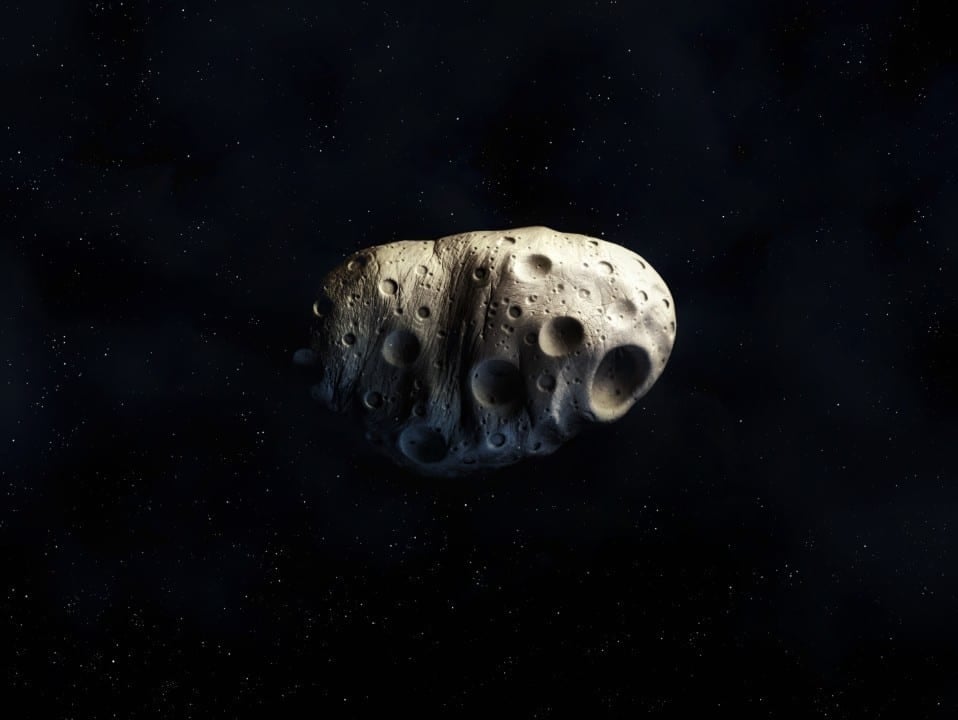
NASA monitors asteroid 2025 XM, which passes close to Terra this Tuesday, December 9, 2025, at a distance of 475 thousand kilometers. The space object, with an estimated diameter of 25 meters, travels at 15,700 kilometers per hour, according to data from Laboratório from Propulsão to Jato (JPL). Essa approach occurs without risk of collision, as the asteroid does not meet the criteria for a potentially dangerous object.
JPL, the American space agency’s research center, classifies items that are more than 140 meters in diameter and that come within 7.5 million kilometers as dangerous. The recently discovered 2025 XM measures about the size of a commercial airliner and represents an opportunity for scientific studies.
Other asteroids also cross Earth’s neighborhood this week. The 2019 XN3, measuring 15 meters, is due to pass on December 10, while the 1999 SF10, measuring 43 meters, arrives on the same day.
- Average distance Terra-Lua: 385 thousand km
- 2025 XM speed: 15,700 km/h
- Size compared: Equivalente to a Boeing 737
Trajectory and speed of 2025 XM
The asteroid follows an elliptical orbit through the solar system, driven by gravitational forces. Sua speed relative to Terra reaches 15,700 km/h during the passage, which allows brief telescopic observations.
This dynamic results from the interaction with the planetary gravitational field. JPL’s Cientistas accurately calculate trajectories to map future returns.
Classification of nearby objects
Asteroids like 2025 XM are part of the catalog from Objetos Próximos to Terra (NEOs). The agency registers more than 30 thousand items in this category.
Monitoring takes place via terrestrial and space telescopes. Updated Dados avoid unnecessary alarms.
Annual passes involve hundreds of NEOs. In 2025, 176 came closer than Lua.

Other asteroids in December
The 2019 XN3 advances to 1.36 million km on December 10th. Seu diameter of 15 meters makes it harmless.
The 1999 SF10, measuring 43 meters, reaches 1.95 million km on the same day. Velocidade estimated at 20 thousand km/h.
These events highlight constant orbital activity. Nenhum changes atmospheric conditions.
Monitoring by NASA
NASA’s Coordenação of Defesa Planetária coordinates global surveys. Parcerias with international observatories improve detections.
Telescopes like Pan-STARRS capture initial images. Análises subsequent refine orbits.
In December 2025, 12 NEOs passed closer than Lua. The focus remains on items longer than 140 meters.
- Tools used: Radar and infrared optics
- Annual reach: Mais of 1,000 detections
- Global goal: 90% of NEOs cataloged by 2030
Typical composition of asteroids
Space rocks consist of silicates and metals. 2025 XM belongs to type S, rich in minerals.
Samples from missions like Hayabusa2 reveal water and organics. Esses elements suggest primitive origins.
Spectral analysis identifies traces during passes. Dados from JPL confirm the absence of volatile elements in 2025 XM.
Comparative studies include Bennu, collected by OSIRIS-REx. Minerais crucial to life arose from ancient collisions.
Current scientific observations
Close passages facilitate rotation measurements. The 2025 XM rotates every few hours, according to preliminary models.
Spectrometers capture solar reflections for composition. Essa window lasts hours during Earth’s perihelion.
Amateur astronomers contribute via global networks. Relatos validate professional data.
Future exploration missions
NASA plans probes for selected NEOs. The DART program tested deflection in 2022.
Results confirmed viable orbital changes. Aplicações future targets 100 meter items.
Annual budgets allocate $200 million for defense. Colaborações with ESA expand capabilities.
Historical ticket records
Similar events occurred in 2023 with the 2023 BU. Distância of 3,200 km set a recent record.
In 2013, Chelyabinsk exploded in the atmosphere. Energia released was equivalent to 500 kilotons.
Records show 150 lunar passes in 2025 through November. Tendências indicate increased detections.
Implications for space research
NEO data feeds ancient climate models. Impactos shaped Earth’s oceans.
Simulations predict 2025 XM returns in decades. Ciclos orbitals last 2-3 years.
Advances in AI speed up processing. Previsões now achieve 99% accuracy.




