
Scientists solve 39-year-old mystery about intense radiation belt on Uranus detected by Voyager 2

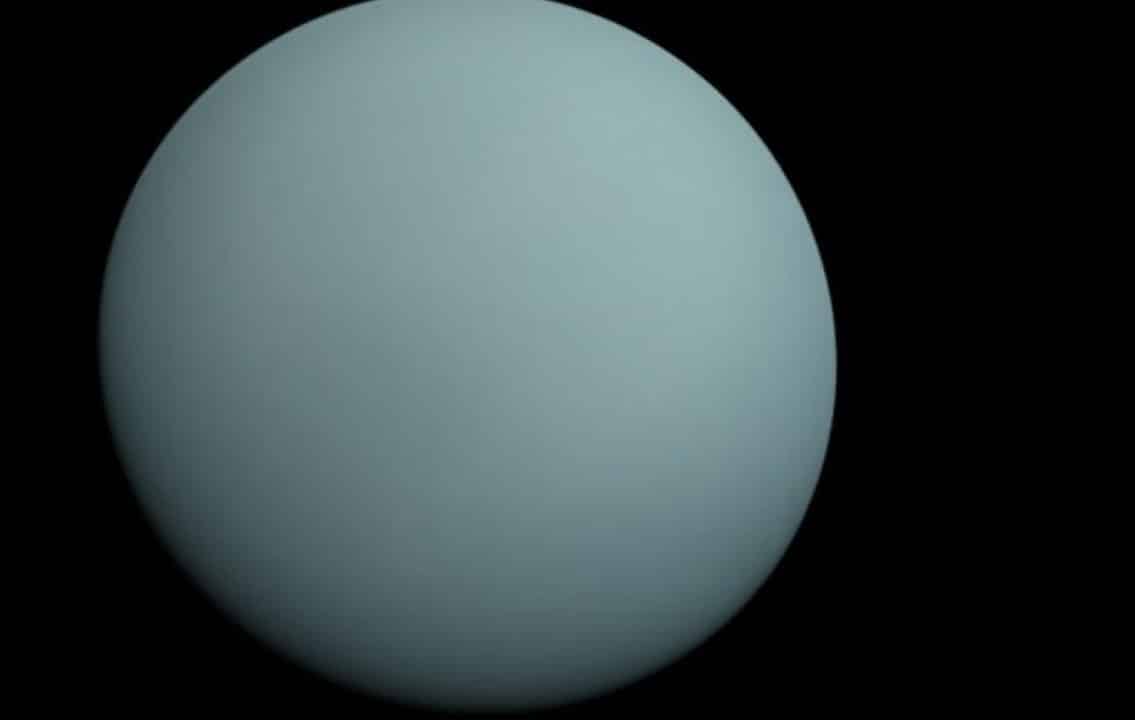
A reanalysis of data from the Voyager 2 probe, collected during the flyby of Urano in 1986, indicates that the planet was observed under exceptional solar wind conditions.
The probe recorded a belt of electron radiation with energy levels much higher than expected, creating an enigma that persisted for decades.
Researchers at Southwest Research Institute (SwRI) propose that a transient structure in the solar wind, known as the co-rotating interaction region, was crossing the Uranian system at the time.
This structure generated high-frequency waves capable of accelerating electrons to relativistic energies.
- Voyager 2 remains the only mission to perform direct measurements in the radiation environment of Urano.
- Initial data characterized the planet with a weaker ion belt and an unexpectedly intense electron belt.
- Comparisons with exoplanets reinforced the difficulty in explaining the support of so much trapped radiation.
Original observations from Voyager 2
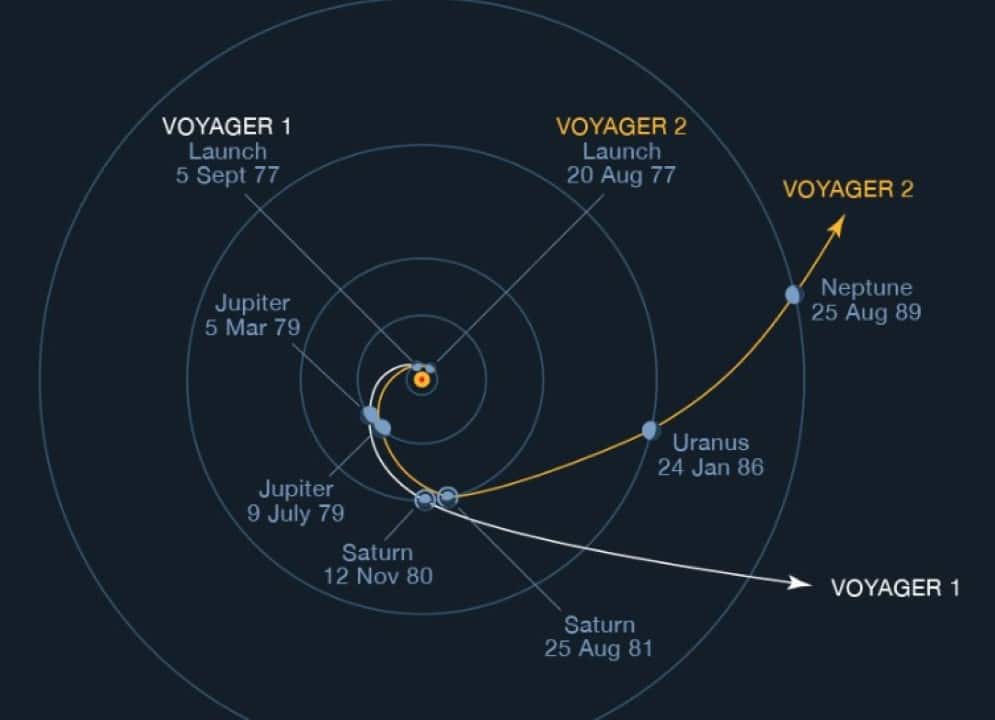
The probe Voyager 2 passed through Urano in January 1986 and detected high-frequency waves, the most powerful recorded in its entire trajectory. At the time, it was believed that these waves would disperse electrons into the planet’s atmosphere.
Later advances in ground-based observations showed that, under certain conditions, they accelerate particles and inject extra energy into the radiation belts.
Comparison with terrestrial events
A similar event occurred on Terra in 2019, when a fast solar wind structure caused massive acceleration of electrons in the belts of Van Allen.
The researchers identified similarities between the signatures observed in Urano and these terrestrial processes.
High-frequency chorus-type waves arise in interactions between the solar wind and the magnetosphere. Essas waves can compress the magnetosphere and generate intense activity.
Particle acceleration mechanisms
Solar interactions at Urano likely drove enhanced chorus wave emissions. Essas waves accelerated electrons to speeds close to that of light.
The transient event explains why energy levels exceeded predictions based on standard models. The reassessment contextualizes the measurements as a result of non-normal solar wind conditions.
1986 mission data
Voyager 2 has provided the only in situ measurements of the Uranian magnetospheric environment to date. The instruments detected high relativistic electron flows.
Observations included compression of the magnetosphere and substorm activity. Esses elements align with patterns seen in Earth’s geomagnetic storms.
Comparative approach adopted
The team adopted a comparative analysis between data from Voyager 2 and terrestrial observations from recent decades. Essa method revealed that similar mechanisms operate in different planetary magnetospheres.
Science has advanced since 1986, allowing waves previously seen only as dispersive to be reinterpreted.
Implications for similar systems
The findings apply to other ice giants, such as Netuno. Elas highlight the variability of radiation belts in response to the solar wind. Questões remain on the exact physics of intense waves and their formation.
A dedicated mission to Urano could clarify these processes with prolonged measurements.
Need for new explorations
The results reinforce the importance of an orbital probe for Urano. Observações unique to Voyager 2 limit the complete understanding of the system.
Transient events can drastically alter the radiation environment. Estudos futures would benefit analogous planetary systems.



