
Comet 3I/Atlas reveals methanol and cyanide at levels never seen before, says NASA

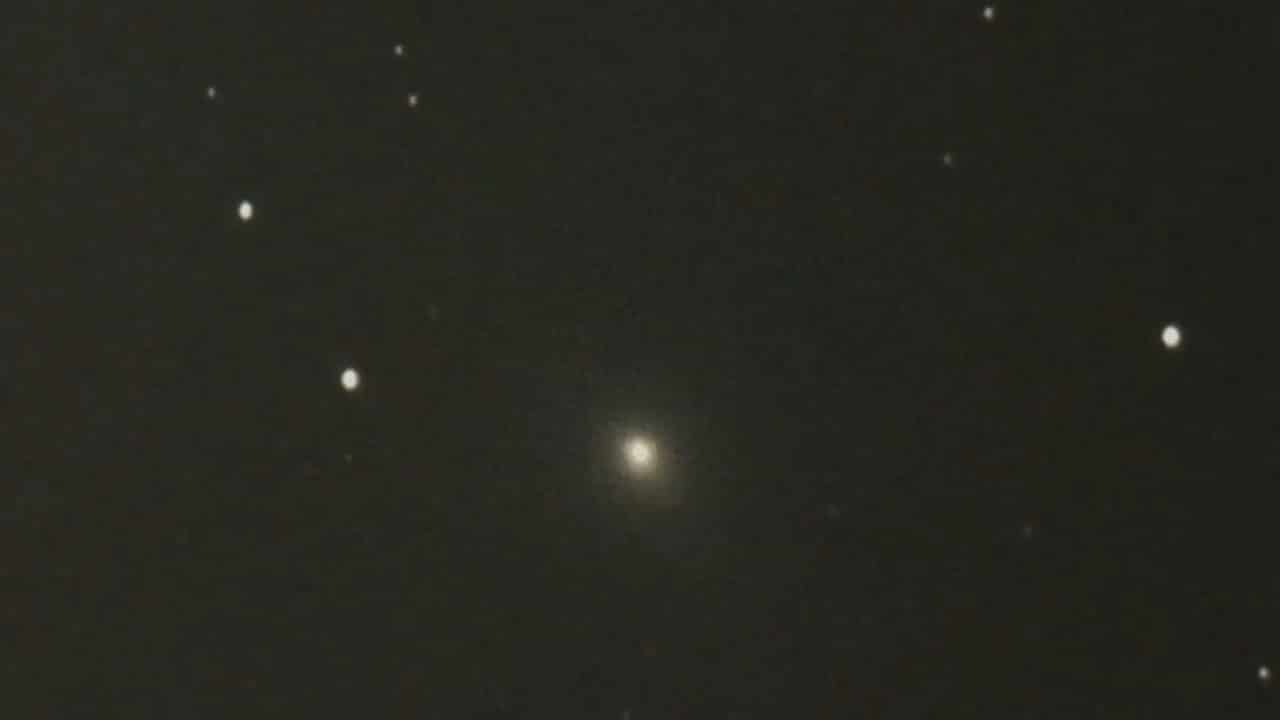
Nasa confirmed, on December 10, 2025, that the interstellar comet 3I/Atlas contains record amounts of methanol and hydrogen cyanide. The observations were carried out by the ALMA telescope, in the desert of Atacama, on Chile, in partnership with the Centro of Voos Espaciais Goddard. Essas molecules are considered precursors of amino acids and proteins essential to life.
The object, the third interstellar comet already identified, has more than 8% of its vapor composed of methanol, a value four times higher than that recorded in other bodies in Sistema Solar. The data indicate that organic compounds are present both on the surface and inside the core.
Origin of comet 3I/Atlas
3I/Atlas was discovered in 2025 and has a hyperbolic trajectory, which confirms its origin outside of Sistema Solar.
Its high speed prevents it from being captured by solar gravity, allowing only a few months of observation before it definitively moves away.
Detailed chemical composition
ALMA analyzes revealed abnormal concentrations of methanol (CH₃OH) and hydrogen cyanide (HCN).
These molecules are fundamental blocks for the formation of amino acids, basic components of proteins. Scientists highlight that simultaneous and large-volume presence is rare in known objects.
The uniform distribution suggests that the compounds are part of the comet’s original structure, not the result of surface processes.

Comparison with other objects
Sistema Solar comets, such as 67P/Churyumov-Gerasimenko, have less than 2% methanol in their vapor.
2I/Borisov, the second interstellar comet detected, also showed traces of hydrogen cyanide, but in much lower quantities. The proportion observed in 3I/Atlas surpasses all previous records.
Window to distant systems
Each interstellar comet functions as a chemical time capsule for another planetary system.
The high concentration of organic precursors reinforces hypotheses about the transport of complex molecules through space. The researchers claim that the data obtained helps to understand chemical conditions in regions distant from Via Láctea.
Next steps of the research
3I/Atlas will remain visible until the end of 2025, with perihelion expected in the coming months. Telescópios as well as James Webb and the future Vera Rubin observatory must perform new observations.
Nasa coordinates an international campaign to maximize data collection before the comet’s definitive departure. The results already obtained will be published in specialized scientific journals in the first months of 2026.
Implications for astrobiology
The discovery expands the debate on panspermia, a theory that suggests the transport of life or its precursors across celestial bodies. Não there is evidence of living organisms in 3I/Atlas, only of precursor molecules.
The data reinforces the possibility that complex organic compounds are common in the interstellar universe.



