
Interstellar comet 3I/ATLAS travels at 61 km/s and surpasses Voyager 1 in speed through the Solar System

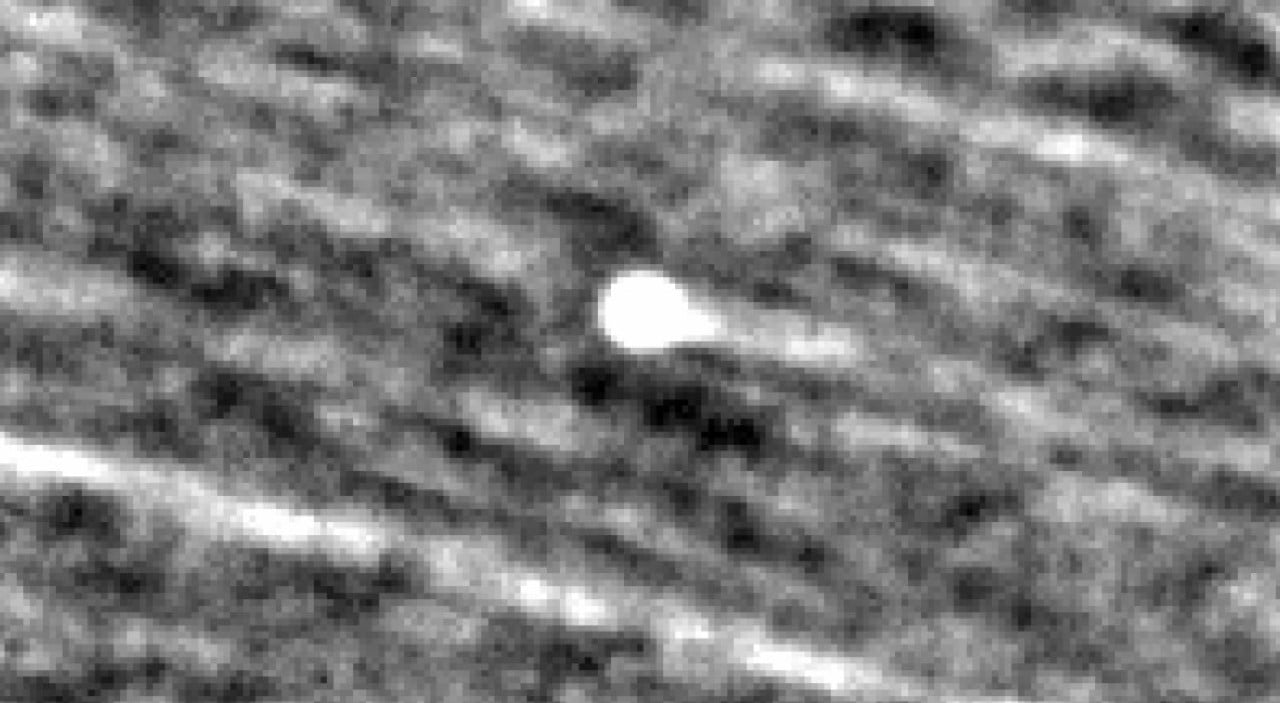
The interstellar comet 3I/ATLAS, discovered in July 2025 by the ATLAS telescope on Chile, passes through Sistema Solar at a speed of 61 km per second. Esse celestial body, originating outside the heliosphere, represents the third interstellar object confirmed to visit our region. NASA and ESA’s Astrônomos have been monitoring its trajectory since Hemisfério Sul, where the comet initially appeared 420 million miles from Sol.
The speed of 3I/ATLAS, equivalent to 221 thousand km/h, results from gravitational interactions accumulated over billions of years. Diferente of the Voyager probes, launched by humanity, the comet follows a hyperbolic orbit that propels it into the solar bubble. In November 2025, observations of Telescópio Espacial Hubble confirmed its activity with a visible coma and two distinct tails.
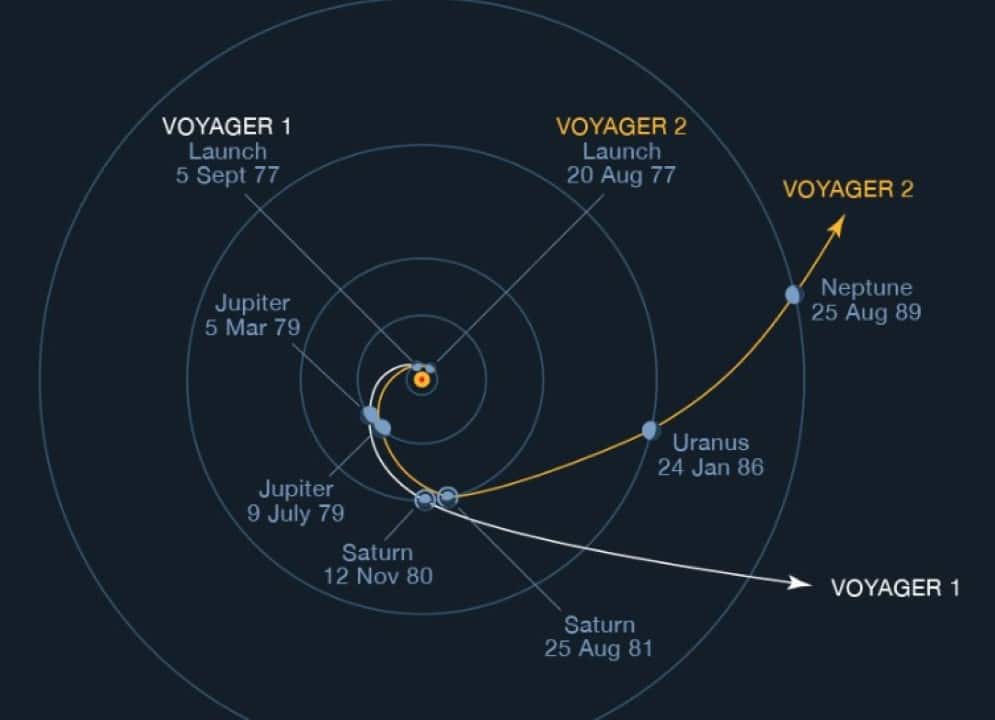
Comparison with Voyager highlights the disparity between natural and man-made objects in deep space.
- Voyager 1 reaches 17 km/s after 47 years of travel.
- Voyager 2 has recorded 15 km/s since its launch in 1977.
- 3I/ATLAS multiplies this mark by more than three times in its current passage.
This data emerges from recent ESA measurements, taken in October 2025 near Marte.
Trajectory and discovery of 3I/ATLAS
Astronomers detected 3I/ATLAS on July 1, 2025, as it approached the orbit of Júpiter. The NASA-funded ATLAS telescope identified the object as interstellar due to its excessive speed relative to Sol. Equipes in Chile, Havaí and Austrália confirmed the detection within hours, with preliminary observations revealing a reddish coma of dust.
The comet reached perihelion on October 29, 2025, 1.4 astronomical units from Sol, just beyond the orbit of Marte. Missões as well as Mars Express and ExoMars Trace Gas Orbiter captured images during this phase, showing dust ejection at 22 m/s for small grains. The speed increased to 246,000 km/h at that point, driven by solar gravity.
Speed of Voyager in interstellar space
Voyager 1 crossed the heliosphere in 2012, reaching 17 km/s towards the constellation of Ofiúco. Lançada in 1977, the probe accumulated this speed through gravitational assists from Júpiter and Saturno. In 2025, it travels more than 24 billion km from Terra, transmitting data about interstellar plasma.
Voyager 2 followed in 2018, with 15 km/s towards Peixes, after passing through Urano and Netuno. Ambas probes operate with declining nuclear power, limiting future accelerations. Observações of 2025 shows that they maintain stable speeds, without the cumulative impulses of a comet like 3I/ATLAS.
These pioneering missions serve as a benchmark for measuring interstellar visitors, but highlight human technological limitations.
Factors driving 3I/ATLAS
The gravitational slingshot phenomenon explains part of the comet’s speed. Over billions of years, encounters with stars and nebulae have added kinetic energy to 3I/ATLAS, increasing its trajectory to 58-61 km/s relative to Sol. A September 2025 study estimates that it has moved within 1 parsec of 25 stars in the last 10 million years.
The composition of the core, estimated to be between 440 meters and 5.6 km in diameter by Hubble in August 2025, includes volatile ice that sublimates under solar heat. Isso generates a coma of thousands of km, with ejection of 6 kg of fine dust per second in July. JWST’s Observações in August detected carbon-13-rich CO2, suggesting origins in ancient galactic disks.
The comet’s high vertical speed indicates that it belongs to the thick disk of Via Láctea, aged between 7.6 and 14 billion years.
Recent observations from space agencies
Telescópio Hubble revisited 3I/ATLAS on November 30, 2025, capturing tails of ionized gas and dust 277 million miles from Terra. The image reveals stellar streaks due to the comet’s fast tracking, confirming ongoing activity. NASA released data from multiple missions on Nov. 19, including images of Psyche from 33 million miles away.
ESA’s Juice mission, heading to Júpiter, observed the comet on 2 November 2025 with its navigation camera, 90 degrees from Sol. Cinco instruments recorded data, with partial download expected in February 2026. SOHO captured 3I/ATLAS between October 15 and 16, during its solar pass.
- Hubble: Espectroscopia ultraviolet for sulfur and oxygen emissions.
- JWST: Detecção of water and CO in coma in July.
- TESS: Observações pre-discovery May-June 2025.
These global collections enrich the catalog of interstellar objects.
Composition and activity of the cosmic visitor
The rocky, icy core of 3I/ATLAS releases gases such as CO and CO2, observed by SPHEREx in 2025, without dominant water vapor. The reddish coma, measured in July, indicates organic dust similar to 2I/Borisov. Grãos of 100 micrometers comes out at 2 m/s, forming a 3 arcsecond dust tail.
In October, Marte orbiters recorded the comet 1 AU from the planet, with a coma of a few thousand km. The activity persists despite the distance, suggesting hypervolatile ices. Estimativas of July indicate ejection of 60 kg of coarse dust per second, slightly changing the mass of 33 billion tons.
Astronomers note that the coma’s reddish color differs from solar comets, pointing to formation in ancient star systems.
Comparison with other interstellar objects
3I/ATLAS surpasses 1I/ʻOumuamua in speed, which traveled at 26 km/s in 2017 with no visible coma. Diferente of 2I/Borisov, with 32 km/s and similar composition in 2019, this comet shows double tails from 6.4 AU of Sol. Sua extreme hyperbolicity confirms external origin, with entry velocity equal to exit velocity.
Studies from July 2025 estimate an age of 3 to 11 billion years, older than Sistema Solar. The inclined trajectory aligns it with the thick galactic disk, with low metallicity. Observações of Vera C. Rubin in pre-discovery June show expanding coma, limiting the core to less than 1 km.
This distinction reinforces the rarity of visitors with cometary activity.
Challenges for future missions
Launching a probe to intercept 3I/ATLAS would require delta-v of 24 km/s post-July 2025, beyond current capabilities. Estudos of August indicate that multiple gravitational assists could approach human speeds, but would require decades. The comet will pass Júpiter in March 2026, potentially altering its exit.
Observability ends in spring 2026, with weak magnitude opposite January 22. Telescópios amateurs see it in the pre-auroral sky in December 2025, in the constellation Leão. PUNCH’s Dados in September captured the comet close to Marte, with anomalous outgassing plumes.
These limits drive plans for observatories like Rubin, which would detect more interstellars.
Comet 3I/ATLAS approaches Terra on December 19, 2025, at 1.8 AU or 270 million km, without any risk. Sua passage offers lessons about distant planetary formation, at speeds that Voyager would only match in millennia. Missões like Europa Clipper and Parker Solar Probe contribute peripheral glimpses, expanding the understanding of interstellar dynamics. In 2025, the event united global agencies in a coordinated effort, recording the fastest and most active of the three known visitors to date.



