
Satellite constellations threaten 96% of space telescope images, warns NASA

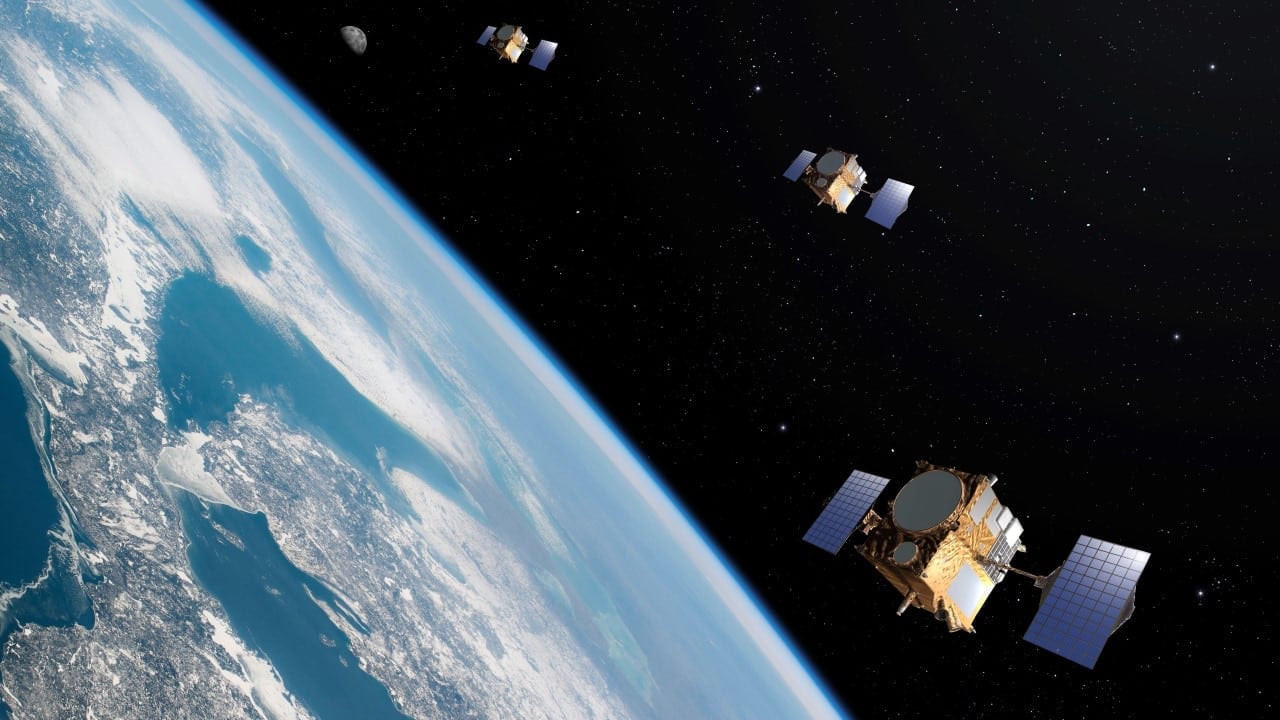
A NASA-led study, published in the magazine The research, conducted by astronomers from the agency’s Centro and Pesquisa Ames, simulates the impact of 560,000 satellites proposed by operators such as SpaceX, Amazon and China. Essa proliferation, driven by reduced launch costs, affects observatories such as Hubble and SPHEREx, as well as planned missions such as ARRAKIHS and Xuntian.
The number of satellites in low orbit jumped from 2,000 in 2019 to 15,000 in 2025, and current proposals predict an exponential increase by the end of the 2030s.
Astronomers warn that trails of light reflected by satellites erase weak signals from distant galaxies and planets, compromising scientific discoveries.
- Main affected telescopes: Hubble (40% contamination), SPHEREx (up to 99%).
- Future missions: ARRAKIHS and Xuntian with 96% of invalid exhibits.
- Main cause: Reflexos of sunlight during orbital sunrises and sunsets.
Simulations reveal the scope of the problem
NASA astronomers used data from satellite operators to model orbits between 500 and 700 km in altitude.
These simulations considered trajectories, fields of view and exposure times of the telescopes.
The results indicate that, with 560 thousand satellites, images from Hubble will have an average of two tracks per exposure.
Current telescopes face growing trails
Telescópio Espacial Hubble, in operation since 1990, has already recorded 4% of images with satellite tracks since 2018.
With projected growth, this rate rises to 40%, requiring more time in data processing.
SPHEREx, launched in 2025, accumulates multiple exposures for spectra in 102 colors, but isolated tracks still require manual removal.
Astronomers note that pauses in observations do not solve the problem in orbit, unlike with terrestrial telescopes.

Impact on terrestrial observatories worsens
The Observatório Vera C. Rubin, in the Chile, plans to collect more data in the first year than all previous telescopes combined.
With fewer than 50,000 satellites, up to 80% of its images can be contaminated by trails.
Unlike space telescopes, the Rubin cannot adjust orbit to avoid interference.
Previous studies, such as the LSST, confirm that trails can be confused with supernovae or variable objects.
Proposals to mitigate contamination
Satellite operators discuss altitude limits for constellations below 500 km.
This would reduce atmospheric friction, but would shorten the useful life of the devices, something resisted by companies.
Light-absorbing paints, such as variants of Vantablack, could reduce reflections by up to 50%.
União Astronômica Internacional coordinates efforts via Centro to Proteção from Céu Escuro and Silencioso.
Shared orbits generate potential collisions
Low-orbit telescopes such as Xuntian at 450 km share space with constellations such as Starlink at 550 km.
The projected density increases the risk of collisions, in addition to optical interference.
American Astronomical Society warns of impacts in collisions with telescopes and the creation of orbital debris.
Regulators such as the US FCC are considering proposals for safe orbital layers by 2030.
Future missions require urgent action
The Agência Espacial Europeia ARRAKIHS mission, scheduled to launch in the early 2030s, will use long exposures to map dark matter.
Its images could record up to 165 tracks per exposure with one million satellites.
The Chinese Xuntian, with a wide field of view, would face dozens of simultaneous interferences.
Astronomers emphasize global coordination between space agencies and industry to balance telecommunications and research.
Technical solutions in global debate
Reducing maximum satellite altitudes would allow telescopes to be positioned above constellations.
Companies like SpaceX are testing anti-glare shields, but full implementations are pending regulatory approvals.
The NASA study reinforces the need for data shared between operators and observatories for accurate predictions.
Initiatives like the IAU’s CPS bring together scientists from multiple countries to monitor launches in real time.
Historical growth of constellations
From 1957 to 2020, fewer than 10,000 satellites have been launched globally.
Between 2021 and 2025, the number of launches surpassed seven previous decades combined.
Projects such as Guowang (China, 14 thousand satellites) and Kuiper (Amazon, 3,200) compete with Starlink (SpaceX, more than 9 thousand assets).
This expansion democratizes the internet in remote areas, but overloads the orbital environment.
Telescópio Espacial James Webb, positioned 1.5 million km from Terra, remains immune to such interference, capturing clear images of distant regions without tracks from low-orbit satellites. However, its distance limits studies of solar objects and requires billion-dollar investments for similar missions in the future; Telescopes like the Roman, undergoing final assembly in December 2025, will still orbit at vulnerable altitudes, requiring urgent innovations in orbital design to preserve the continuity of infrared and wide-field observations, while space agencies push for international treaties that regulate satellite densities and promote contamination-free zones for advances in cosmology and exoplanet detection.
International collaborations advance
NASA participates in workshops like SATCON2 to align policies with industry.
ESA and the Chinese CNSA integrate simulations into mission planning.
UN reports on sustainable use of orbital space include astronomical recommendations.



