
Interstellar comet 3I/ATLAS approaches Earth on December 19 at 270 million km

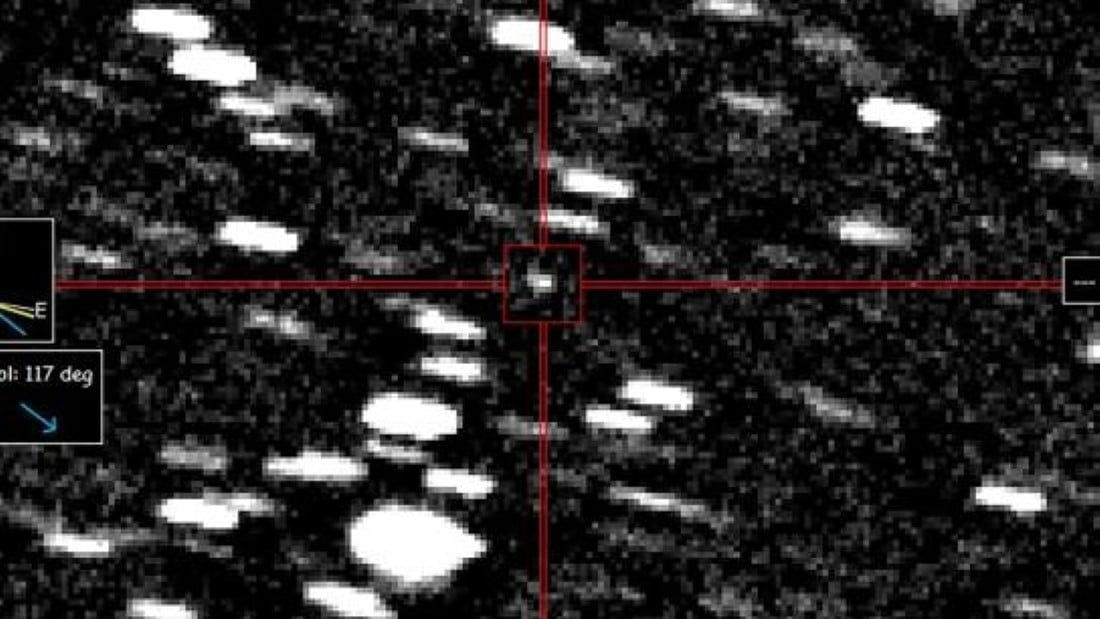
Comet 3I/ATLAS, the third interstellar object confirmed in Sistema Solar, passes through its hyperbolic trajectory and approaches Terra on December 19, 2025, at a safe distance of about 270 million kilometers.
Discovered on July 1, 2025 by the ATLAS system at Chile, the comet follows an orbit that confirms its origin outside Sistema Solar. Recent Observações telescopes like Hubble have captured detailed images of its coma and tails.
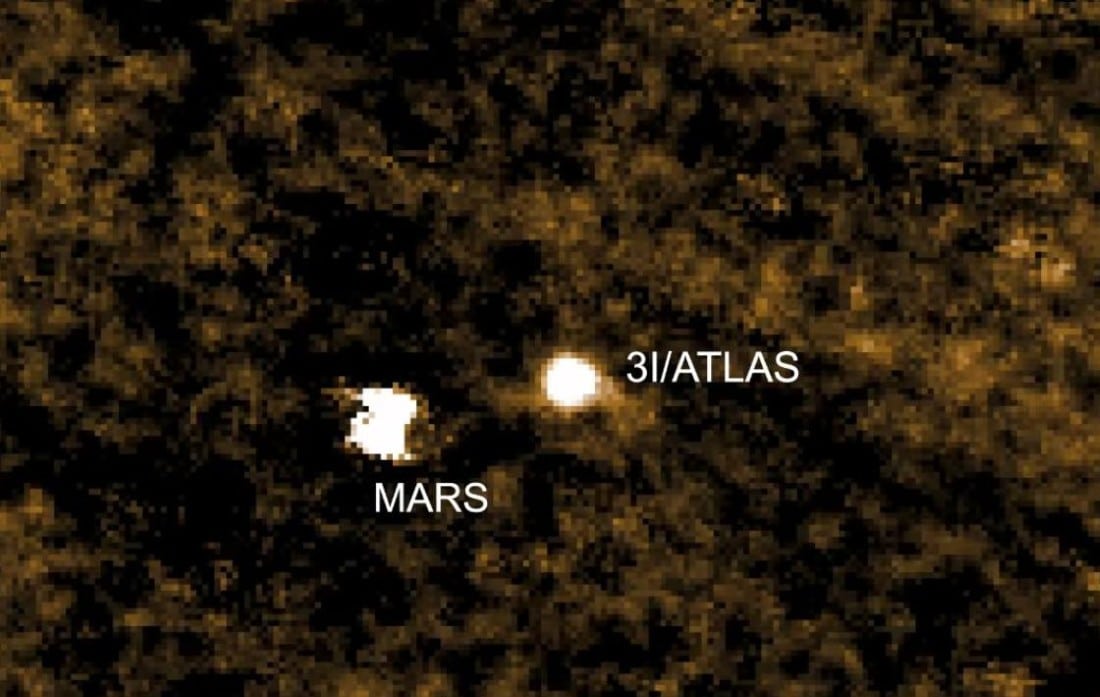
Multiple space missions have recorded the visitor, who reached perihelion in October and is now moving away from Sol.
- The comet exhibits activity with ejection of dust and gases.
- Its speed relative to Sol reaches 58 km/s.
- It does not represent a risk to Terra.
Discovery and confirmation
Astronomers initially detected comet 3I/ATLAS by the ATLAS telescope at Río Hurtado, at Chile.
Subsequent observations confirmed traces of a coma and tail, classifying it as an active comet. The hyperbolic trajectory, with an eccentricity greater than 6, proved its interstellar origin.
Other similar objects include 1I/’Oumuamua from 2017 and 2I/Borisov from 2019.
Recent space observations
Telescópio Espacial Hubble reobserved the comet on November 30, 2025, 286 million kilometers from Terra.
Images show the bluish coma and dust structure. ESA’s Juice probe captured the comet with an intense brightness in the coma and distinct tails.
Missions such as Psyche, Lucy and MAVEN recorded ultraviolet and trajectory data.
Chemical composition detected
Observations with ALMA revealed high amounts of methanol and hydrogen cyanide in the coma.
These organic compounds indicate formation in distant environments. The comet has a higher carbon dioxide content than water vapor at distances greater than Sol.
Signs of cryovolcanism appear in spiraling jets at the surface.
Trajectory and high speed
The comet entered Sistema Solar at 58 km/s, a speed faster than its interstellar predecessors.
It reached perihelion on October 29, 2025, at 1.4 AU from Sol. Após the approach of Terra on December 19, heads outside of Sistema Solar.
Its inclined orbit suggests its origin in the thick disk of Via Láctea, estimated to be between 7.6 and 14 billion years old.
Terrestrial and amateur images
Photographers captured the comet over Deserto Negro from Egito in November 2025.
Smart telescopes facilitate nighttime observations in the Northern Hemisphere. The object appears as a diffuse point with a tail on amateur equipment.
Its visibility increases until January 2026 before weakening.
Scientific contributions
The comet provides data on planetary formation in other star systems.
Observations coordinated by NASA and ESA refine trajectory models. Não There is evidence of artificial technology, despite initial speculation.
Studies focus on irradiated dust and prebiotic compounds.
Unusual activity observed
The core, estimated to be between 440 meters and 5.6 km in diameter, ejects dust at varying rates.
Small particles exit at 22 m/s, while larger ones at 2 m/s. The anti-solar tail grew to 56 thousand km in August.
Activity remained stable without intense outbursts.
3I/ATLAS represents a rare opportunity to study primordial material from another stellar system. Observações continue over the next few months as the comet moves away permanently. Dados collected improves understanding of interstellar objects and their frequency in space.



