
Zurich discovery redefines ice giants: Uranus and Neptune may have predominantly rocky interior

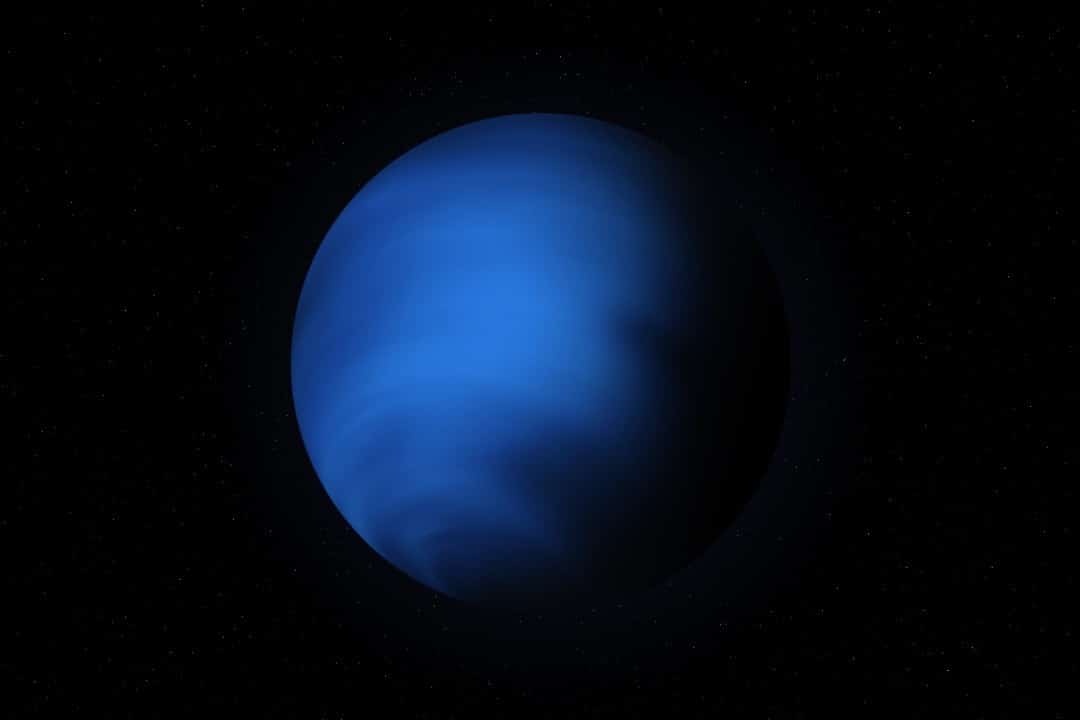
New research developed by the Universidade of Zurique (UZH) in collaboration with the Centro Nacional of The study, which employed an advanced simulation method, suggests that these worlds, long known as “ice giants”, may have an interior predominantly composed of rock. Publicado in the specialized magazineAstronomy & Astrophysics, the scientific work confronts decades of understanding about the composition of these two outer planets of our Sistema Solar.
The reclassification proposed by scientists offers new clues for understanding the atypical and complex magnetic fields observed, especially in Urano. Além Furthermore, the scenario raised by the computational model reinforces the need and urgency for new space missions dedicated to Urano and Netuno, aiming to collect more precise data that can confirm the nature of their internal composition.
Density simulation redefines planetary structure
To reevaluate the internal structure of Urano and Netuno, the research team constructed density profiles in a random manner. Posteriormente, calculated the gravitational field corresponding to each profile and compared the results obtained with astronomical observations.
The process included deriving internal compositions that were compatible with the observational data, repeating the calculation several times until the best agreement was achieved. At all stages of the simulation, scientists maintained strict respect for fundamental physical laws, such as the balance between gravity, internal pressure and thermodynamics.
What the new interpretation suggests about the “ice giants”
The traditional classification of Urano and Netuno as “ice giants” may be an oversimplification, according to the study authors, since the composition of the two planets is not yet fully understood. The team combined physical and empirical approaches to develop models that are neutral and physically consistent, making room for internal compositions that go beyond the prevalence of ice – a volatile material often understood as water.
- The model combines physical and empirical approaches to simulate the interiors of planets.
- The results indicate a mostly rocky composition.
- The findings help in understanding complex magnetic fields.
Professor Ravit Helled, from Instituto of Esta new interpretation, by including observational restrictions and physical consistency, does not eliminate the ice from the portrait of Urano and Netuno, but disaligns the idea that it would be the dominant component in all plausible composition scenarios.
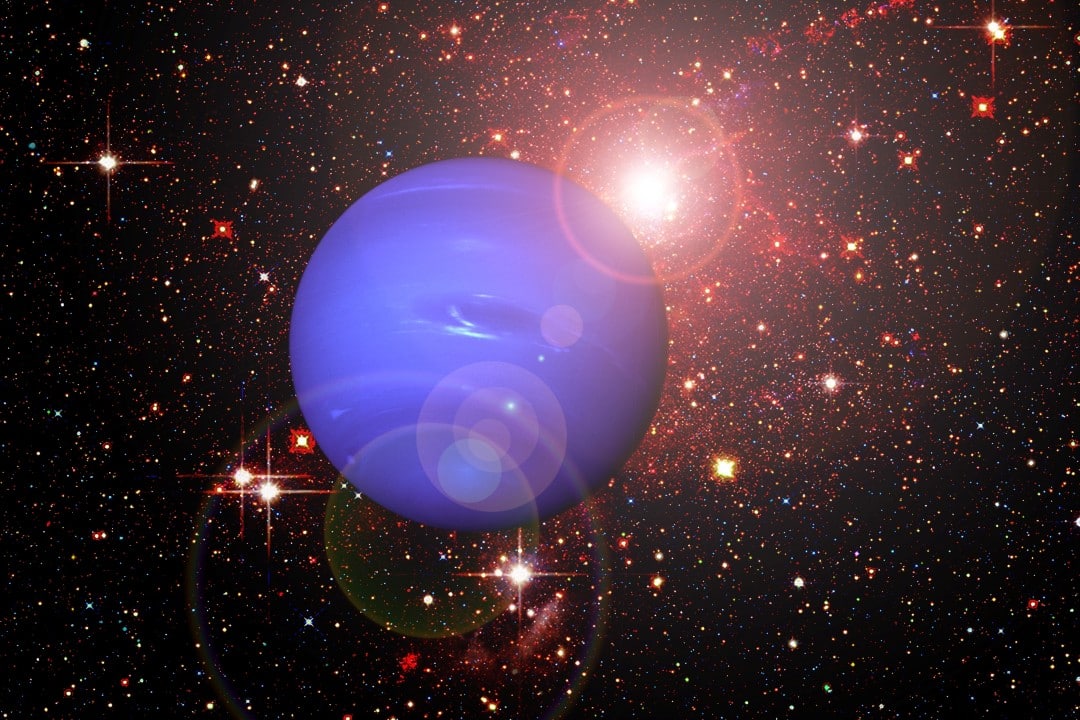
Magnetic fields and depth highlighted
Reinterpreting the internal composition of the planets also illuminates differences in the behavior of their respective magnetic fields. The researchers found that the magnetic field of Urano may be deeper compared to the field of Netuno.
The implications of the study extend beyond the mere planetary taxonomy of our solar system. By improving the methods used to infer the composition of distant worlds, the work significantly improves the reading and interpretation of data obtained from exoplanets. Esta improved data reading is also essential to guide the design and instrumentation of future space probes.
Uncertainties and the need for new missions
Although the model is promising and consistent with the laws of physics, there are still gaps in the knowledge about the internal composition of planets. The behavior of materials under extreme pressures and temperatures, typical conditions inside planets like Urano and Netuno, is not fully known.
This lack of in-depth knowledge about the physics of materials under extreme conditions can influence density and composition estimates. Luca Morf, doctoral student at UZH and lead author of the study, recognizes the uncertainties and plans to expand the simulation models.
Currently, available data is not sufficient to reliably distinguish between a predominantly rocky or icy interior. Dependendo of each model’s hypotheses, both planets can fit into both classifications. For this reason, the team considers it essential to send specific missions to Urano and Netuno, equipped with instruments capable of refining gravitational and magnetic measurements.



