
James Webb confirms oldest supernova in the universe at 730 million years after Big Bang

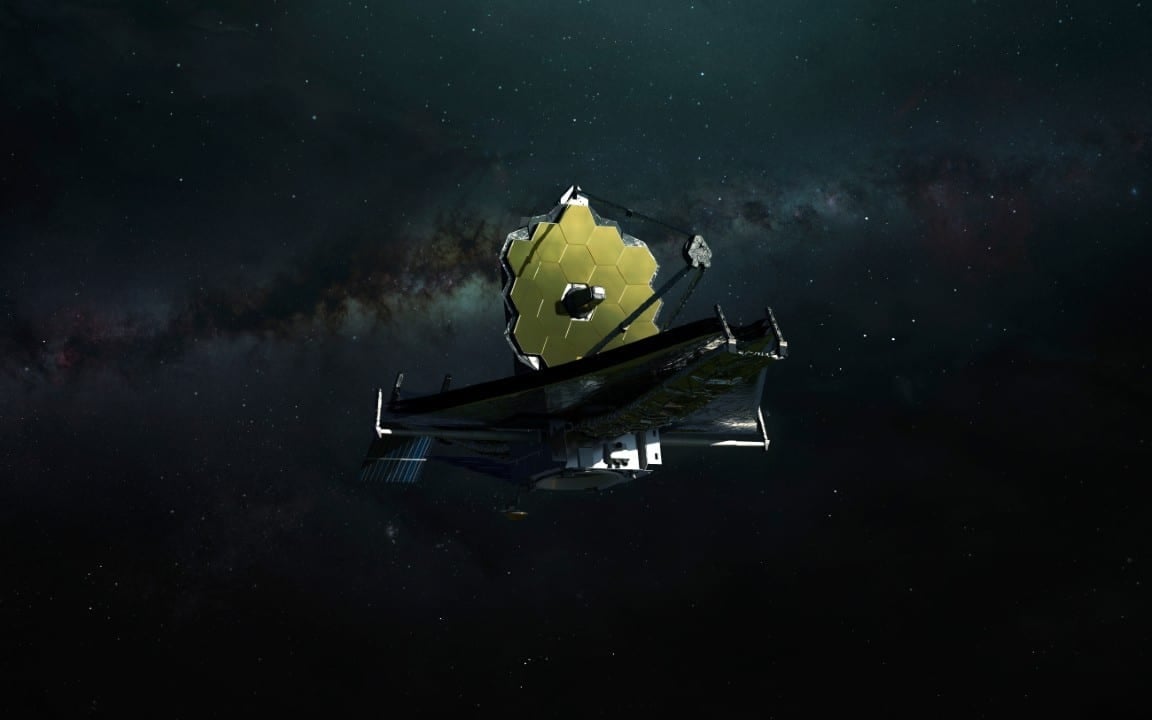
Telescópio Espacial James Webb has identified the oldest supernova ever observed, associated with the gamma-ray burst GRB 250314A. Essa explosion occurred when the universe was just 730 million years old, about 5% of the current estimated age of 13.8 billion years. The light from this supernova traveled for more than 13 billion years until it was captured by Webb’s instruments.
The initial detection of the gamma ray burst took place on March 14, 2025 by the Franco-Chinese SVOM satellite. Observações with the Neil Gehrels Swift telescope and Nasa helped locate the exact position in the sky. On July 1, 2025, James Webb used its near-infrared camera to confirm the supernova’s afterglow.
This observation breaks the previous record held by Webb itself, which had recorded a supernova 1.8 billion years after Big Bang. Supernova GRB 250314A highlights the telescope’s ability to capture individual star events in the early universe.
- The explosion was confirmed as a massive star collapse.
- The redshift of approximately 7.3 indicates extreme distance.
- The host galaxy was detected for the first time in such a remote event.
How James Webb Captured This Distant Event
O James Webb utilizou sua sensibilidade ao infravermelho para registrar o brilho tênue da supernova GRB 250314A. Devido to the expansion of the universe, the light stretched over billions of years, making the event visible only at infrared wavelengths. Observações were timed three and a half months after the initial burst to capture the supernova’s peak luminosity.
Rapid observation techniques, known as director discretionary time, allowed prioritizing the target. Webb’s NIRCam camera isolated the supernova signal amid distant galaxies. Essa approach demonstrated that stellar explosion processes were similar to those observed today.
Details of detection and scientific confirmation
The GRB 250314A burst lasted a few seconds and was classified as long, typical of massive star collapses. Telescópios terrestrial Ilhas Canárias and Chile contributed to measuring the initial infrared afterglow. Webb directly confirmed that the glow came from a collapsing supernova.
Researchers led by Andrew Levan, from universities Radboud and Warwick, published studies highlighting the similarity with modern supernovae. The light curve of the explosion evolved as expected, despite the extreme distance. Essa consistency suggests that black hole formation mechanisms occurred early in cosmic history.
Significance of supernova for the early universe
This supernova occurred during the era of reionization, when the first stars ionized the neutral gas around them. Explosões like this injected heavy elements into space, enriching the interstellar medium. The detection makes it possible to compare theoretical models with real data on primordial star formation.
The universe at 730 million years ago contained massive, rapidly evolving stars. The presence of a host galaxy, although faint, reveals environments where these stars formed. Observações future similar events will help map the distribution of matter in this phase.
Unique Telescope Capabilities in Cosmic Exploration
The James Webb overcomes limitations of previous telescopes by penetrating cosmic dust with infrared. Sua resolution allowed individual stars to be isolated at remote times. The discovery reinforces the potential to detect more ancient supernovae associated with gamma-ray bursts.
- Events like GRB 250314A are rare in the first billion years.
- Webb can identify host galaxies at extreme distances.
- Multiwave observations combine data from satellites and ground-based telescopes.
- Future studies will map rates of primordial star formation.
Advances in understanding the first stars
The first generations of stars, known as População III, had metal-poor compositions. Supernovas like GRB 250314A provide direct evidence about their masses and life cycles. The similarity with current explosions indicates stable physical processes from an early age.
The host galaxy appears as a blurred dot in a few pixels, but reveals conditions similar to others from the period. Pesquisas approved will make it possible to capture the afterglow of bursts to obtain chemical fingerprints of distant galaxies. Essa approach will expand knowledge about galactic evolution.
Contributions to modern astronomy
Confirmation of GRB 250314A validates the use of Webb in rapid observations of transient events. Dois scientific articles detail direct detection and multi-wavelength characterization. The supernova highlights the role of explosions in disseminating elements essential for planet formation.
Observing individual stars in the universe that are 5% of their current age opens up new lines of research. Colaborações internationals, including SVOM and Swift, were crucial to the success. Webb continues to reveal early chapters of the cosmic story with unprecedented precision.
Perspectives opened by observation
This detection proves that James Webb can track stellar explosions for the first billion cosmic years. Eventos rare as long bursts of gamma rays serve as beacons for primordial epochs. The ability to resolve host galaxies at high redshifts enriches studies of cosmic growth.
Researchers plan to systematically monitor the sky to capture more ancient supernovae. Combining infrared data with other wavelengths refines distance and composition measurements. Descobertas thus consolidate the telescope as the main tool for observational cosmology.



