
France calls for postponement of decisive votes on the Mercosur-EU agreement and creates uncertainty


França asked União Europeia to postpone the votes scheduled for next week on the trade agreement with Mercosul.
The office of the French Prime Minister, Sébastien Lecornu, reported that the conditions are not met to approve the signature authorization.
The request took place this Sunday, December 14, and aims to obtain more protections for European agriculture.
The signing of the agreement is scheduled for December 20, on Foz of Iguaçu, during the Mercosul summit.
Main opponents of the treaty
The main resistance comes from França and Polônia, who fear competition from South American agricultural products.
- Beef, poultry, sugar and soy are among the sensitive items for European farmers.
- Countries such as Alemanha, Espanha and Portugal support the agreement.
- Itália appears decisive, with a recent favorable position, but still cautious.
Diplomats indicate that opposition from França, Polônia and Itália could block approval by qualified majority.
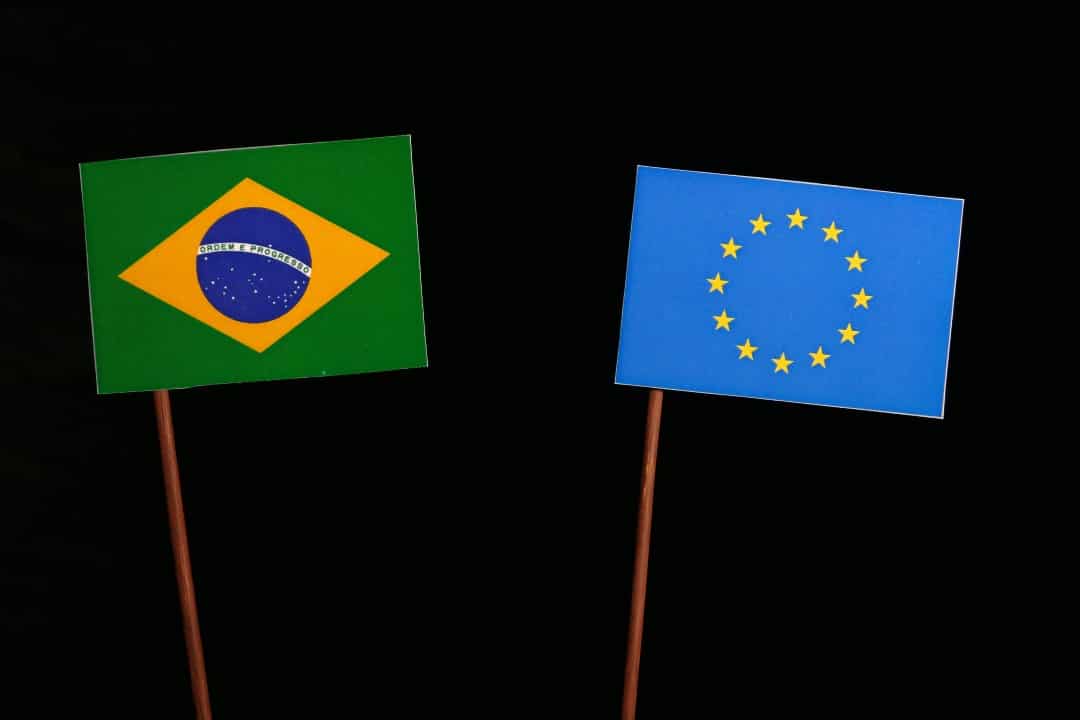
Requirements for EU approval
The agreement requires approval from Parlamento Europeu by a simple majority and from Conselho Europeu by a qualified majority.
In Conselho, it requires support from at least 15 of the 27 countries, representing 65% of the bloc’s population.
Voting is scheduled between December 16th and 19th.
Recently approved safeguard mechanisms allow preferential tariffs to be suspended in the event of an excessive increase in imports.
These measures aim to protect European agricultural sectors.
The Parlamento Europeu is expected to vote on the safeguards on Tuesday, December 16th.
Trading history
Negotiations between Mercosul and União Europeia began in 1999.
Political understanding occurred in 2024, after 25 years of discussions.
If concluded, the pact creates a free trade zone with around 720 million inhabitants and a combined GDP of 22 trillion dollars.
Tariff reductions benefit European industrial and South American agricultural exports.
Position of the Brazilian government
Brazilian government sources estimate that postponement could mean the definitive end of negotiations.
A European retreat would lead Brasil to prioritize commercial partnerships in Ásia.
In 2025, China purchased 94 billion dollars in Brazilian products.
This value more than doubles the purchases of União Europeia, worth 45 billion dollars.
Agricultural safeguards under debate
Comissão Europeia introduced clauses to suspend tariff advantages if imports from Mercosul grow by more than 5% compared to the previous year.
These safeguards were approved in the EU’s Comitê of Comércio Internacional.
French farmers criticize the agreement for differences in environmental and health standards.
The mechanism seeks to balance access to sensitive markets such as meat and sugar.
Decisive vote from Itália
Itália, with around 59 million inhabitants, represents a key population weight in the vote.
Brazilian and European diplomats calculate that Italian rejection, combined with França and Polônia, would make the agreement unfeasible.
Recently, Italian representatives signaled support, but with reservations to protect local producers.
The government of Giorgia Meloni prioritizes guarantees for the Italian agricultural sector.
Consequences of possible failure
European diplomats say that without a signature now, the agreement could be “dead”.
Brasil sees the treaty as reinforcing multilateralism in a scenario of global protectionism.
An alternative would be to intensify agreements with Asian countries, especially China.
Mercosul maintains internal consensus for immediate signature.



