
Interstellar comet 3I/ATLAS closes approach to Earth on December 19, 2025

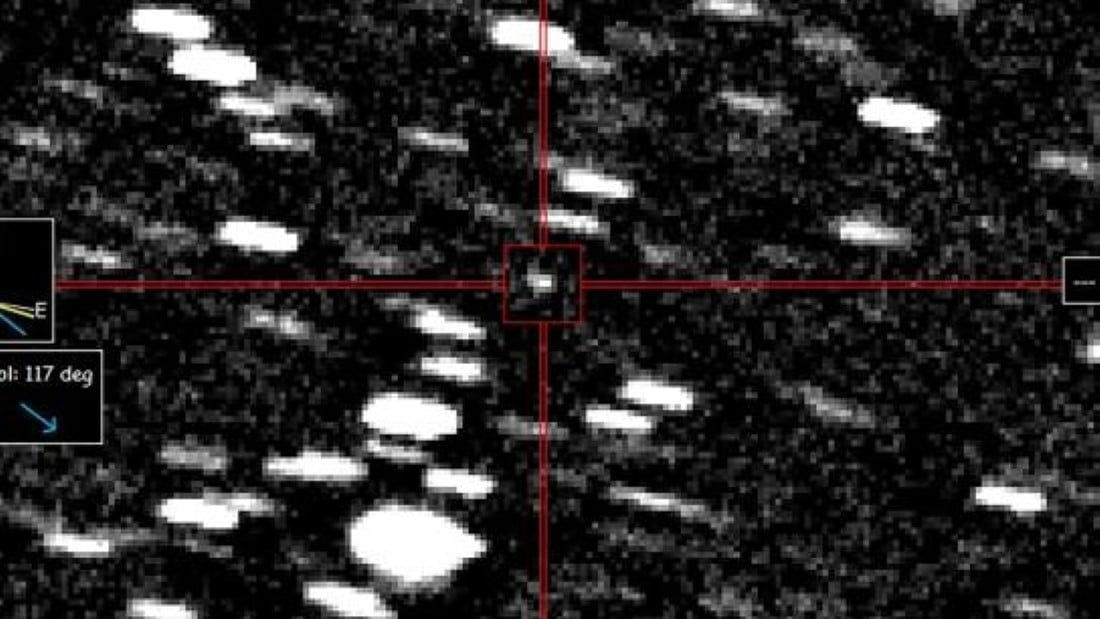
The interstellar comet 3I/ATLAS, the third object of this type identified, will make its closest and safest passage to Terra on December 19, 2025. Este astronomical event will position the celestial body at a distance of approximately 270 million kilometers from our planet, following its trajectory through the solar system.
Discovered on July 1, 2025 by the ATLAS observation system, located at Havaí, the comet’s orbit indicates an origin outside the limits of our solar system. Recent Observações, carried out by telescopes such as Hubble, revealed details of its coma and tail, highlighting its active nature.
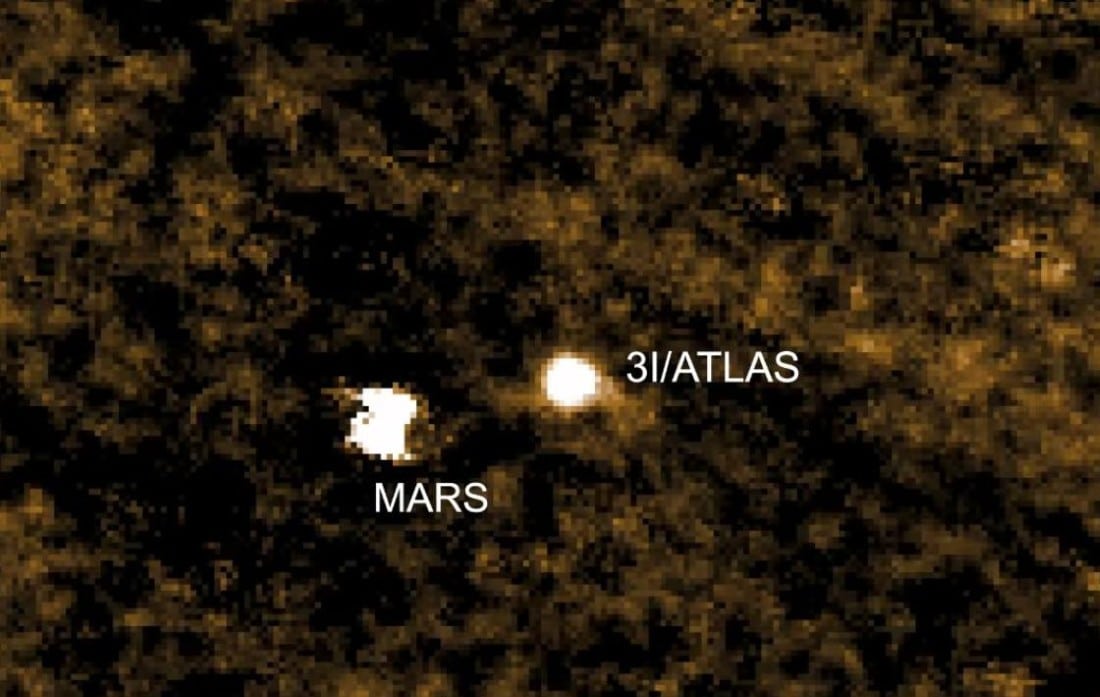
The luminosity of 3I/ATLAS reached its peak in October, reaching a magnitude that allowed it to be observed by amateur astronomers. The passage of this object offers a unique opportunity to study materials and processes that may have influenced the formation of other planetary systems.
Object discovery and classification
Scientists and astronomers initially detected comet 3I/ATLAS using the ATLAS telescope on Havaí, marking it as a significant discovery in celestial body research. The initial identification was crucial for tracking its trajectory and characteristics.
Subsequent observations confirmed the presence of its coma and tail, elements typical of active comets. Analysis of its hyperbolic orbit, with an eccentricity greater than 6, provided definitive confirmation of its interstellar origin, distinguishing it from comets born in our own system.
Recent observations and characteristics
The Hubble space telescope made detailed observations of comet 3I/ATLAS on November 30, 2025, when the object was 286 million kilometers from Terra. The captured images revealed a blue-green coma and a distinctive dust tail.
The Agência Espacial Europeia (ESA) mission Hera, focused on planetary defense, also monitored the comet, contributing to the distinction between its coma and tail. Outras space missions, such as Psyche, Lucy and MAVEN, are currently recording data on the comet’s trajectory and external environment.
[[_0]
The scientific community is using this data to deepen understanding of the composition and behavior of interstellar objects. The collection of information by multiple observatories guarantees a comprehensive and multifaceted analysis.
Chemical composition and origin
Observations carried out by the ALMA telescope (Atacama Large Millimeter/submillimeter Array) revealed the presence of large quantities of methanol and hydrogen cyanide in the coma of comet 3I/ATLAS. Essas organic molecules are important indicators for understanding the conditions of object formation.
The detection of these compounds suggests that the comet formed in a cold and dense nebula, an environment conducive to the creation of such substances. Chemical analysis is fundamental to tracing the evolutionary history of the comet and its stellar origin.
Because it is on a trajectory that keeps it far from Sol for long periods, 3I/ATLAS has a higher proportion of water ice compared to other interstellar objects already studied. Isso offers a window into the primordial composition of comets formed in colder regions of space.
The unusual activity observed on the comet is attributed to the sublimation of subsurface ices, which react as the object approaches and moves away from heat sources. Este phenomenon is crucial to understanding the dynamics of gas and dust emission.
Trajectory and speed
Comet 3I/ATLAS entered the solar system at a remarkable speed of 58 km/s, surpassing the speed of previously observed interstellar comets. Esta high speed is a key factor for its classification and study.
On October 29, 2025, the comet reached its perihelion, the closest point to Sol, at a distance of 1.4 astronomical units. Após passes close to Terra on December 19, the object will head out of the solar system, continuing its journey through interstellar space. Sua hyperbolic orbit is a strong indication of its origin outside the solar system, with an orbital period estimated between 76 million and 140 million years.
Monitoring by amateur astronomers
Amateur astronomers were able to observe comet 3I/ATLAS in November 2025 from locations with little light pollution, such as Elbert. The object’s visibility has been a point of interest for the skywatching community.
The Slooh telescope has facilitated live viewing of the comet from América to Norte. In regions such as Arizona, the object appears as a diffuse stain, revealing its tail and other morphological characteristics. Sua visibility will extend until January 2026, when it will begin to gradually decrease, ending the most favorable observation period for the general public.
Scientific importance of the passage
This comet provides valuable data related to the formation of other planetary systems, allowing scientists to compare its composition and structure with that of objects native to our solar system. In-depth analysis contributes to cosmology and astrophysics.
Orbital models are being improved through joint NASA and ESA observations, which allows for more accurate predictions about the motion of celestial bodies. The research focuses on identifying volatile ices and prebiotic chemical compounds, crucial elements for understanding the origin of life.
Unusual activity and comet nucleus
The 3I/ATLAS core, with an estimated diameter of between 440 meters and 5.6 kilometers, has emitted gas at varying speeds, a behavior that has been the subject of study. Pequenas particles are ejected at 22 meters per second, while larger particles are expelled at 2 meters per second.
In August, the comet’s dust tail extended up to 56,000 kilometers, demonstrating the intensity of its activity. The constancy of this emission, without unexpected flares, has been a notable feature of 3I/ATLAS, providing a stable scenario for data collection. Este comet represents a unique opportunity to investigate the beginnings and evolution of other stellar systems.



