
Nissan Roox 2025: Trump’s orders and praise boost Japanese kei car market By Luís Henrique Costa
5 min read
 |
On December 3, 2025, President Donald Trump, during an event in Palm Beach, praised Japanese light vehicles, known as “kei cars”, describing them as “really small and really cute”. Trump’s statement, which followed his official visit to Japão in September 2025, where he observed kei cars on the streets of
This international recognition had an almost immediate impact on Nissan, which launched the new model
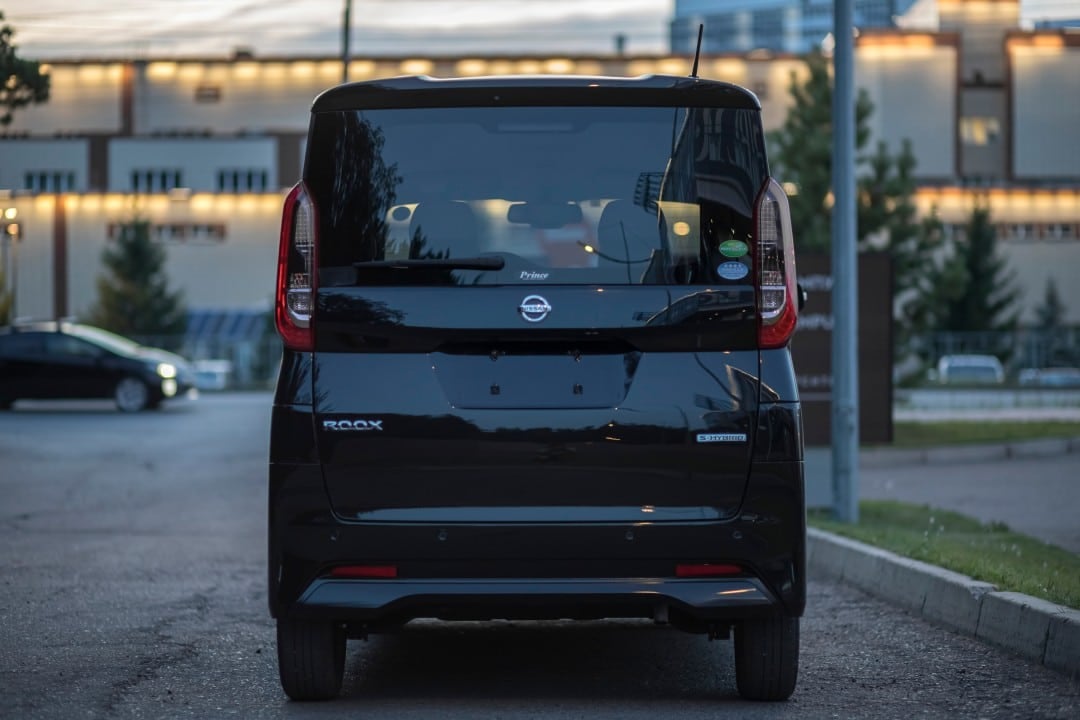
The success of the Roox is evident in the sales figures. According to a report by Nissan released on December 8, 2025, the model has accumulated more than 22 thousand orders since its launch, solidifying its position in the competitive light vehicle market and contributing to the growth of the Japanese automotive sector.
Roox boosts sales and ranking in Japão
Nissan announced that in November 2025, the Roox reached third place in sales in the kei car segment. The model outperformed strong competitors such as the Suzuki Spacia and the Mitsubishi eK Wagon, benefiting from an updated design and technological advances that made it more attractive to consumers.
With features such as sliding doors and a spacious interior, the Roox is offered from 1.67 million yen. Buyers especially value the modernized interior space and advanced driving assistance systems, which provide greater comfort and safety during daily journeys.
Technological innovations attract buyers
Kei cars occupy a key market niche in Japão, being the most suitable vehicles for urban driving due to their compact size. The Roox is equipped with a 58 horsepower engine, delivering a remarkable fuel economy of 25 km per liter in mixed cycles, making it an economical and efficient option for everyday use.
The update to the model’s fourth generation included the integration of Google applications and a 360-degree vision camera, elevating the onboard technological experience. Collaboration with Mitsubishi guarantees efficient production in shared factories, optimizing resources and maintaining market competitiveness.
A mild hybrid propulsion system is being tested with a view to expanding exports to larger markets, demonstrating the ambition of Nissan. The model’s weight, less than 1 ton, allows for agile and versatile operation, even in various situations on toll roads.
Repercussions of Trump’s statements
President Trump’s statements about the potential of kei cars were made in a context of debate about the high costs of vehicles in the USA, which often exceed 50 thousand dollars. The objective, according to analysts, was to press for changes in tariffs and facilitate the import of more affordable vehicles.
American automotive lobbyists have expressed concern about the need for innovation to meet stringent U.S. safety and emissions standards. Nissan, in turn, expressed interest in collaborating with American manufacturers, but has no immediate plans for local production.
The CEO of Nissan Motor, Makoto Uchida, recently commented on the possibility of partnerships with Honda and Mitsubishi Motors. Tais collaborations could accelerate the penetration of light vehicles in the North American market, where there is already growing interest among consumers over 25 years old.
Trump’s visit to Tóquio also highlighted bilateral discussions on trade, including restrictions on Japanese products. The features of kei cars are seen as a counterproposal to the demand for American full-size pickup trucks, such as the Ford F-150, in an effort to balance the trade balance.
Dynamics and competition in the light vehicle market
The kei car segment, although it suffered a slight drop in sales in 2024 due to irregularities in Daihatsu inspections, registered a remarkable recovery of 10% in the first half of 2025. Annual sales volume surpassed 1.5 million units in 2024 and is expected to maintain a similar trend in 2025, with Japanese manufacturers focusing on efficiency and compact size to meet demand for affordable and practical vehicles.
Chinese giant BYD also plans to launch its compact electric kei car, the “Racco”, to challenge local brands. Initial Testes demonstrated robust acceleration performance and a competitive price, below 2 million yen. Fabricantes automotive companies are investing in kei cars with efficient propulsion systems to target the growing electric vehicle market, and the Roox update in August 2025 positions Nissan as a key player in this movement.
Regulatory challenges in international expansion
In the American market, kei cars face stricter safety and emissions regulations than in the Japão. President Trump’s proposed initiatives would require significant adjustments to U.S. highway safety, a process that could take months to implement. Atualmente, US importers already sell compact pickup trucks adapted for recreational use, with annual sales in the tens of thousands, often limited to 40 km/h to fit into off-road vehicle classifications. European Regulamentações are also being adapted to Japanese models, with a focus on promoting smaller vehicles, while discussions at Brasil seek to introduce similar categories for compact vehicles, aiming to solve urban challenges with 660cc engine limits.
Nissan marketing and growth strategies
Nissan invested 50 billion yen in marketing for the Roox in 2025, with campaigns that highlighted the vehicle’s fuel efficiency and safety. Essa strategy was essential to attract urban families looking for reliable and economical transportation. The company is also considering expansion into Asian markets such as Tailândia, where kei cars are valued, and is exploring mild hybrid systems with enhanced export capabilities to these regions.
Technological partnerships and future perspectives
New partnerships with technology companies are being established, with a focus on integrating artificial intelligence into driving assistance systems. The Roox 2026, for example, is expected to feature premium models and over-the-air updates. Nissan’s position in the segment is strengthened by its collaborations with Renault and Mitsubishi, and analysts predict a 10% increase in kei car sales from these brands by 2026, indicating a promising future for the segment and for the Japanese automaker.



