
Ford ends production of the electric F-150 Lightning and announces hybrid version with range extender

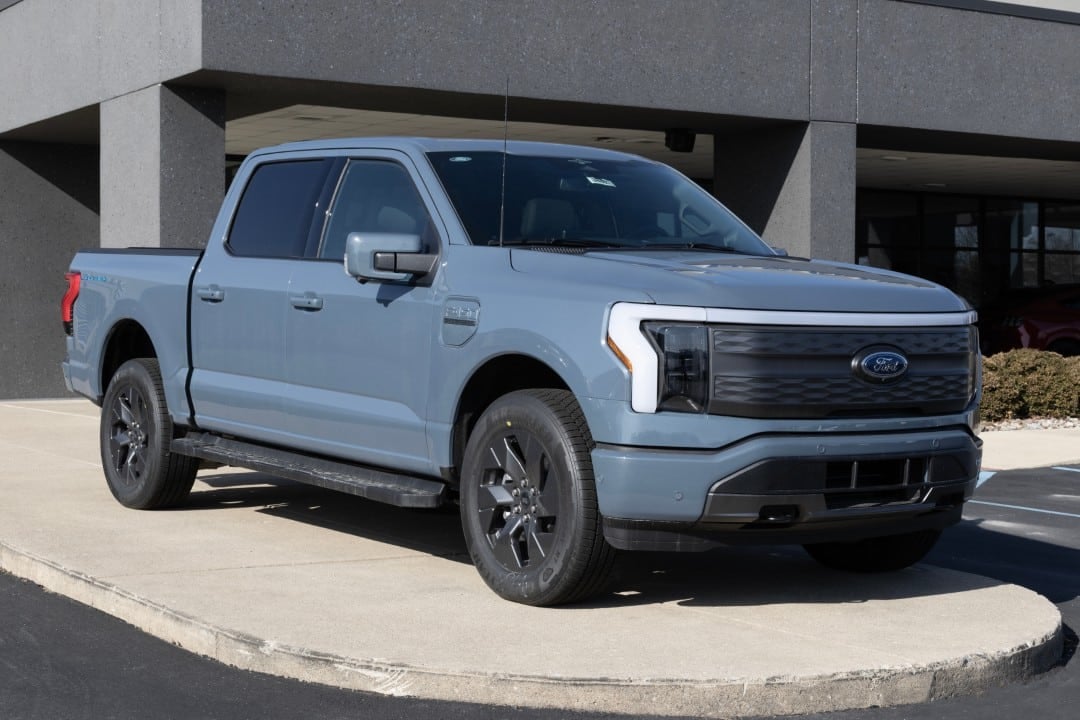
Ford Motor Company announced, on December 15, 2025, the end of production of the fully electric F-150 Lightning, a model that marked the automaker’s entry into the large electric pickup truck segment. The decision comes after the company recorded consistent losses with the vehicle, despite awards received and leadership in sales of electric pickup trucks in the Estados Unidos in recent periods. Production of the 2025 model concluded this month, and the company is redirecting investments towards hybrid vehicles and a new generation of smaller, more affordable electric vehicles.
Ford executives highlighted that the change follows consumer demand for options with instant torque, but at viable prices and with greater practicality for intense use. The next version of the Lightning will keep the name, but will adopt an extended autonomy configuration, with a gasoline engine acting as a generator to recharge the battery. Essa change allows range in excess of 700 miles, combining electric drive with flexibility for long distances or heavy towing.
The company faces high costs with the transition, forecasting charges of around 19.5 billion dollars, mainly in the fourth quarter of 2025. Parte of these amounts refers to the readjustment of factories and the cancellation of larger electric vehicle projects.
Trajectory of the F-150 Lightning on the market
The F-150 Lightning was launched in 2021 with a promised starting price of $40,000, generating great expectations among consumers of traditional pickup trucks. The model preserved the robust design of the conventional F-150, adding electrical outlets for tools and even the ability to power homes during blackouts. Essas features earned awards such as Picape from Ano by MotorTrend in 2023 and leadership in electric pickup truck sales in the last quarter reported by Ford.

However, actual sales prices were higher than advertised, with the 2025 model starting at around 55 thousand dollars. Sales initially grew, reaching a peak of more than 33 thousand units in 2024, but fell in 2025, with around 25 thousand vehicles delivered by November.
Reasons for discontinuation
Ford identified limitations in autonomy when towing heavy loads as a factor that discouraged buyers accustomed to conventional pickup trucks. Além In addition, production costs did not reduce as expected, resulting in losses on all units sold. The electric pickup truck category as a whole has not met automakers’ growth projections.
Regulatory changes in the Estados Unidos contributed to the decision, with the relaxation of emissions standards and the elimination of $7,500 tax credits for electric vehicles. Essas changes reduced incentives for maintaining unprofitable models.
New strategy focusing on hybrids
Ford plans to expand the hybrid line, including a plug-in version of the F-150 with a combustion generator. Essa configuration maintains pure electric traction in everyday life, but extends range without the need for frequent recharging. The company is also developing a mid-size electric pickup truck, with a target price of $30,000 and expected to be launched in about a year.
- Hybrid vehicles will represent a large part of global sales by 2030.
- Pure electric models focus on compact and affordable sizes.
- Surplus battery factories will be adapted for other uses.
Readjustment of factories and batteries
With the end of production of the electric Lightning, the Ford has idle capacity in battery plants originally intended for the model. A factory in Kentucky will be retooled to produce stationary storage batteries. Esses produtos atendem à estabilização de redes elétricas, carregando em períodos de abundância de energia renovável e descarregando em picos de demanda.
The batteries will also be marketed to data centers and industrial customers. The measure creates a new line of business, offsetting part of the initial investments in electrical infrastructure.
Workforce realignment
Employees from the Lightning production line in Rouge Electric Vehicle Center, in Dearborn, Michigan, are being relocated to the gasoline and hybrid F-150 factory in the same region. Ford plans to add extra shifts to increase production of conventional and hybrid models in response to the recovery of supplies affected by previous incidents.
This transfer keeps jobs at the company, with thousands of workers involved in the expansion of profitable lines.
Prospects for electric vehicles
Ford maintains its commitment to electrification, but adjusts the pace to the current market reality. Veículos with extended autonomy combines electrical benefits with combustion practicality, serving varied consumer profiles. The company projects that hybrids, extended range models and pure electrics will reach around 50% of global sales by the end of the decade.
Canceled projects include a new-generation electric pickup truck codenamed T3 and an electric commercial van for European markets. In return, plants in Ohio and Tennessee will be converted to produce hybrid vans and gasoline pickup trucks.
New energy storage business
The redesign of battery factories opens up opportunities in the stationary power sector. Large-capacity Baterias help balance electrical grids in states like Califórnia and Texas, where variable renewables generate surpluses and shortages. Sales to industries and data centers diversifies Ford’s revenue beyond mobility.
This initiative uses technology developed for vehicles, applying it to energy transition solutions.



